
What Targeted Therapy Resistance Is
Resistance means a tumour that responded at first no longer responds to the same drug. A cancer cell can use more than one molecular route to grow; when the drug closes the active one and the cell finds another, growth resumes.
Two forms are described. Primary resistance means no response was seen at all, usually because the target was not the one driving the tumour. Acquired resistance appears months after a response; that is the subject of this article.
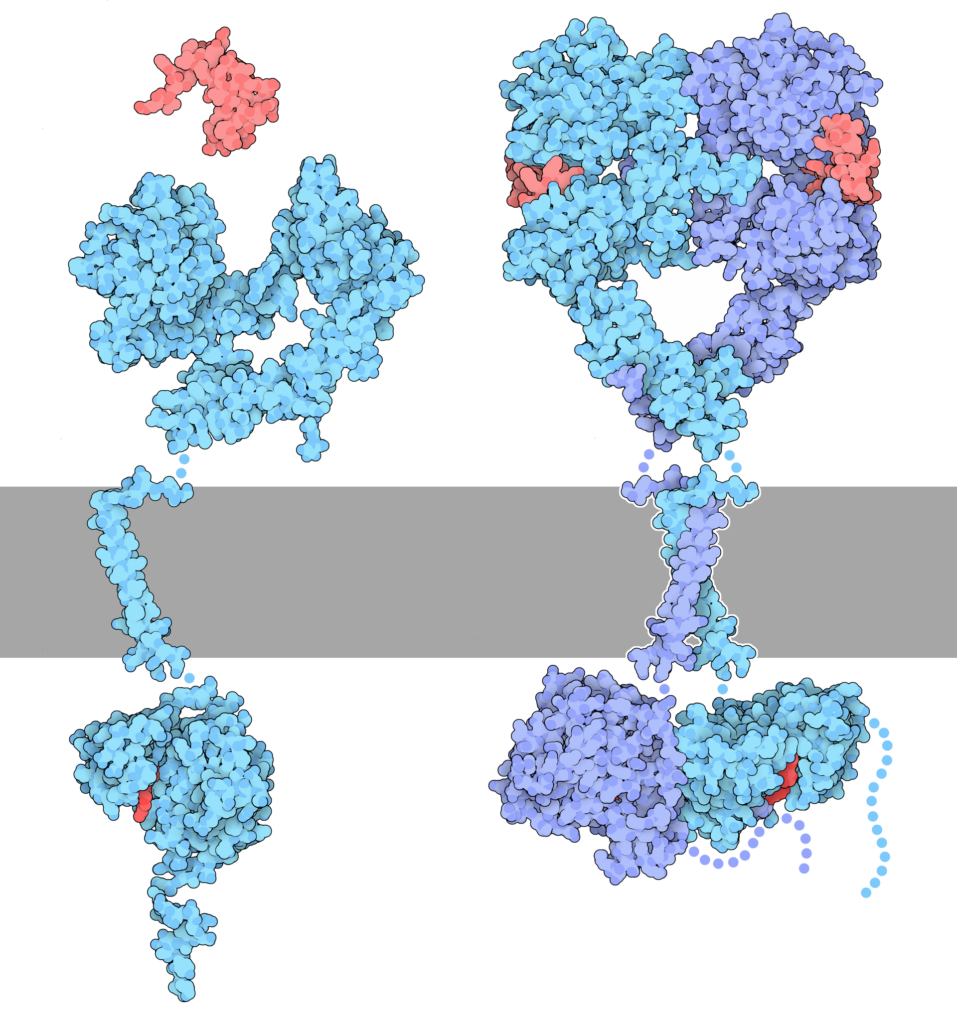
The concept is not exclusive to targeted drugs; chemotherapy and immunotherapy meet resistance too. With targeted agents, however, the mechanism can often be traced to a single molecular change, which makes investigation and the counter-move clearer. What follows applies to treatments with a defined target.
How long a response lasts varies by target and drug. Median response durations exceeding a year are reported for some targets and are shorter for others. A median is a group figure and is not a promise for any individual.
How Resistance Develops
Mechanisms fall into three groups: a new change in the target itself, an alternative pathway taking over, and the tumour changing its biological type.
| Mechanism | What happens | Example |
|---|---|---|
| New mutation in the target | The drug binding site changes | EGFR C797S |
| Bypass pathway | Another receptor takes over signalling | MET amplification |
| Downstream activation | Signalling continues below the target | PIK3CA, BRAF changes |
| Histological transformation | The tumour type changes | Small cell transformation |
| Clonal selection | A resistant subgroup becomes dominant | Clone present before treatment |
Some of these are present before treatment starts. If a very small population already carries the resistant feature, it becomes dominant as the drug clears sensitive cells. That is clonal selection, and it explains why resistance can look as though it appeared from nowhere.
Identifying the mechanism changes the next step directly. A new mutation in the target may point to a different generation of inhibitor; a bypass pathway raises the question of combination; histological transformation moves the plan to chemotherapy.

Why Resistance Develops in Cancer
A cancer cell can use more than one molecular pathway to grow. When the active one is blocked, a new mutation or another pathway can take over.
Why Resistance Is So Common
A tumour is not made of one kind of cell. New alterations accumulate with every division, and over time distinct populations of cells emerge. When a drug is started a selection begins among them: sensitive cells fall away while cells relatively protected from the drug find room in the same environment. Marked shrinkage on imaging does not mean no cells remain; it means the sensitive part has been suppressed.
The second factor is how well the drug reaches the tissue. Concentration is not uniform across a tumour; where the blood supply is poor or penetration limited, cells sit under lower pressure. Pressure too low to kill a cell can still be enough to select those carrying resistant features, which may explain why progression on treatment often begins at one site.
Taken together, the two factors show resistance to be an expected outcome rather than a misfortune. What decides practice is not whether resistance appears but whether its cause can be identified when it does. How this is handled with drugs directed at the KRAS G12C alteration is described under KRAS G12C inhibitors.
How Resistance Is Recognised
Progression is not called on imaging alone. Symptoms, laboratory findings and measured changes on scans are read together, using response criteria such as RECIST. Small fluctuations do not count as progression.
Once progression is confirmed, the next question is the mechanism. This is where liquid biopsy earns its place: a plasma panel can reveal the resistance alteration without a new tissue procedure. If plasma is uninformative, a tissue biopsy is planned.
Important: Not every progression means stopping the drug. Where a single site progresses while the rest stays controlled, local treatment may be applied and the same drug continued. The decision follows how widespread the progression is.
Send Your Reports for Assessment
Share your pathology, imaging and blood results on WhatsApp, or send them by email. Documents are reviewed before the consultation.
How the Next Line Is Chosen
Three pieces of information determine it: the resistance mechanism, the patient’s general condition and the treatments already given. Guidelines set out a different order for each mechanism.
- Progression is confirmed and its extent defined.
- The mechanism is investigated in plasma or tissue.
- The finding is classified by level of evidence.
- Approval, reimbursement and trial options are reviewed.
- The decision is made with the patient.
Approval and reimbursement can be decisive here. A drug with a sound scientific rationale may lack approval in that indication, and access then runs through a separate application. How those routes work is described on the treatments page.
Where no actionable resistance alteration is found, chemotherapy, immunotherapy or combination options are weighed. The order of lines is set out on the targeted therapy page.
When a Targeted Drug Stops Working
Tumours can develop a new escape route over time. The video explains why the resistance mechanism must be identified with a liquid biopsy.
The Limits of Resistance Testing
Resistance testing does not always give a single answer. More than one mechanism can coexist in the same patient, and then no single drug covers all the resistant populations. Where a new mutation in the target and a bypass pathway are seen together, the choice depends on which is dominant, and that cannot always be settled with one measurement.
The methods have their own limits. A plasma panel does not show histological transformation; where the tumour type itself has changed, the diagnosis can only be made on tissue. A tissue biopsy represents the site it came from rather than the whole tumour. What to do when the sample proves inadequate for molecular work is set out under when the tissue biopsy is not enough.
In some patients no mechanism can be shown. That does not make the investigation pointless; the absence of a mechanism is itself information and means the decision follows the standard sequence in guidelines. The current list of mechanisms is not a closed one, and routes that have not yet been described are accepted to exist.
Can Resistance Be Prevented?
With current knowledge it cannot be prevented outright, but delaying it is an active field. Three approaches stand out: a stronger first-line agent, combination treatment and early detection of the resistant clone.
- A more effective inhibitor in the first line can lengthen the response.
- Combinations targeting two pathways are under study; the side-effect balance decides their use.
- Regular plasma monitoring can reveal a resistant clone before imaging does; but acting on that early information has not yet been shown to improve outcomes, so it is not a routine monitoring method.
- Missed doses and irregular use can shorten responses; adherence matters.
Resistance developing does not mean the patient has done something wrong. It arises from the biology of the tumour and is an expected stage for most patients, so news of progression is handled as the move to the next step of the plan rather than a failure.
Adherence is the least discussed item on that list and often the most decisive. If doses are being missed because of side effects, sharing that allows a dose adjustment or supportive treatment; stopping on your own tends to shorten the response.

Monitoring on Treatment
Intervals depend on tumour type and treatment; most plans use imaging every eight to twelve weeks, with blood tests and examination in between.
| Item | What is sought | Frequency |
|---|---|---|
| Imaging | Lesion size, new sites | Every 8-12 weeks |
| Blood tests | Liver, kidney, blood counts | Every visit |
| Side-effect review | Skin, diarrhoea, fatigue | Every visit |
| Plasma panel | Resistance alteration | When progression is suspected |
A single measurement showing growth is not always progression. Where the difference is small, the clinical picture and the next scan are weighed together rather than a decision being taken on one test. The "pseudoprogression" seen with immunotherapy, however, is not expected with targeted drugs: a new lesion appearing on one of these is treated as progression and acted on without delay.
Side-effect monitoring is part of this. Rash, paronychia, diarrhoea and raised liver enzymes are common with targeted agents. Most can be managed with supportive care and, when reported early, without dose reduction. A side effect that is not reported often ends with the drug being stopped altogether. Whether progression can be seen earlier in blood is discussed in the article on ctDNA testing.
Sores inside the mouth are a separate topic with this class of drug; when they interfere with eating they can lead to missed doses. How they are managed is described under mouth sores from targeted therapy.
How often review is needed can change with the patient. Where a new symptom appears, coming in before the planned date is advised; the patient guide lists which symptoms call for urgent assessment.
What Patients Can Do
Hearing that a drug has stopped working is one of the harder moments, even though it does not mean treatment has ended. What helps most is understanding the information the decision rests on.
- Keep copies of imaging reports; comparison needs the earlier scans.
- Record the name, dose and start date of every drug.
- Note missed doses and why; that informs how the response duration is read.
- Report new symptoms with the date they began.
- If blood or tissue is requested, ask which question it will answer.
A second opinion can be sought at any stage and does not delay treatment. With existing reports it is usually completed without repeating tests; the process is described on the second opinion page.
Frequently Asked Questions
How soon does targeted therapy resistance appear?
The time to targeted therapy resistance varies by target, drug and patient. Median response durations exceed a year for some targets and are shorter for others. Medians describe groups and do not predict what any one person will experience.
Does treatment end when a drug stops working?
No. Most patients have a further line after progression. The choice follows the resistance mechanism, previous treatment and general condition; sometimes the same drug is continued alongside local treatment.
Can the mechanism always be found?
Not always. In some patients neither plasma nor tissue shows a mechanism. The decision then follows the standard sequence in guidelines together with the clinical picture.
Is a new biopsy necessary?
A plasma panel is usually tried first. If it is uninformative, or if histological transformation is suspected, tissue is needed — and in suspected small cell transformation tissue is essential.
Do missed doses cause resistance?
Irregular use makes drug levels fluctuate and can shorten a response. If side effects are behind missed doses, that should be shared; a dose adjustment or supportive treatment handles it better than stopping on your own.
Does combination treatment prevent resistance?
Some combinations can delay it, at the cost of more side effects. Who benefits is decided from trial results and the individual’s general condition.
Can a previous drug be used again later?
Sometimes. The clonal make-up of a tumour changes over time and a drug used earlier can become an option again. That decision is made with current molecular findings in hand.
Related Articles
Liquid Biopsy for Cancer: When It Is Used and What It Shows
Open the Page
Driver Mutation or Passenger: How a Genomic Report Is Read
Open the PageRelated Pages
Targeted Therapy
Open the Page
Lung Cancer Treatment
Open the Page
Molecular Tumour Board
Open the Page
Patient Guide
Open the PageSources
- Vasan N, Baselga J, Hyman DM. A view on drug resistance in cancer. Nature 2019;575(7782):299-309. Link
- Leonetti A, Sharma S, Minari R et al. Resistance mechanisms to osimertinib in EGFR-mutated non-small cell lung cancer. Br J Cancer 2019;121(9):725-737. Link
- Rotow J, Bivona TG. Understanding and targeting resistance mechanisms in NSCLC. Nat Rev Cancer 2017;17(11):637-658. Link
- Hendriks LE, Kerr KM, Menis J et al. Oncogene-addicted metastatic non-small-cell lung cancer: ESMO Clinical Practice Guideline. Ann Oncol 2023;34(4):339-357. Link
- Ramalingam SS, Vansteenkiste J, Planchard D et al. Overall survival with osimertinib in untreated, EGFR-mutated advanced NSCLC (FLAURA). N Engl J Med 2020;382(1):41-50. Link
- ESMO Clinical Practice Guidelines, guidelines by cancer type. Link
- NCCN Clinical Practice Guidelines in Oncology, guidelines by cancer type. Link