
Symptoms and Risk Factors
The most common symptoms of lung cancer are a cough lasting longer than three weeks, coughing up blood, breathlessness, chest pain, hoarseness and unexplained weight loss. Repeated chest infections can also be a warning sign. In advanced disease, symptoms of spread appear, such as bone pain, headache, loss of balance or swelling of the face and neck. Most early tumours cause no symptoms and are found by chance on imaging done for another reason.
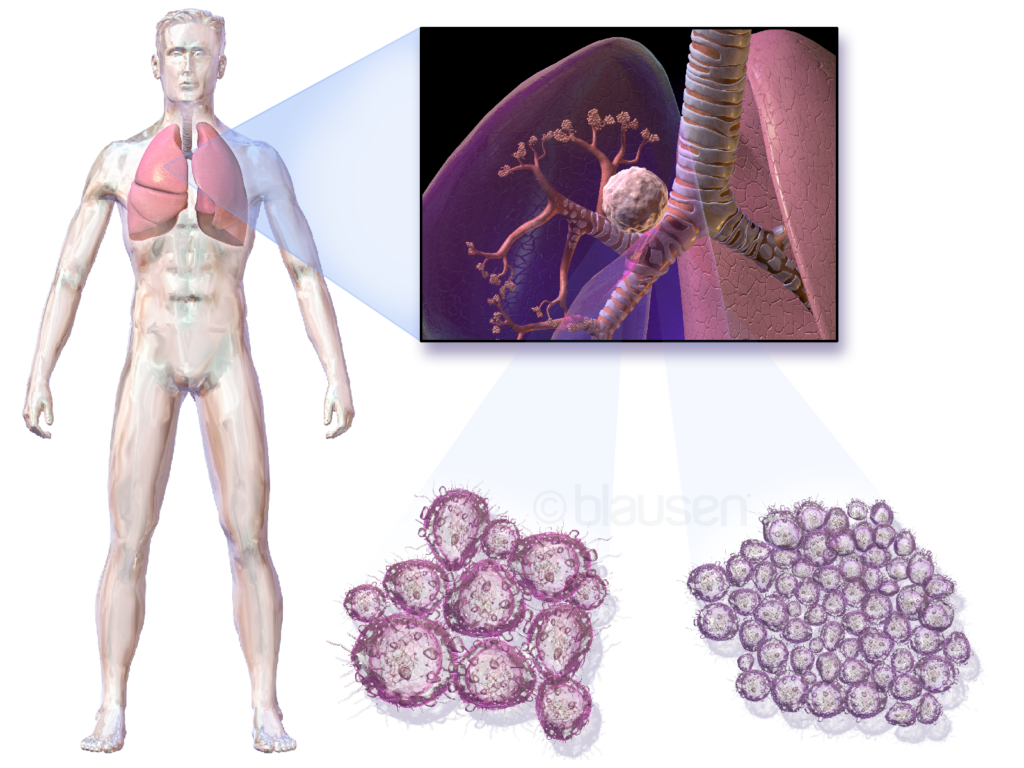
Lung cancer causes more deaths than any other cancer worldwide; according to IARC (GLOBOCAN 2022) about 2.5 million new cases were diagnosed in 2022. Turkish national cancer statistics place it first among men. Smoking is the most important risk factor and accounts for about 80 per cent of cases; second-hand smoke, radon gas, asbestos, air pollution and a family history of lung cancer are the other factors.
Lung cancer also develops in people who have never smoked; their tumours are more often adenocarcinomas and more often carry gene changes such as EGFR or ALK that determine treatment. Stopping smoking lowers the risk at any age, and stopping during treatment improves side effects and outcomes. Anyone with a cough lasting more than three weeks, blood in the sputum or breathlessness should see a physician.
Small Cell and Non-Small Cell Lung Cancer
Lung cancer is divided by pathology into two main groups, and this distinction sets the treatment from the outset. Non-small cell lung cancer makes up about 85 per cent of cases and small cell lung cancer about 15 per cent (ESMO guidelines). The pathologist makes the distinction under the microscope and with immunohistochemistry stains.
- Non-small cell lung cancer (NSCLC)
- Includes adenocarcinoma, squamous cell carcinoma and large cell carcinoma. It grows more slowly and can be treated with surgery in early disease. Because adenocarcinoma frequently carries gene changes that open the way to targeted therapy, molecular testing is mandatory.
- Small cell lung cancer (SCLC)
- Grows quickly and spreads early; two thirds of patients have extensive-stage disease at diagnosis. It is highly sensitive to chemotherapy and radiotherapy, and surgery is rarely used. In extensive-stage disease immunotherapy is added to chemotherapy.
- Limited and extensive stage
- Small cell lung cancer uses these two stages instead of TNM. In limited-stage disease the tumour fits within one radiotherapy field and concurrent chemoradiotherapy is given; in extensive-stage disease systemic therapy leads.

When Genetic Testing Should Be Done in Lung Cancer
Genetic tests are not a last resort after progression; the video explains why comprehensive profiling belongs at diagnosis and in first-line planning.
Diagnosis and Staging
Lung cancer is diagnosed by taking tissue from a mass seen on computed tomography, through bronchoscopy, CT-guided needle biopsy or EBUS (ultrasound-guided bronchoscopic sampling of lymph nodes). Staging uses PET-CT and brain MRI, and heart and lung function are assessed for fitness for surgery or radiotherapy. The biopsy sample must be sufficient for both pathology and molecular testing; if it is not, a repeat biopsy or a liquid biopsy (analysis of circulating tumour DNA in blood) is planned.
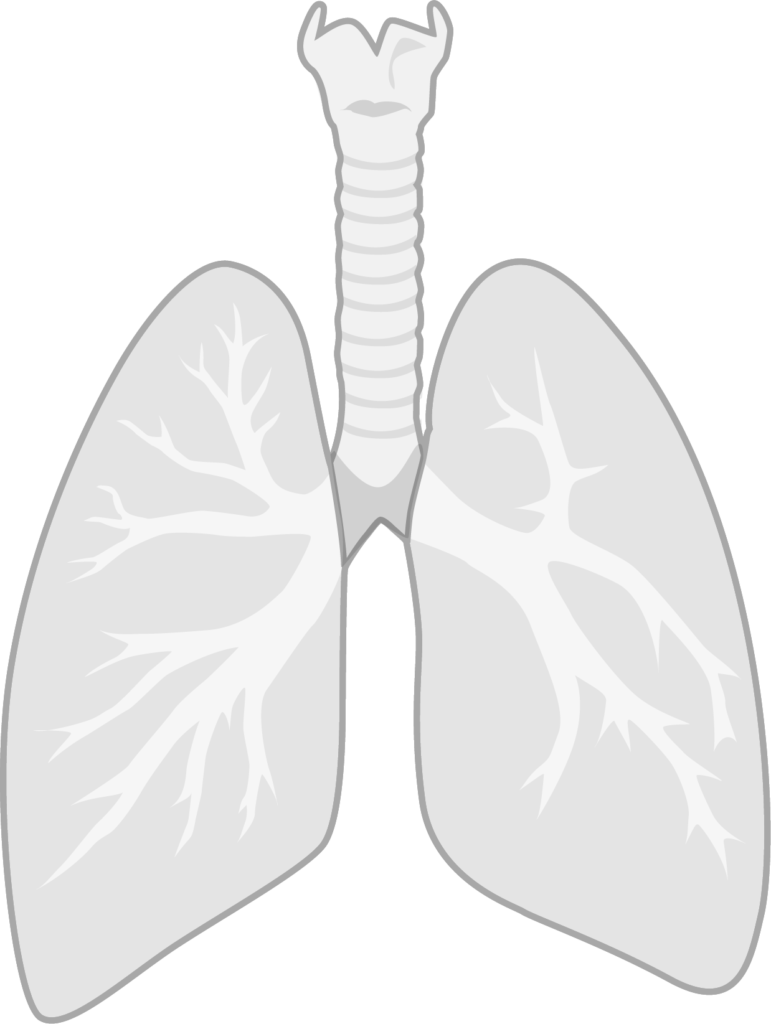
Non-small cell lung cancer is staged with the TNM system, using the IASLC 9th edition published in 2024. Tumour size (T), lymph node involvement (N) and distant metastasis (M) are assessed together. Treatment choice is determined by the physician according to stage, pathology and molecular findings; surgical and radiotherapy decisions are taken with thoracic surgery and radiation oncology, and can be shared with the patient's home centre.
| Stage | Definition | Treatment approach |
|---|---|---|
| Stage 1 | Tumour 4 cm or smaller, no lymph node involvement | Surgery; stereotactic radiotherapy for patients unfit for surgery |
| Stage 2 | Tumour over 4 cm or involvement of lymph nodes within the lung | Chemotherapy and immunotherapy before or after surgery; adjuvant osimertinib for EGFR mutation |
| Stage 3 | Mediastinal (central chest) lymph node involvement or invasion of neighbouring structures; locally advanced | Perioperative treatment and surgery if operable; otherwise concurrent chemoradiotherapy followed by one year of durvalumab, or osimertinib for EGFR mutation |
| Stage 4 | Metastasis (spread) to the other lung, pleural fluid or distant organs | Targeted therapy, immunotherapy or chemo-immunotherapy according to biomarker results |
Same Diagnosis, Different Treatment
One patient may have an EGFR change and another a KRAS or ROS1 change; the video explains how that difference changes the choice of treatment.
Biomarker Testing and Its Effect on Treatment
In non-small cell lung cancer, driver gene alterations and the PD-L1 level are tested on tumour tissue before treatment begins; ESMO and NCCN guidelines advise that systemic therapy in advanced adenocarcinoma should not start until this panel is back. The tests are run in a single next-generation sequencing (NGS) panel, and results usually take 10 to 14 working days. About half of adenocarcinomas carry a target that changes treatment. The panel can be run on a biopsy block sent from abroad, and results from an accredited laboratory in another country are accepted without repetition.
| Biomarker | Frequency (adenocarcinoma) | Effect on treatment |
|---|---|---|
| EGFR mutation | 10 to 15 per cent (Europe); more common in never-smokers | First-line osimertinib; three years of osimertinib after surgery in early disease |
| ALK fusion | 3 to 5 per cent | Alectinib, brigatinib or lorlatinib; active against brain metastases |
| ROS1 fusion | 1 to 2 per cent | Crizotinib, entrectinib, repotrectinib; zidesamtinib is under study in clinical trials |
| KRAS G12C mutation | 12 to 13 per cent | Sotorasib or adagrasib in the second line; chemo-immunotherapy in the first line |
| BRAF V600E mutation | 1 to 2 per cent | Dabrafenib with trametinib, or encorafenib with binimetinib |
| MET exon 14 skipping | 3 per cent | Capmatinib or tepotinib |
| RET fusion | 1 to 2 per cent | Selpercatinib or pralsetinib |
| HER2 mutation, NTRK fusion | 1 to 3 per cent | Trastuzumab deruxtecan (sevabertinib is under study in clinical trials); larotrectinib or entrectinib |
| PD-L1 (TPS) | 50 per cent or higher in about one third of cases | Without a driver mutation: immunotherapy alone at TPS 50 per cent or higher; chemo-immunotherapy below that |
Targeted therapy consists of oral drugs that bind to one of these alterations; when a driver mutation is present it is more effective than immunotherapy and is used first. These tablets are continued until the disease progresses or side effects require a change, in most patients for more than a year, and they are well suited to being taken at home with remote monitoring of blood tests and scans. When resistance develops, a new biopsy or liquid biopsy identifies the mechanism and the next line is chosen accordingly; details are on the targeted therapy page.
Please note: the information on this page describes general principles; it does not replace a medical consultation or an individual treatment plan. As of 21 September 2026, marketing authorisation and reimbursement status in Türkiye differ from drug to drug and are discussed at the consultation in their current form.
Liquid Biopsy or Tissue Biopsy
Through the story of a 98-year-old patient with a lung mass, for whom a needle biopsy carried real risk, the video explains where each method fits.
Treatment Options by Stage
In early (stage 1 and 2) non-small cell lung cancer the main treatment is surgery; in patients unfit for surgery, stereotactic radiotherapy serves the same purpose. If the tumour is over 4 cm or lymph nodes are involved, chemotherapy with immunotherapy is given before surgery (CheckMate 816, KEYNOTE-671) or chemotherapy after it; in patients with an EGFR mutation, three years of osimertinib after surgery reduces recurrence (ADAURA). Chemotherapy is usually four cycles, every three weeks.
In locally advanced (stage 3) disease that cannot be operated on, six to seven weeks of concurrent chemoradiotherapy is given, followed by one year of durvalumab according to the PACIFIC trial, or by osimertinib if an EGFR mutation is present (LAURA). This approach has markedly reduced the risk of the disease returning in stage 3.
In metastatic (stage 4) disease the aim is long-term disease control with preserved quality of life, and treatment follows one of three routes according to the biomarker result: targeted therapy if a driver mutation is present, immunotherapy alone if PD-L1 is high, and otherwise chemotherapy with immunotherapy. Radiotherapy is added for bone or brain metastases; in EGFR- and ALK-positive patients with brain metastases, targeted drugs that cross into the brain are usually tried first. In small cell lung cancer, extensive-stage disease is treated with four cycles of platinum and etoposide with atezolizumab or durvalumab, and limited-stage disease with chemoradiotherapy followed by durvalumab (ADRIATIC).
Duration depends on the stage: active treatment in early disease takes three to six months, stage 3 chemoradiotherapy with immunotherapy about 14 months, and metastatic treatment continues for as long as the drug is effective. In metastatic disease immunotherapy is usually given for up to two years, while targeted tablets continue without a fixed limit. For international patients the intravenous parts of treatment are given in Izmir, and oral targeted therapy with three-monthly imaging can be continued at home under a shared plan with a written treatment summary. A plan started at another centre can be reviewed as a second opinion.
When Immunotherapy Is Used
Immunotherapy (PD-1 or PD-L1 inhibitors: pembrolizumab, nivolumab, atezolizumab, durvalumab) is used in lung cancer from stage 2 to stage 4, and the guidelines define how it is given at each stage. In stage 2 and 3 it is given with chemotherapy for three to four cycles before surgery and alone after surgery to complete one year. In inoperable stage 3, one year of durvalumab follows chemoradiotherapy.
In metastatic disease without a driver mutation, immunotherapy is part of first-line treatment. At PD-L1 TPS of 50 per cent or higher, pembrolizumab alone (KEYNOTE-024) is at least as effective as chemotherapy; when PD-L1 is low or negative, chemotherapy and pembrolizumab are given together (KEYNOTE-189). In patients with an EGFR or ALK alteration immunotherapy is not used before targeted therapy; its effect is low in these patients and side effects increase when the two are used in sequence.
The effect of immunotherapy usually becomes visible on imaging within the first two to three months; in some patients the tumour enlarges before it shrinks. Its side effects are immune-related: thyroid dysfunction, skin rash, diarrhoea or colitis, pneumonitis (inflammation of the lung) and raised liver enzymes. New breathlessness or cough is assessed the same day for pneumonitis, wherever the patient is. General principles are on the immunotherapy page.
Genomic Assessment
Molecular assessment in lung cancer focuses largely on changes in the tumour tissue (somatic); inherited (germline) mutations are rare in this disease and are investigated only with diagnosis at a young age or clustering in the family. Comprehensive genomic profiling screens dozens of genes including EGFR, ALK, ROS1, KRAS, BRAF, MET, RET, HER2 and NTRK in one run; compared with single-gene tests this saves both tissue and time.
When biopsy tissue is insufficient or a repeat biopsy is risky, a liquid biopsy is used; if a mutation is found in circulating tumour DNA the result is sufficient for treatment, but if none is found a tissue biopsy is still needed. Liquid biopsy is also the first choice when resistance develops on targeted therapy; mechanisms such as EGFR T790M or C797S and MET amplification are detected this way. A blood sample for liquid biopsy can be taken in Izmir at the first visit while an existing block is being processed.
Rare alterations, cases with more than one mutation and patients who have exhausted standard lines are discussed at the molecular tumour board, which considers off-label use or clinical trial options as matters for assessment only. A test result does not always change treatment; but in advanced adenocarcinoma, treatment started without the result is outside the guidelines. The practical steps for sending reports are on the international patients page.
Frequently Asked Questions
How long does lung cancer treatment take?
Duration depends on the stage. In early disease surgery and four cycles of chemotherapy are completed within three to six months; where immunotherapy is given around surgery the total is about a year. In stage 3, six to seven weeks of chemoradiotherapy followed by one year of durvalumab takes about 14 months. In metastatic disease targeted tablets continue for as long as they work, and immunotherapy usually for up to two years. Duration varies from person to person according to response and side effects.
At which stage is immunotherapy given?
In non-small cell lung cancer immunotherapy is given in stage 2 and 3 with chemotherapy before surgery and alone after it, in inoperable stage 3 as one year of durvalumab after chemoradiotherapy, and in metastatic disease without a driver mutation as first-line treatment alone or with chemotherapy. In small cell lung cancer it is added to chemotherapy in extensive-stage disease. In patients with an EGFR or ALK alteration targeted therapy comes first; immunotherapy is not the initial choice for them.
What does an EGFR mutation mean?
EGFR is a protein on the cell surface that passes growth signals inward; a mutation in this gene drives the cell to keep growing. It is found in about 10 to 15 per cent of lung adenocarcinomas in Europe and is more common in never-smokers. When present, the oral drug osimertinib is the first-line treatment in metastatic disease and is given for three years after surgery in early disease. It is used before chemotherapy or immunotherapy; when resistance develops, a new biopsy or liquid biopsy guides the next step.
Targeted therapy or chemotherapy?
The choice follows the biomarker result. If the tumour carries a targetable alteration such as EGFR, ALK, ROS1, RET, BRAF, MET, KRAS G12C, HER2 or NTRK, targeted therapy is used first, because in these patients it is more effective and better tolerated than chemotherapy. If no such alteration is found, treatment is immunotherapy or chemotherapy with immunotherapy. Targeted therapy does not work in every patient and is never chosen without the test result; the two approaches can also be used in sequence or together.
Is stage 4 lung cancer treatable?
Yes. In stage 4 lung cancer the aim of treatment is to keep the disease under control for as long as possible, relieve symptoms and protect quality of life. With targeted therapy, immunotherapy and chemotherapy the disease can be controlled for years in some patients; the duration depends on the biomarker result and on response, and varies from person to person. In patients with a small number of metastases (oligometastatic disease) radiotherapy or surgery may be added to drug treatment. The plan is discussed individually at the consultation.
Are biomarker tests available in Turkey?
Yes. Next-generation sequencing panels covering EGFR, ALK, ROS1, KRAS, BRAF, MET, RET, HER2 and NTRK, PD-L1 immunohistochemistry and liquid biopsy are performed in accredited laboratories, and results usually take 10 to 14 working days. Testing can be run on an existing biopsy block sent from another country, provided enough tissue remains; if the sample is insufficient, a liquid biopsy or a repeat biopsy is planned. Results reported abroad in a standard format are accepted and do not need to be repeated.
How do I send my biopsy report?
The pathology report, any molecular or PD-L1 results, CT or PET-CT reports with the images in DICOM format, recent blood tests and a summary of previous treatment can be sent as PDF files by WhatsApp or e-mail before the first contact. Reports in English are read directly; reports in other languages can usually be interpreted from the standard terms they contain. The documents are reviewed before a video or telephone consultation, and a written opinion follows so that the decision to travel can be made in advance.
Related Pages

Targeted Therapy
Open the Page
Immunotherapy
Open the Page
Chemotherapy
Open the Page
Comprehensive Genomic Profiling
Open the Page
Molecular Tumour Board
Open the Page
International Patients
Open the Page
Second Opinion
Open the Page
Cancer Types
Open the PageSources and Guidelines
- Hendriks LE et al. Oncogene-addicted metastatic non-small-cell lung cancer: ESMO Clinical Practice Guideline. Ann Oncol 2023;34(4):339-357. Link
- Hendriks LE et al. Non-oncogene-addicted metastatic non-small-cell lung cancer: ESMO Clinical Practice Guideline. Ann Oncol 2023;34(4):358-376. Link
- Dingemans AMC et al. Small-cell lung cancer: ESMO Clinical Practice Guidelines. Ann Oncol 2021;32(7):839-853. Link
- National Comprehensive Cancer Network. NCCN Clinical Practice Guidelines in Oncology: Non-Small Cell Lung Cancer. Link
- Rami-Porta R et al. The IASLC Lung Cancer Staging Project: proposals for the 9th edition of the TNM classification. J Thorac Oncol 2024;19(7):1007-1027. Link
- Reck M et al. Pembrolizumab versus chemotherapy for PD-L1-positive non-small-cell lung cancer (KEYNOTE-024). N Engl J Med 2016;375:1823-1833. Link
- Gandhi L et al. Pembrolizumab plus chemotherapy in metastatic non-small-cell lung cancer (KEYNOTE-189). N Engl J Med 2018;378:2078-2092. Link
- Soria JC et al. Osimertinib in untreated EGFR-mutated advanced non-small-cell lung cancer (FLAURA). N Engl J Med 2018;378:113-125. Link
- Wu YL et al. Osimertinib in resected EGFR-mutated non-small-cell lung cancer (ADAURA). N Engl J Med 2020;383:1711-1723. Link
- Antonia SJ et al. Durvalumab after chemoradiotherapy in stage III non-small-cell lung cancer (PACIFIC). N Engl J Med 2017;377:1919-1929. Link
- Forde PM et al. Neoadjuvant nivolumab plus chemotherapy in resectable lung cancer (CheckMate 816). N Engl J Med 2022;386:1973-1985. Link
- Cheng Y et al. Durvalumab after chemoradiotherapy in limited-stage small-cell lung cancer (ADRIATIC). N Engl J Med 2024;391:1313-1327. Link
- International Agency for Research on Cancer (WHO). GLOBOCAN 2022, Global Cancer Observatory. Link
- Republic of Türkiye Ministry of Health, General Directorate of Public Health. Cancer statistics. Link
- Turkish Society of Medical Oncology. Guidelines and patient information resources. Link
- U.S. Food and Drug Administration. Oncology (cancer) / hematologic malignancies approval notifications. Link