
What HER2 Is and How It Is Tested
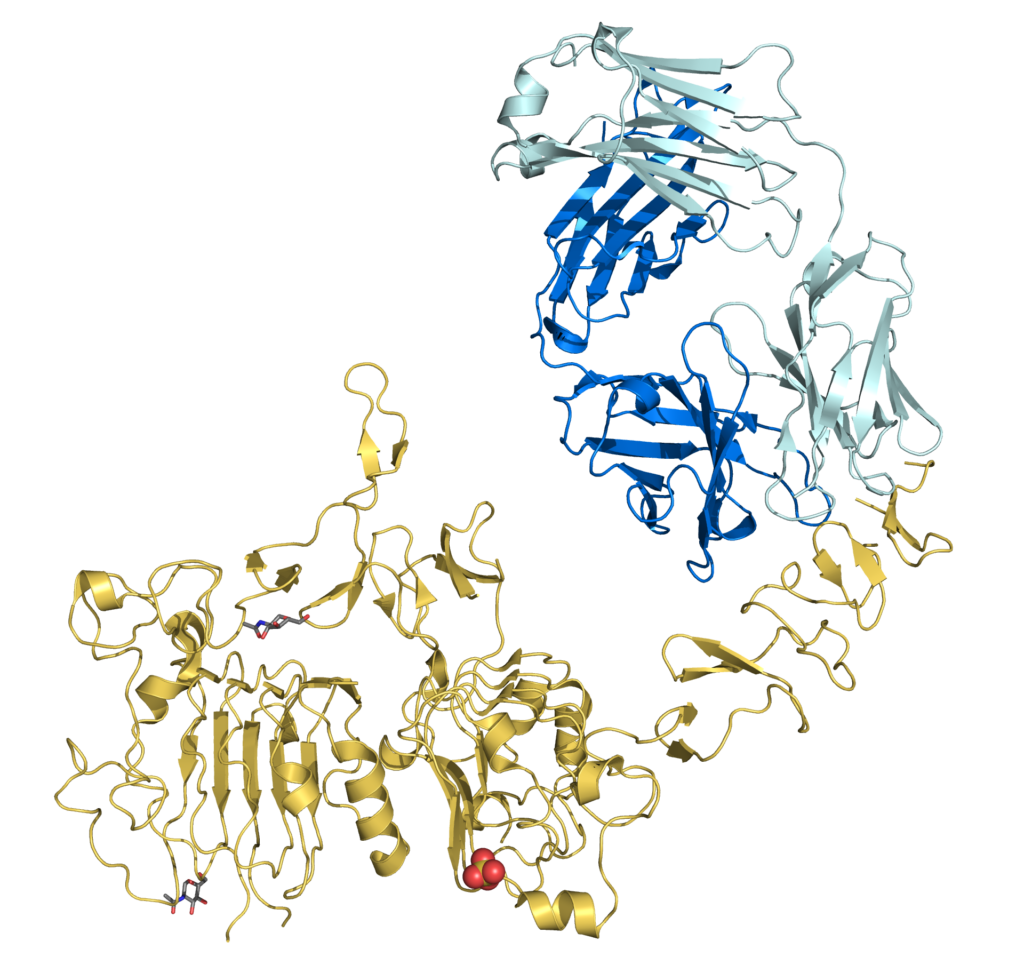
HER2 (human epidermal growth factor receptor 2) is a protein on the cell surface that passes growth signals into the cell. In some breast tumours the HER2 gene is multiplied (amplification), and the cell surface carries far more HER2 protein than normal; these tumours are called HER2-positive. Without targeted treatment they grow quickly, but drugs that bind HER2 have changed the outlook for this subtype more than for any other.
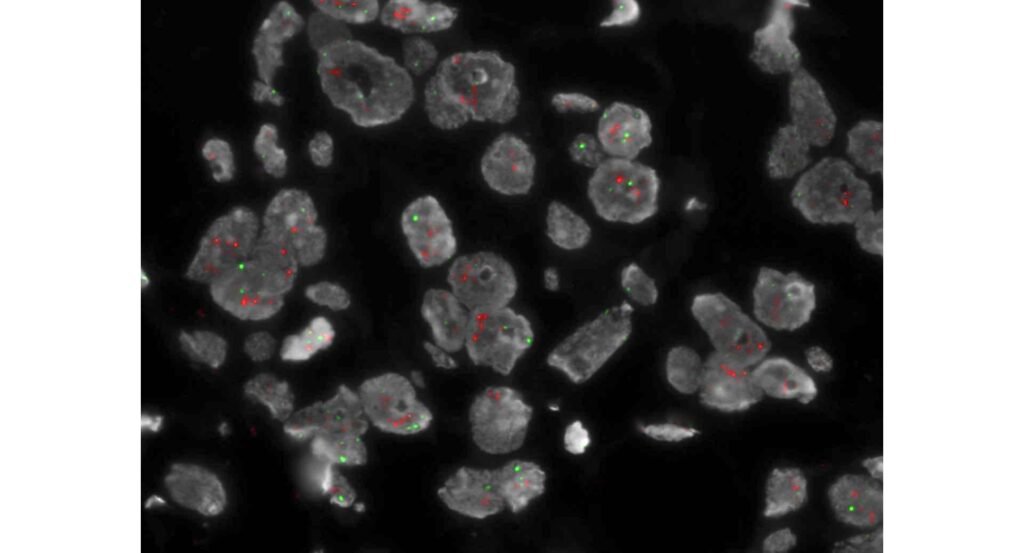
HER2 status is determined on the biopsy or surgical specimen with two tests. Immunohistochemistry (IHC) stains the protein and scores it 0, 1+, 2+ or 3+. In situ hybridisation (FISH or ISH) counts gene copies and reports positive or negative. Under the ASCO and CAP guideline, IHC 3+ is positive, IHC 2+ is equivocal and is clarified by FISH, and IHC 0 and 1+ are negative. For patients sending reports from abroad, the IHC score and, where relevant, the FISH result are the two items that must appear in the pathology report.
| IHC result | Meaning | Next step |
|---|---|---|
| 0 | No staining; HER2-negative | No HER2-targeted therapy |
| 1+ | Weak staining; HER2-negative, in the HER2-low group | No HER2-targeted therapy in early disease; antibody-drug conjugate option in metastatic disease |
| 2+ | Moderate staining; equivocal | FISH/ISH requested; positive means HER2-positive, negative means HER2-low |
| 3+ | Strong, complete staining; HER2-positive | HER2-targeted therapy is planned |
The HER2 result is read together with the oestrogen and progesterone receptor results. About half of HER2-positive tumours are also hormone receptor-positive; in these patients endocrine therapy follows the HER2-targeted treatment. The interpretation of the report and the other subtypes are described on the breast cancer treatment page. When a report is unclear, or the score was reported before 2018, the original slides or block can be re-read rather than repeating the biopsy.
Course and Symptoms
The symptoms of HER2-positive breast cancer are the same as in other subtypes: a palpable lump, swelling in the armpit, nipple retraction or discharge and thickening of the skin. HER2 status cannot be judged from symptoms; only the pathology test shows it. This subtype is slightly more common in younger patients and the tumour tends to grow faster.
Before targeted therapy, HER2-positive disease was regarded as higher risk for recurrence and for brain metastasis (spread). With trastuzumab and the drugs that followed, recurrence in early disease has fallen markedly; the APHINITY and KATHERINE trials document this change. In metastatic disease, sequential lines of treatment can keep the disease under control for long periods; the course differs from patient to patient and is discussed individually at the consultation.
The brain needs particular attention in metastatic HER2-positive disease. Headache, loss of balance or a change in vision prompts a brain MRI. Tucatinib and trastuzumab deruxtecan are active against brain metastases and are planned together with radiotherapy.
Treatment by Stage
Treatment of HER2-positive breast cancer is planned according to the size of the tumour, lymph node involvement and whether distant spread is present, and a HER2-targeted drug is part of the treatment at every stage. Treatment choice is determined by the physician according to stage, pathology and molecular findings; surgical and radiotherapy decisions are taken with the relevant specialists, whether in Izmir or at the patient's home centre.
| Stage | Treatment principle | Duration |
|---|---|---|
| Stage 1 (tumour under 2 cm, node-negative) | Surgery first; then 12 weeks of paclitaxel with trastuzumab, followed by trastuzumab alone | One year of HER2-targeted therapy in total |
| Stage 2 and 3 (tumour over 2 cm or node-positive) | Chemotherapy with trastuzumab and pertuzumab first (neoadjuvant); then surgery and radiotherapy; trastuzumab and pertuzumab continue after a pathological complete response, an antibody-drug conjugate is used for residual disease | Neoadjuvant phase four to six months; one year of HER2-targeted therapy in total |
| Stage 4 (metastatic) | First line: a taxane with trastuzumab and pertuzumab; trastuzumab deruxtecan at progression; later lines: tucatinib combination or trastuzumab emtansine | For as long as the drug is effective; no fixed limit |
Starting treatment before surgery from stage 2 upwards has two advantages: the tumour shrinks, and the effect of the drugs is seen directly in the surgical specimen. If no living tumour cells remain, a pathological complete response has been achieved; about 60 per cent of HER2-positive patients reach this result (NeoSphere and later trials). If residual disease is found, trastuzumab emtansine lowers the recurrence risk according to the KATHERINE trial, and trastuzumab deruxtecan has also been studied in this setting in the DESTINY-Breast05 trial.
In patients who are also hormone receptor-positive, endocrine therapy continues for five to 10 years once HER2-targeted therapy is complete. The chemotherapy part is usually limited to four to six cycles, while the HER2 antibodies continue alone every three weeks after chemotherapy ends. For international patients the neoadjuvant chemotherapy is the part that is usually given in Izmir; surgery, radiotherapy and the remaining antibody infusions can be planned at home or here, depending on what the home centre can provide, with a written plan shared between the two teams.
Please note: the information on this page describes general principles; it does not replace a medical consultation or an individual treatment plan.
HER2-targeted Therapies
Targeted therapy in HER2-positive breast cancer consists of drugs that bind the HER2 protein and either cut off the growth signal or use the binding to deliver a chemotherapy molecule into the cell. Five main drugs appear in the guidelines; which one is used when depends on the stage and on previous treatment. The general principles of this drug class are explained on the targeted therapy page.
- Trastuzumab
- The first antibody to bind HER2, given into a vein or under the skin every three weeks. In early disease it starts with chemotherapy and continues for one year in total (HERA trial). Its most important side effect is a temporary reduction in the heart's pumping strength. The subcutaneous form takes a few minutes to give and is suitable for continuation near home.
- Pertuzumab
- Binds a different part of HER2 and is used together with trastuzumab. It is a standard component in node-positive early disease (APHINITY) and in first-line metastatic treatment (CLEOPATRA). Diarrhoea is its most common side effect.
- Trastuzumab deruxtecan (T-DXd)
- An antibody-drug conjugate that carries a chemotherapy molecule attached to trastuzumab. In metastatic disease it proved superior to trastuzumab emtansine in the second line (DESTINY-Breast03) and is also effective in HER2-low tumours. Its rare but serious side effect is interstitial lung disease; a new cough or breathlessness must be reported immediately.
- Trastuzumab emtansine (T-DM1)
- Lowers the recurrence risk in residual disease after neoadjuvant treatment (KATHERINE) and is used in later lines of metastatic disease. Liver enzymes and platelet counts are monitored.
- Tucatinib
- An oral small-molecule HER2 inhibitor used with trastuzumab and capecitabine. It is active in patients with brain metastases (HER2CLIMB). Diarrhoea and raised liver enzymes are its main side effects.
Clinical trials established this sequence. CLEOPATRA (phase III, NEJM 2015) increased median overall survival in first-line metastatic disease from 40.8 to 56.5 months by adding pertuzumab. DESTINY-Breast03 (phase III, NEJM 2022) raised the 12-month progression-free survival rate in the second line from 34 to 76 per cent with trastuzumab deruxtecan. HER2CLIMB (NEJM 2020) showed a progression-free survival gain with tucatinib, including in patients with brain metastases. As of 21 September 2026, marketing authorisation and reimbursement status in Türkiye differ from drug to drug and are discussed at the consultation; off-label use is a matter for individual assessment only.
HER2-low
HER2-low describes tumours with an IHC score of 1+ or 2+ and a negative FISH test; these tumours are not HER2-positive and belong to the hormone receptor-positive or triple-negative group. About half of all breast cancers fit this definition. The concept gained importance when antibody-drug conjugates were shown to deliver chemotherapy into cells that carry only small amounts of HER2.
In the DESTINY-Breast04 trial (NEJM 2022), trastuzumab deruxtecan significantly delayed progression compared with chemotherapy of the physician's choice in HER2-low metastatic patients who had received at least one line of chemotherapy. In metastatic disease, therefore, the distinction between HER2 0 and 1+ on the pathology report can change treatment, and the pathologist may be asked to re-evaluate the score. In early disease HER2-targeted therapy is not used for HER2-low tumours; treatment follows hormone receptor status.
HER2 status can change at recurrence or in a metastatic biopsy, so HER2 is retested whenever a new lesion is sampled. Other tumour alterations (PIK3CA, ESR1, germline BRCA) are examined by comprehensive genomic profiling, which can be run on an existing block, and complex cases are discussed at the molecular tumour board.
Treatment Duration and Cardiac Monitoring
In early HER2-positive breast cancer, HER2-targeted therapy starts with chemotherapy and lasts one year in total (about 17 to 18 administrations). The chemotherapy part takes four to six months; surgery and radiotherapy are planned within or after that period. In metastatic disease treatment continues for as long as the drug is effective and well tolerated, with imaging every three months to assess response.
Trastuzumab and pertuzumab can temporarily reduce the pumping strength of the heart muscle; this usually causes no symptoms and recovers when the drug is paused. Before treatment and every three months during it, the left ventricular ejection fraction (the share of blood the heart pumps with each beat) is measured by echocardiography or MUGA scan. If the ejection fraction falls below 50 per cent, or drops by more than 10 points from baseline, the drug is paused and a cardiologist is consulted.
The cardiac risk is higher with anthracycline chemotherapy, at older age and with conditions such as high blood pressure or diabetes; anthracycline-free regimens may be preferred in these patients. Breathlessness, swollen legs or palpitations should be reported without waiting for the next appointment. For patients who continue antibody infusions at home, the three-monthly echocardiogram can be done locally and the report sent for review; the consultation and planning steps are described on the treatment pathway page.
Frequently Asked Questions
What does HER2-positive mean?
HER2-positive means that the tumour cells carry far more of the HER2 growth protein on their surface than normal; the pathology report shows this as IHC 3+, or IHC 2+ with a positive FISH result. About 15 to 20 per cent of breast cancers are HER2-positive. Without targeted treatment these tumours grow quickly, but because trastuzumab and related drugs act directly on this protein, the whole treatment plan is built around the result.
How long does HER2-targeted treatment last?
In early disease HER2-targeted therapy starts together with chemotherapy and lasts 12 months in total; the chemotherapy part takes four to six months, and surgery and radiotherapy are fitted into that period. If the tumour is also hormone receptor-positive, five to 10 years of endocrine therapy follows. In metastatic disease treatment continues every three weeks for as long as it is effective. The later antibody-only infusions can often be arranged near home under a shared plan; duration varies from person to person.
Does trastuzumab affect the heart?
Trastuzumab can temporarily reduce the pumping strength of the heart muscle. This affects a small proportion of patients, usually causes no symptoms and recovers when the drug is paused. For this reason the ejection fraction is measured by echocardiography before treatment and every three months during it. If the value falls below 50 per cent the drug is paused and a cardiologist is consulted. Breathlessness, swollen legs or palpitations should be reported straight away; the scans can be done locally and the results sent for review.
What is HER2-low breast cancer?
HER2-low describes tumours with a HER2 score of 1+ or 2+ and a negative FISH test; they are not HER2-positive and make up about half of all breast cancers. The term became important when antibody-drug conjugates such as trastuzumab deruxtecan were shown to work in these tumours in metastatic disease (DESTINY-Breast04). In early disease HER2-low tumours are treated according to hormone receptor status and HER2-targeted therapy is not given. The distinction between HER2 0 and 1+ can be re-read on the original slides.
Is targeted therapy given before surgery?
Yes. When the tumour is larger than 2 cm or the axillary lymph nodes are involved, guidelines recommend chemotherapy with trastuzumab and pertuzumab before surgery. This shrinks the tumour, increases the chance of breast-conserving surgery and shows the effect of the drugs in the surgical specimen. If no living tumour cells remain, a pathological complete response has been achieved; if residual disease is found, the treatment after surgery is switched to an antibody-drug conjugate. Small, node-negative tumours are usually treated after surgery instead.
What are the options in metastatic HER2-positive disease?
First-line treatment for metastatic HER2-positive breast cancer is a taxane with trastuzumab and pertuzumab; once the chemotherapy part is complete the antibodies continue on their own. If the disease progresses, trastuzumab deruxtecan is the second-line option, followed by tucatinib with trastuzumab and capecitabine, or trastuzumab emtansine. In patients with brain metastases tucatinib and radiotherapy are planned together. If the tumour is also hormone receptor-positive, endocrine therapy is added. The sequence is decided individually and reviewed at each progression.
Related Pages

Breast Cancer Treatment
Open the Page
Triple-Negative Breast Cancer
Open the Page
Targeted Therapy
Open the Page
Chemotherapy
Open the Page
Comprehensive Genomic Profiling
Open the Page
Molecular Tumour Board
Open the Page
Treatment Pathway
Open the Page
International Patients
Open the PageSources and Guidelines
- Gennari A et al. ESMO Clinical Practice Guideline for the diagnosis, staging and treatment of patients with metastatic breast cancer. Ann Oncol 2021;32(12):1475-1495 (2024 living update). Link
- Loibl S et al. Early breast cancer: ESMO Clinical Practice Guideline. Ann Oncol 2024;35(2):159-182. Link
- National Comprehensive Cancer Network. NCCN Clinical Practice Guidelines in Oncology: Breast Cancer, version 4.2026. Link
- Wolff AC et al. HER2 testing in breast cancer: ASCO/CAP Clinical Practice Guideline focused update. J Clin Oncol 2018;36(20):2105-2122. Link
- Wolff AC et al. HER2 testing in breast cancer: ASCO/CAP guideline update 2023 (HER2-low). J Clin Oncol 2023;41(22):3867-3872. Link
- Swain SM et al. Pertuzumab, trastuzumab, and docetaxel in HER2-positive metastatic breast cancer (CLEOPATRA). N Engl J Med 2015;372:724-734. Link
- von Minckwitz G et al. Trastuzumab emtansine for residual invasive HER2-positive breast cancer (KATHERINE). N Engl J Med 2019;380:617-628. Link
- von Minckwitz G et al. Adjuvant pertuzumab and trastuzumab in early HER2-positive breast cancer (APHINITY). N Engl J Med 2017;377:122-131. Link
- Cortés J et al. Trastuzumab deruxtecan versus trastuzumab emtansine for breast cancer (DESTINY-Breast03). N Engl J Med 2022;386:1143-1154. Link
- Modi S et al. Trastuzumab deruxtecan in previously treated HER2-low advanced breast cancer (DESTINY-Breast04). N Engl J Med 2022;387:9-20. Link
- Murthy RK et al. Tucatinib, trastuzumab, and capecitabine for HER2-positive metastatic breast cancer (HER2CLIMB). N Engl J Med 2020;382:597-609. Link
- U.S. Food and Drug Administration. Oncology (cancer) / hematologic malignancies approval notifications. Link
- Turkish Society of Medical Oncology. Guidelines and patient information resources. Link