How Targeted Therapy Works
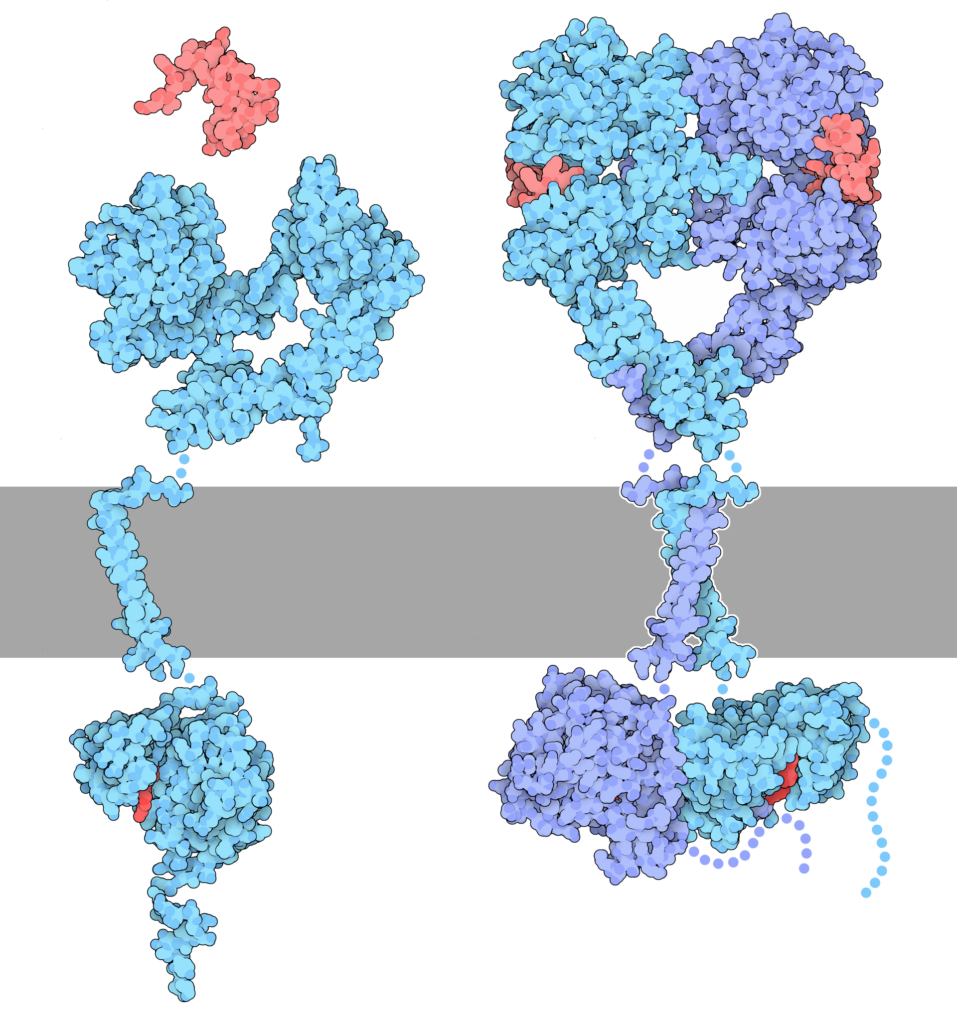
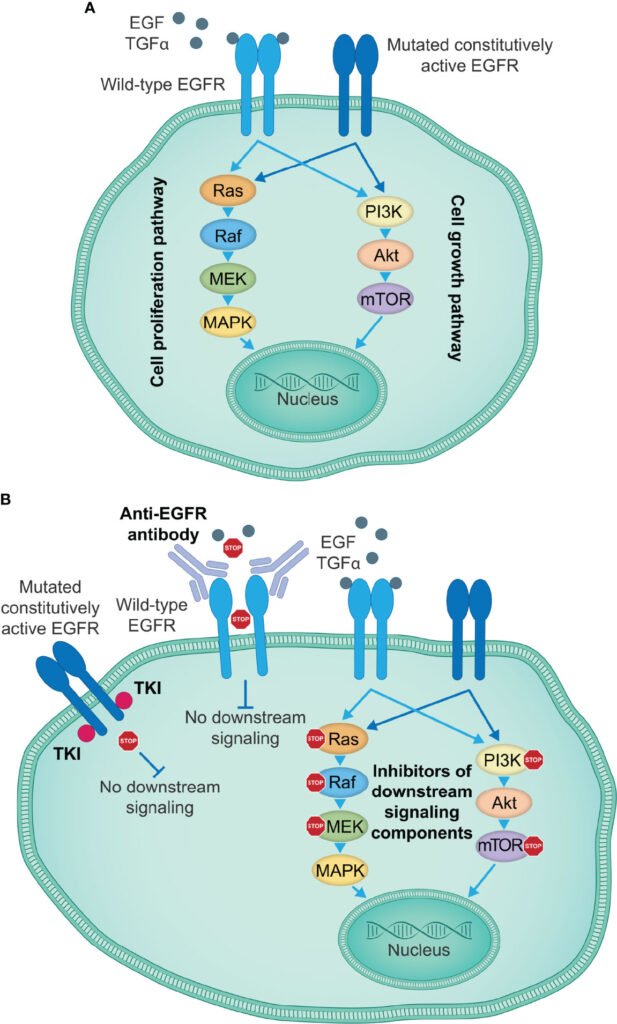
Targeted therapy works by recognising one specific molecule that drives the growth of a cancer cell and locking on to it. Cancer cells carry gene alterations that make certain proteins send a constant "grow" signal; the targeted drug blocks that protein and the signal stops. Healthy cells either lack the target or carry very little of it, which is why the effect is more selective for the tumour than that of chemotherapy.
Targeted therapy is often confused with immunotherapy. The difference is simple: targeted therapy acts on the cancer cell itself, whereas immunotherapy acts on the patient's immune cells and releases them to attack the tumour. This page covers targeted therapy only.
Targeted drugs are grouped into classes by the way they act. Tyrosine kinase inhibitors are small molecules that block signalling enzymes inside the cell and are taken as tablets. Monoclonal antibodies are large molecules that bind to a protein on the cell surface from outside and are given by infusion. Antibody-drug conjugates carry a chemotherapy molecule attached to an antibody straight into the tumour cell. PARP inhibitors act on cells with faulty DNA repair, and CDK4/6 inhibitors block the cell division cycle in hormone receptor-positive breast cancer.
Targeted Therapy Versus Chemotherapy
The core difference between targeted therapy and chemotherapy is the mechanism: chemotherapy affects all rapidly dividing cells, whereas targeted therapy affects only cells that carry a particular target. This difference also changes the route of administration, the side-effect profile and the condition for starting treatment. Neither method is superior to the other; the biology of the tumour decides which is used in which patient.
| Feature | Targeted therapy | Chemotherapy |
|---|---|---|
| Mechanism | Binds to a specific gene alteration or protein in the tumour | Damages the DNA or division of all rapidly dividing cells |
| Condition for starting | The target must be shown in the tumour by a test | Pathology diagnosis and stage are sufficient; no biomarker is required |
| Route | Mostly tablets; antibodies by infusion | Mostly by infusion; some drugs as tablets |
| Schedule | Continuous daily dosing or every three weeks | Cycles with a rest period in between |
| Typical side effects | Rash, diarrhoea, hand-foot syndrome, raised blood pressure, liver enzymes | Nausea, hair loss, low blood counts, mouth sores, nerve damage |
| Resistance | Develops over time through new mutations; re-testing is done | Can develop; a new regimen is chosen |
In many cancers the two are combined. In HER2-positive breast cancer trastuzumab and pertuzumab start together with chemotherapy; in colorectal cancer cetuximab or bevacizumab is added to the chemotherapy regimen. How chemotherapy is given and what its side effects are is described on the chemotherapy page.
How Targeted Therapy Progresses
Treatment starts with genetic testing: the tumour’s DNA and RNA map is read, a drug is chosen for the targetable change if one is found, and the response is followed with regular imaging.
Targets, Cancers and Drug Classes
Targeted therapy can be used in any cancer in which the relevant target has been demonstrated; licensed targeted drugs now exist for dozens of tumour types. The 2024 ESMO recommendation on next-generation sequencing regards a multi-gene panel as standard in advanced lung adenocarcinoma, cholangiocarcinoma, prostate and ovarian cancer; in other cancers single-gene or protein tests are used. The table below summarises the targets encountered most often.
| Target | Cancer type | Drug class and example agents |
|---|---|---|
| EGFR, ALK, ROS1, RET, MET, KRAS G12C, BRAF, NTRK | Lung cancer (non-small cell) | Tyrosine kinase inhibitors: osimertinib, alectinib, lorlatinib, selpercatinib, capmatinib, sotorasib, dabrafenib with trametinib, larotrectinib |
| HER2 | HER2-positive breast cancer, stomach cancer | Monoclonal antibodies: trastuzumab, pertuzumab; antibody-drug conjugates: trastuzumab deruxtecan, trastuzumab emtansine; TKI: tucatinib |
| Hormone receptor and CDK4/6 | Hormone receptor-positive breast cancer | CDK4/6 inhibitors: palbociclib, ribociclib, abemaciclib (with endocrine therapy) |
| BRAF V600 | Melanoma, colorectal cancer | BRAF and MEK inhibitors: dabrafenib with trametinib, encorafenib with binimetinib; in colorectal cancer encorafenib with cetuximab |
| BRCA1/2 and HRD | Ovarian, breast, prostate, pancreatic cancer | PARP inhibitors: olaparib, niraparib, talazoparib |
| RAS wild type, VEGF | Colorectal cancer | Anti-EGFR antibodies: cetuximab, panitumumab; anti-VEGF: bevacizumab |
| KIT, PDGFRA | Gastrointestinal stromal tumour (GIST) | Tyrosine kinase inhibitors: imatinib, sunitinib, regorafenib |
| VEGFR and mTOR | Kidney, liver, thyroid cancer | Sunitinib, pazopanib, cabozantinib, lenvatinib, everolimus |
Every target in the table has to be tested for first; targeted therapy is not started before the result is available. Which test is requested in which cancer, and how the report is read, is explained on the comprehensive genomic profiling page. A test result does not always change treatment; when no target is found, chemotherapy or immunotherapy continues as the standard treatment.
At Which Stage It Is Used
Targeted therapy is used mostly in metastatic (spread) or inoperable advanced disease, where the aim is to keep the disease under control for as long as possible. Its use in early-stage disease depends on the cancer type and is limited to situations in which large trials have shown a reduction in the risk of recurrence.
- Metastatic disease
- First-line treatment when a target is found: for example osimertinib in EGFR-mutated lung cancer, trastuzumab with pertuzumab and chemotherapy in HER2-positive breast cancer, and dabrafenib with trametinib or immunotherapy in BRAF-mutated melanoma.
- Adjuvant (post-operative) treatment
- One year of trastuzumab in HER2-positive breast cancer; three years of osimertinib in resected stage 1B to 3A EGFR-mutated lung cancer (ADAURA trial); one year of dabrafenib with trametinib in stage 3 BRAF-mutated melanoma (COMBI-AD trial); one year of olaparib in high-risk BRCA-mutated breast cancer (OlympiA trial).
- Neoadjuvant (pre-operative) treatment
- Trastuzumab and pertuzumab with chemotherapy in HER2-positive breast cancer; shrinking the tumour makes surgery easier and the response guides the post-operative plan.
- Maintenance treatment
- A PARP inhibitor for two to three years after a response to chemotherapy in ovarian cancer; bevacizumab maintenance in colorectal cancer.
The choice of treatment is made by the medical oncologist according to stage, pathology and molecular findings; the same target may be used at different stages in different cancers, and early-stage use is limited to the situations the guidelines define.
When a Targeted Drug Stops Working
Tumours can develop a new escape route over time. The video explains why the resistance mechanism must be identified with a liquid biopsy, using progression during osimertinib as the example.
Tablets or Infusion
Most targeted drugs are tablets or capsules taken by mouth; tyrosine kinase inhibitors, CDK4/6 inhibitors and PARP inhibitors belong to this group. They are taken at home, at the same time each day, some on an empty stomach and some with food. No hospital stay is needed; monitoring usually consists of a blood test and consultation every two weeks in the first month and then monthly. For a patient who lives abroad, this monitoring can be shared with the home clinician: blood counts, liver and kidney tests, blood pressure, an ECG for drugs that affect heart rhythm and a check of the skin, with the results reviewed remotely.
Monoclonal antibodies and antibody-drug conjugates are given into a vein in the day-case unit over 30 to 90 minutes, mostly every three weeks. Some antibodies, such as trastuzumab and pertuzumab, are also available as a subcutaneous injection that takes a few minutes. The observation period is longer at the first dose because of the small risk of an allergic reaction.
With oral drugs, adherence directly determines the effect of treatment; a missed dose is not doubled up, and the next dose is taken at the usual time. Grapefruit juice, some antibiotics, stomach acid medicines and herbal products can change the level of the drug in the blood, so every medicine taken is reported to the medical oncologist. A prescription written in Türkiye is not automatically valid in another country; when a patient continues an oral drug at home, the home clinician re-prescribes it on the basis of the written treatment plan.
Why Resistance Develops
A cancer cell can use more than one molecular pathway to grow. When the active one is blocked, a new mutation or another pathway can take over, and the video explains what that means for the plan.
Duration
The duration of targeted therapy is set in one of two ways depending on the aim of treatment. In metastatic disease the drug continues until the disease progresses or a side effect makes it necessary to stop; this is not a fixed number of months and it varies from person to person. In the FLAURA trial the median period of disease control with osimertinib was 18.9 months, and in the CLEOPATRA trial with trastuzumab and pertuzumab it was 18.5 months; these are trial averages and individual patients differ.
In adjuvant treatment the duration is fixed: one year in HER2-positive breast cancer, three years in EGFR-mutated lung cancer, one year in BRAF-mutated melanoma and one year in BRCA-mutated breast cancer. These durations come from the trials and are defined in the guidelines. Response is assessed with imaging every two to three months; for a patient who lives abroad the scans can be done at home and sent for review.
Over time the tumour cells can develop resistance through a new mutation. When resistance is detected, a new biopsy or a liquid biopsy (analysis of circulating tumour DNA in blood) is used to look for the mechanism, and the next step is chosen accordingly: another targeted drug, chemotherapy or assessment for a clinical trial. In complex cases these decisions are discussed at the molecular tumour board.
Side Effects
The side effects of targeted drugs depend on the molecule targeted and differ from those of chemotherapy; hair loss is rare with most of these drugs and low blood counts are less common. The most frequent side effects are skin rash and acne-like spots (EGFR inhibitors), diarrhoea (EGFR, HER2 and CDK4/6 inhibitors), hand-foot syndrome (VEGFR inhibitors), raised blood pressure (anti-VEGF drugs), fatigue and raised liver enzymes. The 2021 ESMO guideline on skin toxicity recommends moisturisers, sun protection and, when needed, an antibiotic cream or tablet for rash.
Rare but serious side effects are specific to each drug class and require regular monitoring. Trastuzumab and antibody-drug conjugates can reduce the pumping strength of the heart, so an echocardiogram is done every three months. Osimertinib, trastuzumab deruxtecan and mTOR inhibitors can cause inflammation of the lung (pneumonitis); a new cough or breathlessness is assessed the same day. Some tyrosine kinase inhibitors affect the heart rhythm (QT interval) and are followed with ECGs. Diarrhoea four or more times a day, a temperature of 38 °C or above, yellowing of the skin, chest pain or a sudden change in vision are symptoms that are reported to the medical oncologist.
Please note: the information on this page describes general principles and does not replace a consultation or an individual treatment plan. Most side effects are managed with a dose adjustment or a short break; the drug is not stopped and the dose is not changed without speaking to the medical oncologist.
Access and Off-Label Applications in Türkiye
Targeted drugs in Türkiye are licensed by the Turkish Medicines and Medical Devices Agency (TİTCK), the national regulator under the Ministry of Health, and most agents in current ESMO and NCCN guidelines hold a licence. They are prescribed under the same international non-proprietary names as in other countries; the brand name on the packaging may differ from the one a patient knows from home, but the active substance is the same. The licensing status of a particular drug and its indication is checked at the consultation, because it differs from drug to drug.
When a drug is not licensed in Türkiye, or is licensed but not for the patient's cancer type, two separate routes exist. A drug that is unavailable in the country can be imported for a named patient through the Turkish Pharmacists' Association, and use outside the licensed indication is assessed through an off-label application to TİTCK. The medical oncologist prepares these applications with the supporting evidence; the outcome depends on the agency's review and is not promised in advance. Access through a clinical trial is also a matter for assessment, and if a suitable study is open the patient is informed.
For a patient travelling from abroad, the sequence is a review of the existing pathology and biomarker reports, any additional testing that is needed, and a written treatment plan. Once the report is available and the drug has been supplied, treatment can usually begin within days; the timing depends mainly on the licensing status of the drug. Oral therapy can then continue at home under shared monitoring, with the plan and results sent to the home clinician. The overall process is described on the international patients page.
Frequently Asked Questions
Is targeted therapy better than chemotherapy?
Neither is superior in general; they suit different patients. When the tumour carries an alteration that can be targeted, guidelines recommend targeted therapy first, because in that patient it usually controls the disease for longer than chemotherapy and has a different side-effect profile. When no target is present, a targeted drug does not work and chemotherapy or immunotherapy is used. In several cancers the two are given together. The choice is made by the medical oncologist on the basis of the biomarker result.
At which stage is targeted therapy used?
Targeted therapy is most often used in metastatic (stage 4) disease, where it continues for as long as it works. In some cancers it also has a place in early-stage disease: trastuzumab before and after surgery in HER2-positive breast cancer, three years of osimertinib after surgery in EGFR-mutated lung cancer, and one year of dabrafenib with trametinib in stage 3 BRAF-mutated melanoma. The stage at which it is given depends on the cancer type, the target and the guideline recommendation.
How long is targeted therapy taken?
In metastatic disease targeted therapy continues for as long as the drug is working and the side effects are tolerable; this can range from months to years and no fixed number of months is set in advance. In post-operative (adjuvant) use the duration is fixed: one year in HER2-positive breast cancer, three years in EGFR-mutated lung cancer and one year in BRAF-mutated melanoma. The duration varies from person to person and is reviewed with imaging every two to three months.
Is targeted therapy a tablet?
Some targeted drugs are tablets and some are infusions. Tyrosine kinase inhibitors such as osimertinib, alectinib, imatinib, palbociclib and olaparib are taken by mouth at home, once or twice a day. Monoclonal antibodies such as trastuzumab, bevacizumab and cetuximab, and antibody-drug conjugates such as trastuzumab deruxtecan, are given into a vein, usually every three weeks, over 30 to 90 minutes. Some antibodies also have a subcutaneous form that is injected under the skin in a few minutes.
Which test is needed before targeted therapy?
Targeted therapy only starts once the relevant target has been shown in the tumour. Depending on the cancer, this is done on the biopsy tissue with immunohistochemistry (HER2, ER, PR), FISH (HER2, ALK) or a multi-gene next-generation sequencing panel; ESMO recommends a broad panel in advanced lung adenocarcinoma, cholangiocarcinoma, prostate and ovarian cancer. When tissue is insufficient, a liquid biopsy from blood can be used. Results usually take 10 to 14 working days. An existing report from another laboratory can be reviewed rather than repeated.
Are targeted drugs available in Türkiye?
Most targeted drugs in current international guidelines are licensed in Türkiye by the Turkish Medicines and Medical Devices Agency and are prescribed under the same international non-proprietary names as elsewhere, although the brand name on the box may differ. A drug that is not yet licensed, or not licensed for a particular cancer, can be assessed through an off-label application or a named-patient import; the outcome depends on the agency's review and is not promised in advance. The licensing status of a specific drug is discussed at the consultation.
What happens if no target is found?
A result without a targetable alteration is still a useful result: it shows that a targeted drug would not help and that the standard treatment for that cancer, usually chemotherapy, immunotherapy or both, is the right plan. In broad genomic panels roughly one in three patients with advanced cancer has an alteration that changes treatment; in lung adenocarcinoma the proportion is higher. If the disease later progresses, a new biopsy or liquid biopsy can be tested again, because new alterations may have appeared.
Related Pages
Comprehensive Genomic Profiling
Open the Page
Chemotherapy
Open the Page
Immunotherapy
Open the Page
Lung Cancer
Open the Page
HER2-positive Breast Cancer
Open the Page
Melanoma
Open the Page
Molecular Tumour Board
Open the Page
Treatments
Open the PageSources and Guidelines
- Mateo J et al. A framework to rank genomic alterations as targets for cancer precision medicine: the ESMO Scale for Clinical Actionability of molecular Targets (ESCAT). Ann Oncol 2018;29(9):1895-1902. Link
- Mosele MF et al. Recommendations for the use of next-generation sequencing (NGS) for patients with advanced cancer in 2024: a report from the ESMO Precision Medicine Working Group. Ann Oncol 2024;35(7):588-606. Link
- National Cancer Institute. Targeted Therapy to Treat Cancer. Link
- National Comprehensive Cancer Network. NCCN Clinical Practice Guidelines in Oncology: Non-Small Cell Lung Cancer. Link
- Soria JC et al. Osimertinib in untreated EGFR-mutated advanced non-small-cell lung cancer (FLAURA). N Engl J Med 2018;378:113-125. Link
- Wu YL et al. Osimertinib in resected EGFR-mutated non-small-cell lung cancer (ADAURA). N Engl J Med 2020;383:1711-1723. Link
- Swain SM et al. Pertuzumab, trastuzumab, and docetaxel in HER2-positive metastatic breast cancer (CLEOPATRA). N Engl J Med 2015;372:724-734. Link
- Long GV et al. Adjuvant dabrafenib plus trametinib in stage III BRAF-mutated melanoma (COMBI-AD). N Engl J Med 2017;377:1813-1823. Link
- Tutt ANJ et al. Adjuvant olaparib for patients with BRCA1- or BRCA2-mutated breast cancer (OlympiA). N Engl J Med 2021;384:2394-2405. Link
- Lacouture ME et al. Prevention and management of dermatological toxicities related to anticancer agents: ESMO Clinical Practice Guidelines. Ann Oncol 2021;32(2):157-170. Link
- Cancer Research UK. Targeted cancer drugs. Link
- Turkish Medicines and Medical Devices Agency (TİTCK), Ministry of Health of the Republic of Türkiye. Link