
Symptoms and Risk Factors
The early symptoms of stomach cancer resemble ordinary indigestion: fullness in the upper abdomen after meals, feeling full quickly, mild pain and loss of appetite. In advanced disease there is unexplained weight loss, difficulty swallowing, vomiting of blood or black stools, iron deficiency anaemia and fluid in the abdomen. Because the symptoms are late and vague, most patients in most countries are diagnosed at an advanced stage. Indigestion that lasts more than eight weeks, particularly after the age of 50 or with any alarm symptom, needs an endoscopy.
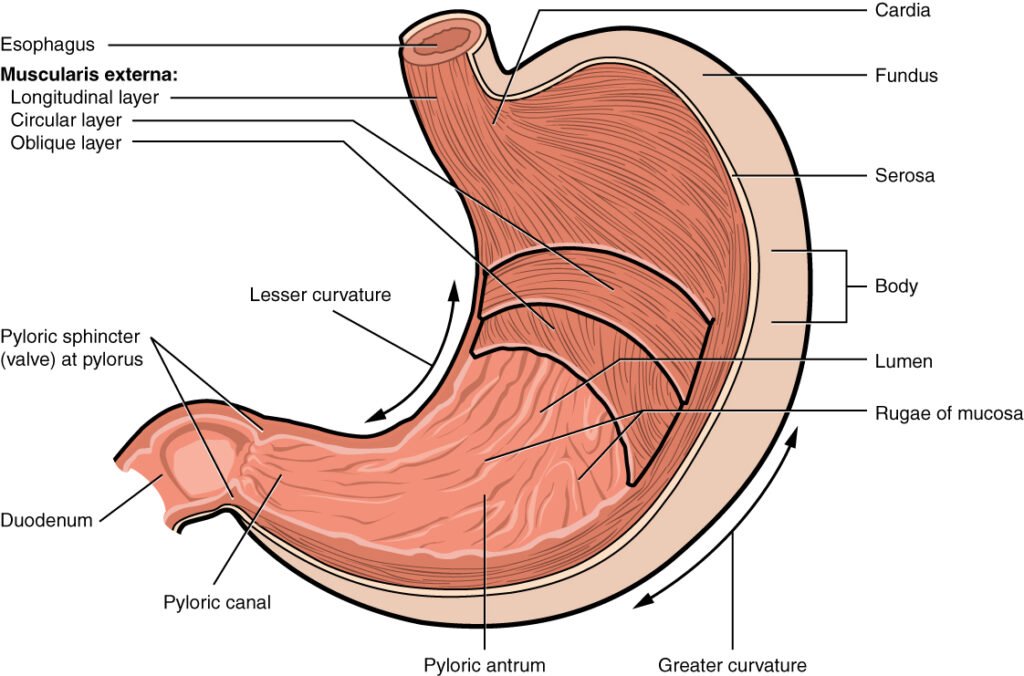
According to IARC GLOBOCAN 2022, stomach cancer is the fifth most common cancer worldwide, with about 970,000 new cases a year, and incidence is highest in East Asia, Eastern Europe and parts of the Middle East. The most important risk factor is infection with Helicobacter pylori, a bacterium that causes long-term inflammation of the stomach lining (atrophic gastritis) and cell changes (intestinal metaplasia) that prepare the ground for cancer. Eradicating the infection with antibiotics lowers the risk.
Smoking, a diet high in salted, smoked and pickled food, low intake of fruit and vegetables, obesity and previous stomach surgery are further risk factors. A family history of stomach cancer, especially diffuse-type cancer at a young age, raises the possibility of an inherited CDH1 mutation; Lynch syndrome and familial polyposis also increase the risk. Anyone with weight loss, difficulty swallowing, vomiting of blood or black stools should see a doctor whatever their age.
Diagnosis and Staging
Stomach cancer is diagnosed by pathological examination of biopsies taken at upper endoscopy. The pathologist reports the type (intestinal or diffuse, including signet-ring cell) and grade. Staging uses CT of the chest and abdomen, endoscopic ultrasound to measure the depth of the tumour in the stomach wall and, where needed, PET-CT. For tumours of stage 2 or higher that are heading for surgery, a staging laparoscopy with peritoneal washings is performed to look for small deposits on the peritoneum; peritoneal disease that CT cannot see changes the whole plan.
The stage follows the TNM system, combining the depth of the tumour (T), the number of involved lymph nodes (N) and distant metastasis (M). HER2, PD-L1, MSI/MMR and claudin 18.2 are tested on the same biopsy tissue, and these results drive drug selection in metastatic disease. Treatment is selected by the treating oncologist on the basis of stage, pathology and molecular findings, and surgical decisions are taken jointly with a gastrointestinal surgeon.
| Stage | Definition | Usual approach |
|---|---|---|
| Stage 0 and 1A | Tumour limited to the mucosa or submucosa; no lymph node involvement | Endoscopic submucosal dissection for suitable tumours; otherwise surgery; no further treatment |
| Stage 1B, 2 and 3 | Tumour has reached the muscle layer or beyond and/or regional lymph nodes are involved | Four cycles of FLOT before surgery, gastrectomy with D2 lymph node dissection, four cycles of FLOT afterwards; in a small stage 1B tumour with no nodal involvement, surgery first is also an option and the choice is made at the tumour board |
| Stage 4 (metastatic) | Spread to the peritoneum, liver, distant lymph nodes or other organs, including positive peritoneal washings | Chemotherapy with immunotherapy, trastuzumab or zolbetuximab according to biomarkers; stent, radiotherapy or surgery for symptom control |
Assessment from Abroad
Endoscopy and pathology reports, CT images in DICOM format and any biomarker results already available can be reviewed before a patient travels. If HER2, PD-L1 CPS, MSI or claudin 18.2 have not been tested, the review says so, and these tests can be run on biopsy blocks or unstained slides brought from the home hospital; results are usually ready within 10 to 14 working days. The sequence of steps is described on the treatment pathway page.
Chemotherapy Before and After Surgery
For resectable stage 1B to 3 stomach cancer, the standard treatment is perioperative chemotherapy with FLOT, given before and after the operation. The FLOT4 trial showed that four cycles of FLOT, surgery and four further cycles gave longer disease-free time than the previous three-drug standard, and ESMO and NCCN guidelines recommend this sequence as the first choice for fit patients. Chemotherapy before surgery shrinks the tumour, controls microscopic spread early and shows in the surgical specimen how sensitive the tumour is to the drugs. Perioperative FLOT is the standard in Türkiye as it is in Europe.
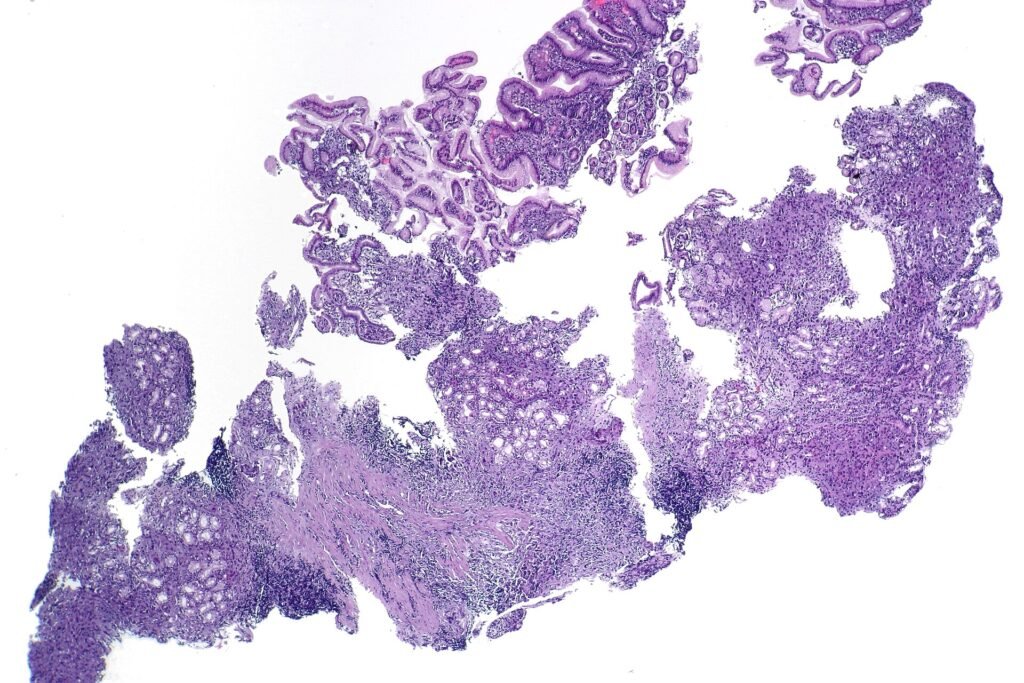
FLOT (5-fluorouracil, folinic acid, oxaliplatin and docetaxel) is given intravenously every two weeks. The operation follows about four to six weeks after the last preoperative cycle, and the remaining four cycles are completed once the patient has recovered. Patients whose fitness or age does not allow FLOT receive a two-drug regimen such as oxaliplatin with capecitabine. Patients with stage 2 or 3 disease who had surgery without preoperative treatment receive chemotherapy or chemoradiotherapy afterwards. The general principles of chemotherapy are explained on a separate page.
Nutrition after gastrectomy is part of the treatment: small frequent meals, fluids taken separately from food, a protein-rich diet and dietitian follow-up limit weight loss. After total gastrectomy, vitamin B12 is given by injection for life, and iron, calcium and vitamin D are measured regularly. International patients sometimes have chemotherapy in Izmir and surgery at home, or the reverse; this is feasible when the two teams agree the sequence in advance, the pathology and imaging are shared and the timing between the last cycle and the operation is respected. A dietitian's plan in English travels with the patient.
Important: The information on this page describes general principles. It does not replace a consultation or an individual treatment plan. Licensing and access to specific drugs differ between countries and are discussed at the consultation as they stand on 21 September 2026.
HER2-positive Gastric Cancer
HER2-positive gastric cancer is the subtype in which tumour cells carry an excess of the HER2 protein on their surface; it accounts for about 15 to 20 per cent of metastatic stomach cancers. HER2 status is measured on the biopsy by immunohistochemistry (IHC), and the result falls into one of three groups. Because HER2 is distributed unevenly within gastric tumours, several biopsy fragments are examined, and in patients who had preoperative treatment the test can be repeated on the surgical specimen.
- IHC 3+
- Strong, complete or basolateral staining in more than 10 per cent of tumour cells. The tumour is HER2-positive and no further test is needed.
- IHC 2+
- Moderate staining; the result is equivocal, so in situ hybridisation (ISH) measures the gene copy number. ISH-positive means HER2-positive; ISH-negative means HER2-negative.
- IHC 0 and 1+
- No or weak staining. The tumour is HER2-negative and trastuzumab is not given. The HER2-low concept used in breast cancer does not change treatment decisions in gastric cancer as of 21 September 2026.
In metastatic HER2-positive disease, first-line treatment has been chemotherapy (a fluoropyrimidine with a platinum drug) plus trastuzumab since the ToGA trial; according to KEYNOTE-811, pembrolizumab is added for patients with a PD-L1 CPS of 1 or higher. Zanidatamab, an antibody that binds HER2 at two different sites, was studied in this first-line setting in the HERIZON-GEA-01 phase 3 trial. Marketing authorisation and reimbursement change over time and differ by country; the position that applies to a given patient in Türkiye is checked at the consultation. The principles of targeted therapy are explained on a separate page.
When the disease progresses, second-line trastuzumab deruxtecan (chemotherapy attached to a HER2 antibody, an antibody-drug conjugate) gave a higher response rate than standard chemotherapy in the DESTINY-Gastric01 trial. Its most important side effect is inflammation of the lungs (pneumonitis), so a new cough or breathlessness is reported the same day. Trastuzumab can weaken the heart muscle; an echocardiogram is done before treatment and every three months. Adding trastuzumab to FLOT in resectable HER2-positive disease is under investigation and not standard.
Immunotherapy
Immunotherapy with PD-1 inhibitors (nivolumab, pembrolizumab) is added to first-line chemotherapy in metastatic stomach cancer according to biomarker results. PD-L1 in gastric cancer is reported as the CPS (combined positive score), which counts staining on both tumour and immune cells. In CheckMate 649, adding nivolumab to chemotherapy prolonged disease control at CPS 5 and above; in KEYNOTE-859, adding pembrolizumab did so at CPS 1 and above. ESMO and NCCN guidelines note that the benefit is smaller between CPS 1 and 4.
MSI-high (microsatellite instability-high) or MMR-deficient stomach cancers make up about 5 to 8 per cent of cases. In these tumours immunotherapy comes first regardless of PD-L1 and can be used without chemotherapy in advanced disease. Immunotherapy before surgery for resectable MSI-high tumours gave high complete response rates in phase 2 trials; it is not yet standard and is considered in selected patients. The side effects and monitoring of immunotherapy are described on a separate page.
Claudin 18.2 is a protein on the surface of stomach cells that is found at high levels in about 38 per cent of metastatic gastric cancers. In the SPOTLIGHT and GLOW trials, adding zolbetuximab to chemotherapy prolonged disease control in HER2-negative, claudin 18.2-positive patients; its most common side effect is nausea and vomiting during the infusion, which is prevented by slowing the infusion. When a tumour is both claudin 18.2-positive and PD-L1-high, the order of zolbetuximab and immunotherapy is decided individually. In later lines, paclitaxel with ramucirumab (RAINBOW trial) and trifluridine-tipiracil are used. Nivolumab, pembrolizumab, trastuzumab and ramucirumab are in clinical use in Türkiye; the status of zolbetuximab and zanidatamab is confirmed at the consultation.
Genomic Assessment
Four biomarkers on the biopsy are mandatory for choosing treatment in stomach cancer: HER2, PD-L1 CPS, MSI/MMR and claudin 18.2; Epstein-Barr virus (EBV) status helps to predict response to immunotherapy. These tests describe features of the tumour tissue (somatic features) and are ordered together at diagnosis. Comprehensive genomic profiling (a broad tumour genetic test) additionally screens for rarer targets such as FGFR2b, NTRK and BRAF and is used when standard lines are exhausted or a clinical trial is being considered; the process is explained on the comprehensive genomic profiling page.
| Biomarker | Frequency (metastatic) | Effect on treatment |
|---|---|---|
| HER2-positive (IHC 3+, or IHC 2+ and ISH-positive) | 15 to 20 per cent | Chemotherapy with trastuzumab; pembrolizumab added at CPS 1 and above; trastuzumab deruxtecan in second line |
| PD-L1 CPS | CPS 1 and above about 80 per cent; CPS 5 and above about 60 per cent | Nivolumab with chemotherapy at CPS 5 and above; pembrolizumab at CPS 1 and above; immunotherapy not recommended below CPS 1 |
| MSI-high / MMR-deficient | 5 to 8 per cent | Immunotherapy first regardless of PD-L1; germline testing for Lynch syndrome |
| Claudin 18.2-positive (strong staining in 75 per cent of cells or more) | About 38 per cent | Zolbetuximab with chemotherapy in HER2-negative tumours |
| EBV-positive | About 5 to 10 per cent | High response to immunotherapy; not a treatment-defining marker on its own |
Hereditary diffuse gastric cancer is caused by an inherited (germline) mutation in the CDH1 gene and is investigated in people with diffuse-type stomach cancer at a young age, more than one stomach cancer in the family, or a combination of stomach and lobular breast cancer in relatives. In carriers, risk-reducing gastrectomy and screening of relatives are planned with genetic counselling; the assessment is described on the hereditary cancer risk assessment page. Lynch syndrome and familial polyposis also raise the risk of stomach cancer. A test result does not always change treatment, but in metastatic stomach cancer first-line treatment is not chosen before the four biomarker results are known.
Stomach cancer that has spread to the peritoneum is a special situation: fluid in the abdomen, bowel obstruction and difficulty eating dominate, and treatment combines chemotherapy with symptom control. In limited peritoneal disease, cytoreductive surgery with heated intraperitoneal chemotherapy (HIPEC) is considered only in selected patients and within a research framework. The other cancers of the digestive tract are described on the gastrointestinal cancers page.
Frequently Asked Questions
How long does stomach cancer treatment take?
The duration depends on the stage. Early stomach cancer removed endoscopically or surgically is treated within weeks. In stage 2 and 3 disease, four cycles of FLOT before surgery (about two months), the operation and recovery, and four cycles afterwards add up to roughly six months. In metastatic disease, chemotherapy with immunotherapy or targeted therapy continues for as long as the disease is controlled and side effects are acceptable; immunotherapy is usually limited to two years. The timeline varies from person to person according to response.
What is FLOT chemotherapy?
FLOT is a four-drug chemotherapy regimen used before and after surgery for stomach cancer: 5-fluorouracil, folinic acid, oxaliplatin and docetaxel. It is given intravenously every two weeks, four cycles before the operation and four after. In the FLOT4 trial it produced more complete responses and longer disease control than the previous three-drug standard. The most common side effects are low blood counts, diarrhoea, tiredness, nausea and numbness in the hands and feet; blood counts are checked before each cycle and doses adjusted when needed.
How is HER2-positive gastric cancer treated?
First-line treatment in metastatic HER2-positive gastric cancer is chemotherapy (a fluoropyrimidine with a platinum drug) plus trastuzumab; pembrolizumab is added when the PD-L1 CPS is 1 or higher. Zanidatamab, an antibody that binds HER2 at two sites, was studied in this setting in the HERIZON-GEA-01 phase 3 trial. Trastuzumab can affect heart function, so an echocardiogram is done before treatment and every three months. Licensing and reimbursement change over time and differ by country; the position that applies in Türkiye is checked at the consultation.
Who receives immunotherapy?
Immunotherapy in metastatic stomach cancer is given according to biomarker results. Patients with a PD-L1 CPS of 1 or higher receive nivolumab or pembrolizumab with first-line chemotherapy, and the benefit is clearer at CPS 5 and above. In MSI-high tumours, immunotherapy comes first regardless of PD-L1 and can be used without chemotherapy. In PD-L1-negative, microsatellite-stable tumours the contribution of immunotherapy is limited and it is generally not recommended. Immunotherapy before surgery for resectable MSI-high tumours is still under investigation.
How do I eat after gastrectomy?
After removal of all or part of the stomach, meals become small and frequent, six to eight a day, with fluids taken between rather than with meals and sugary foods limited. This pattern reduces the palpitations, sweating and diarrhoea after eating known as dumping syndrome. After total gastrectomy vitamin B12 can no longer be absorbed and is given by injection every three months for life; iron, calcium and vitamin D are checked yearly. A dietitian follows the patient through chemotherapy and afterwards to prevent weight loss.
How is recurrence monitored?
After surgery for stomach cancer, follow-up consists of a consultation and blood tests every three to six months for two years, then every six to 12 months for three more years. CT is usually done every six to 12 months for the first three years, as ESMO and NCCN guidelines advise. Endoscopy checks the remaining stomach after partial gastrectomy. Nutrition, weight and B12 are reviewed at every visit, and abdominal pain, difficulty swallowing or weight loss should be reported without waiting for the next appointment.
Related Pages
Gastrointestinal Cancers
Open the Page
Chemotherapy
Open the Page
Targeted Therapy
Open the Page
Immunotherapy
Open the Page
Comprehensive Genomic Profiling
Open the Page
Treatment Pathway
Open the Page
Hereditary Cancer Risk Assessment
Open the Page
International Patients
Open the PageSources and Guidelines
- Lordick F et al. Gastric cancer: ESMO Clinical Practice Guideline for diagnosis, treatment and follow-up. Ann Oncol 2022;33(10):1005-1020. Link
- National Comprehensive Cancer Network. NCCN Clinical Practice Guidelines in Oncology: Gastric Cancer. Link
- Al-Batran SE et al. Perioperative chemotherapy with FLOT versus ECF/ECX for locally advanced, resectable gastric or gastro-oesophageal junction adenocarcinoma (FLOT4). Lancet 2019;393(10184):1948-1957. Link
- Bang YJ et al. Trastuzumab in combination with chemotherapy versus chemotherapy alone for HER2-positive advanced gastric or gastro-oesophageal junction cancer (ToGA). Lancet 2010;376(9742):687-697. Link
- Janjigian YY et al. Pembrolizumab plus trastuzumab and chemotherapy for HER2-positive gastric or gastro-oesophageal junction adenocarcinoma (KEYNOTE-811). Lancet 2023;402(10418):2197-2208. Link
- Janjigian YY et al. First-line nivolumab plus chemotherapy versus chemotherapy alone for advanced gastric, gastro-oesophageal junction, and oesophageal adenocarcinoma (CheckMate 649). Lancet 2021;398(10294):27-40. Link
- Rha SY et al. Pembrolizumab plus chemotherapy versus placebo plus chemotherapy for HER2-negative advanced gastric cancer (KEYNOTE-859). Lancet Oncol 2023;24(11):1181-1195. Link
- Shitara K et al. Zolbetuximab plus mFOLFOX6 in patients with CLDN18.2-positive, HER2-negative, untreated, locally advanced unresectable or metastatic gastric or gastro-oesophageal junction adenocarcinoma (SPOTLIGHT). Lancet 2023;401(10389):1655-1668. Link
- Shitara K et al. Trastuzumab deruxtecan in previously treated HER2-positive gastric cancer (DESTINY-Gastric01). N Engl J Med 2020;382:2419-2430. Link
- Wilke H et al. Ramucirumab plus paclitaxel versus placebo plus paclitaxel in patients with previously treated advanced gastric or gastro-oesophageal junction adenocarcinoma (RAINBOW). Lancet Oncol 2014;15(11):1224-1235. Link
- U.S. Food and Drug Administration. Oncology (cancer) / hematologic malignancies approval notifications (zanidatamab, zolbetuximab). Link
- International Agency for Research on Cancer (WHO). GLOBOCAN 2022, Global Cancer Observatory. Link
- Cancer Research UK. Stomach cancer: symptoms, stages and treatment. Link