
How Chemotherapy Works
Chemotherapy drugs kill rapidly dividing cells by disrupting the copying of DNA or the internal scaffolding that a cell needs in order to divide. Cancer cells divide more often than healthy cells and are therefore affected more. Healthy tissues that renew quickly, such as the bone marrow, hair follicles and the lining of the mouth and bowel, are affected too, and the common side effects of chemotherapy come from these tissues.
Chemotherapy is given for three purposes depending on the cancer. In early-stage disease it is used after surgery (adjuvant) to destroy cells that may have remained, or before surgery (neoadjuvant) to shrink the tumour, with the aim of eliminating the disease. In metastatic disease the aim is to keep the disease under control, relieve symptoms and protect quality of life. In some cancers it is given at the same time as radiotherapy to increase the effect of the radiation.
Chemotherapy is given as a single drug or as a regimen that combines two or three drugs with different mechanisms; regimens are known by the initials of their drugs, such as AC-T in breast cancer, FOLFOX in colorectal cancer and carboplatin-paclitaxel in lung cancer. The same internationally standardised regimens and doses are used as in Europe and North America. Today chemotherapy is often combined with targeted therapy or immunotherapy; the choice is made by the medical oncologist according to stage, pathology and molecular findings, and the other classes of systemic treatment are summarised on the treatments page.
Flu Vaccination During Chemotherapy
A short film on when the influenza vaccine is recommended for a patient receiving chemotherapy.
Cycle, Course and Session
Chemotherapy is given in repeated periods so that cancer cells are reduced in each period while healthy tissues recover. Three terms describe this schedule and are often confused.
- Cycle
- The drug administration plus the rest period that follows it; in most regimens a cycle is 14, 21 or 28 days. "Four cycles of chemotherapy" means this period repeated four times. The first day of the cycle is counted as day 1, and the timing of side effects is calculated from that day.
- Session (infusion day)
- The day on which the drug is given. Some regimens have one session per cycle; others have sessions on days 1 and 8, or on days 1 to 5. A session lasts between 30 minutes and six hours depending on the drug, and 46- to 48-hour continuous infusions are completed at home with a portable pump.
- Course
- The complete series of cycles planned for one treatment aim, for example six cycles of FOLFOX after colon cancer surgery. In metastatic disease, when one regimen stops working, the next regimen is called the second line, the one after that the third line.
- Dose-dense schedule
- The same drugs given every 14 days instead of every 21, supported by an injection that stimulates the bone marrow (G-CSF); it is standard in some breast cancer regimens.
Timing the Flu Vaccine
When in the cycle the vaccine is recommended, and how that relates to the recovery of immune cells.
Routes and Port Catheters
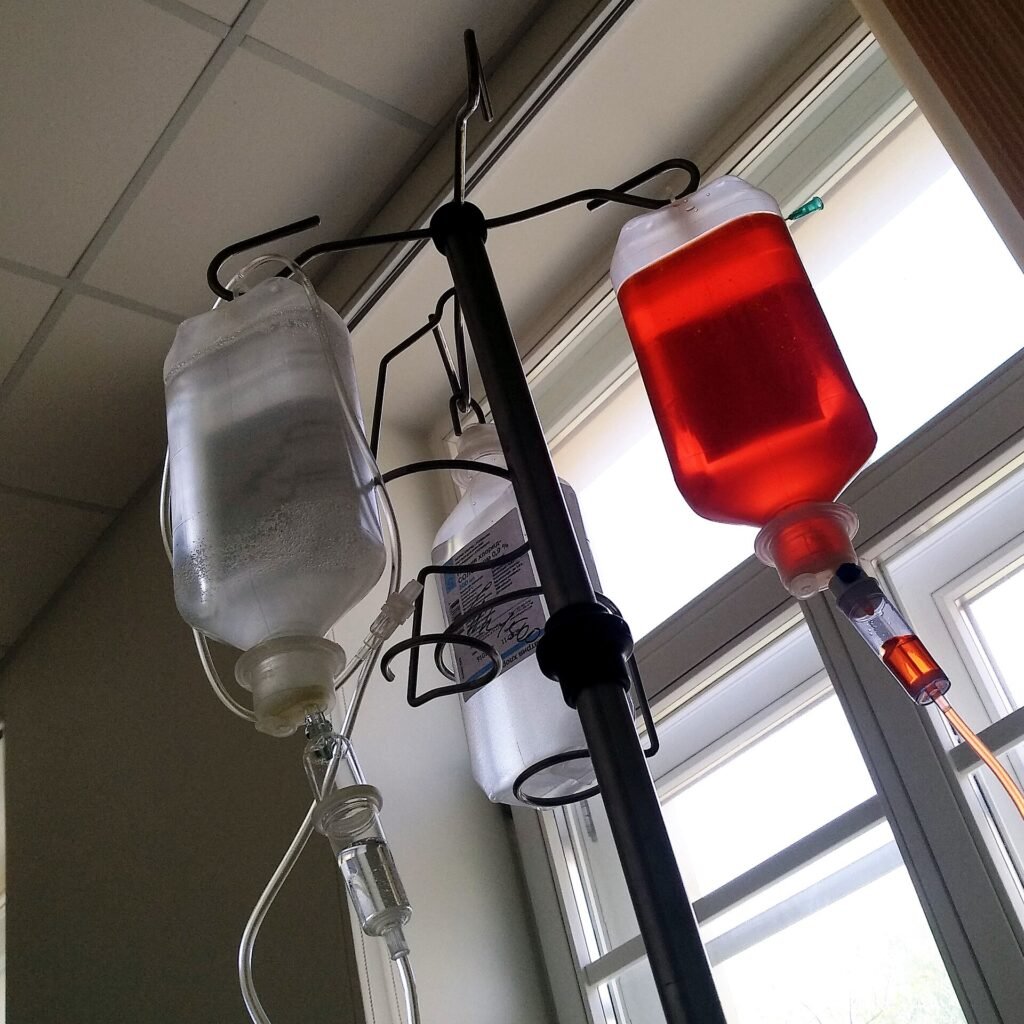
Chemotherapy is most often given into a vein (intravenously); the patient sits in a chair in the day-case unit, the drug is given by drip or by syringe, and the patient goes home the same day. Before each session blood counts, kidney and liver tests are checked; if the values are not adequate the session is postponed by a week or the dose is reduced. Anti-sickness and anti-allergy medicines are given before the infusion. A typical infusion day, including the blood test and pharmacy preparation, takes between two and six hours.
Oral chemotherapy drugs (capecitabine, temozolomide, vinorelbine, cyclophosphamide) are taken as tablets at home on set days and at set times; they follow the same principles as the intravenous drugs and can cause the same side effects. In particular situations chemotherapy is given into the abdominal cavity (intraperitoneal, in ovarian cancer), into the spinal fluid (intrathecal) or into the bladder.
A port is a permanent venous access device consisting of a small reservoir under the skin of the upper chest and a thin tube that runs into a large vein; it is placed in a short procedure under local anaesthetic. It is recommended for long courses, drugs that irritate veins (anthracyclines, vinca alkaloids), 48-hour infusions (FOLFOX, FOLFIRINOX) and patients with poor arm veins. A port placed in Izmir can be used and flushed by any oncology or infusion service at home; it is flushed every four to eight weeks when not in use, does not interfere with swimming, bathing or daily life, and is removed after treatment ends. For short courses a cannula in the arm or a PICC line may be sufficient.
How Many Cycles
The number of cycles is defined in the guidelines by the cancer type, the stage and the aim of treatment; in adjuvant and neoadjuvant treatment the number is known from the start, whereas in metastatic disease it is decided by the response and the side effects. The examples below reflect the general principles of the ESMO and NCCN guidelines; the individual plan is discussed at the consultation.
In breast cancer adjuvant or neoadjuvant chemotherapy is mostly four to eight cycles and is completed in three to six months. In colorectal cancer adjuvant treatment for stage 3 disease lasts three months in low-risk and six months in high-risk patients. In lung cancer four cycles are given around surgery; in metastatic disease four to six cycles are followed by immunotherapy or maintenance alone. In pancreatic cancer six months of adjuvant treatment is recommended after surgery.
In metastatic disease imaging is done every two to three cycles; if the tumour is shrinking or stable and the side effects are tolerable, treatment continues. Some regimens switch to a lighter maintenance phase, and a treatment break may be possible. The total duration varies from person to person, and when the disease progresses the next line is started. For a patient who lives abroad, the cycles of a course can be divided between Izmir and the home hospital, provided the same regimen is available there; the plan is then written cycle by cycle with the doses, the blood-test schedule and the criteria for delaying a cycle, and the steps of the process are described on the treatment pathway page.
Tests Are Fine but the Fatigue Continues
Fatigue does not always show in blood tests; the video covers the cellular reasons behind it after chemotherapy and during targeted treatment.
Side Effects and Timing
The side effects of chemotherapy depend on the drug, the dose and the individual; not every patient has every side effect, and most settle at the end of each cycle. Knowing when a side effect is expected makes it easier to prevent it and to recognise an emergency. Nausea and vomiting are now prevented in the great majority of patients with preventive medicines (5-HT3 antagonists, NK1 antagonists, dexamethasone, olanzapine); the MASCC and ESMO antiemetic guidelines define the combination according to the nausea risk of the regimen.
| Side effect | Onset | Duration | Prevention and management |
|---|---|---|---|
| Nausea and vomiting | First 24 hours (acute) or days 2 to 5 (delayed) | A few days | Preventive medicines before the session; extra medicines for home; small frequent meals |
| Fatigue | First week | Fluctuates through the cycle; builds up over the course | Light walking, regular sleep, checking for anaemia |
| Low blood counts (neutropenia) | Days 7 to 14 | About a week; recovers towards day 21 | G-CSF injection with high-risk regimens; temperature checks; avoiding crowds |
| Mouth soreness (mucositis) | Days 5 to 10 | One to two weeks | Soft toothbrush, salt and bicarbonate mouthwash, pain-relieving gel |
| Hair loss | Weeks 2 to 3 | Regrowth starts 1 to 2 months after the last cycle | Scalp cooling (with suitable regimens); cutting hair short; wig |
| Nerve damage (neuropathy) | Builds up over cycles; with oxaliplatin from day 1 on contact with cold | Months; sometimes permanent | Early reporting, dose reduction, avoiding cold; no proven preventive drug |
| Diarrhoea or constipation | First week | A few days | Loperamide or a laxative; contact the team for more than four loose stools a day |
| Skin and nail changes | After cycle 2 | Resolve after treatment | Moisturiser, sun protection, nail care |
Some side effects are specific to particular drugs and are monitored separately: anthracyclines (doxorubicin, epirubicin) can affect the heart muscle, so an echocardiogram is done before and during treatment; cisplatin affects the kidneys and hearing; bleomycin affects the lungs. Chemotherapy can also affect ovarian and sperm function; in patients who may want children, egg, embryo or sperm freezing is discussed before treatment starts, in line with the 2020 ESMO guideline. Periods may return within months of treatment, and permanent menopause is more common over the age of 40.
Please note: the information on this page describes general principles and does not replace a consultation or an individual treatment plan. Widely repeated claims that chemotherapy "wears the patient out" or "does not work" are not supported by guideline evidence; today its side effects are largely predictable and manageable. Other common questions are collected on the frequently asked questions page.
Can a Limited Response Be Improved
How identifying the genetic change that drives the tumour can alter the plan and the response that can be expected.
Eating During Chemotherapy
The purpose of eating well during chemotherapy is to maintain weight and muscle, ease side effects and reduce the risk of infection; there is no special "cancer diet", and the ESPEN guideline defines adequate energy and protein intake as the first priority. When nausea is present, small frequent meals, cold or lukewarm food with little smell and fluids between meals help. With mouth soreness, soft food that is neither acidic nor spicy is preferred.
In the week when blood counts are low, raw or undercooked meat, fish and eggs, unpasteurised dairy products and unwashed raw fruit and vegetables are avoided. Red meat, sugar and milk are not forbidden; cutting them out entirely leads to loss of weight and protein. Alcohol is not recommended during treatment. Dietary requirements are taken into account in planning when the patient mentions them.
Herbal products, high-dose vitamins and antioxidant supplements, grapefruit juice and St John's wort can change the level of chemotherapy drugs in the blood; these are not used without telling the medical oncologist. No product presented as an "alternative" has evidence in cancer treatment, and none replaces chemotherapy. If weight loss exceeds 5 per cent or eating remains difficult, a dietitian is involved.
When to Contact the Hospital
A temperature of 38 °C or above during chemotherapy, especially between days 7 and 14 of the cycle, is an emergency; white cells are low in this period and an infection can become serious within hours. According to the ESMO guideline on febrile neutropenia, antibiotics are started within the first hour, so the patient goes to an emergency department without delay and states that they are on chemotherapy, rather than taking a fever-reducing tablet and waiting. Shivering, extreme weakness and low blood pressure carry the same warning even without fever. At night and at weekends the hospital emergency department is used; a patient staying in Izmir is given the unit's telephone number and the emergency department address at the first cycle, and a patient who has returned home uses the nearest emergency department with the treatment summary.
Go to an emergency department without waiting if any of these appear:
- vomiting for more than 24 hours that prevents drinking
- more than four loose stools a day or blood in the stool
- mouth soreness that prevents swallowing
- breathlessness or chest pain
- one-sided swelling and pain in a leg (a sign of a clot)
- widespread bruising or bleeding
- swelling and burning in the arm from a drug leaking outside the vein
- redness over the port
During the infusion, flushing of the face, itching, breathlessness or back pain can be signs of an allergic reaction and are reported to the nurse at once. Flu and pneumonia vaccines can be given during chemotherapy; live vaccines are not. Flying is generally avoided in the week when blood counts are lowest and when there is active nausea, diarrhoea or fever, and long flights carry a higher risk of clots; the timing of a return flight is agreed with the medical oncologist, and general guidance on travelling with cancer is published by Cancer Research UK. The general process for patients from abroad is described on the international patients page.
Frequently Asked Questions
How many cycles of chemotherapy are given?
The number of cycles is set by the cancer type and the aim of treatment. Chemotherapy given before or after surgery is four to eight cycles in most cancers and is completed in three to six months: four to eight cycles in breast cancer, three or six months in colon cancer and four cycles in lung cancer are examples. In metastatic disease chemotherapy continues while it is working and the side effects are tolerable, with imaging every two to three cycles. The number varies from person to person.
When do chemotherapy side effects start?
Side effects appear at different times depending on the drug. Nausea occurs within the first 24 hours (acute) or on days two to five (delayed); preventive medicines largely stop it. Fatigue is most noticeable in the first week. Blood counts fall to their lowest point between days 7 and 14 in most regimens, and fever in this period is an emergency. Hair loss begins in weeks two to three, mouth soreness on days five to ten, and nerve symptoms build up as the cycles accumulate.
What should I avoid eating during chemotherapy?
During chemotherapy, and particularly in the week when blood counts are low, raw or undercooked meat, fish and eggs, unpasteurised milk and cheese, unwashed raw fruit and vegetables and food sold uncovered are avoided because of the risk of infection. Grapefruit and grapefruit juice change the level of some drugs. Herbal products, high-dose vitamins and antioxidant supplements can interact with chemotherapy and are not taken without asking the medical oncologist. Red meat and sugar are not forbidden; the aim is a balanced diet with enough energy and protein.
Is hair loss after chemotherapy permanent?
No; hair loss caused by chemotherapy is temporary in the great majority of patients. It depends on the drug: complete loss is common with anthracycline and taxane regimens, while some regimens cause only thinning or no loss at all. Hair usually falls out two to three weeks after the first cycle and starts to regrow one to two months after the last, sometimes with a different colour or texture at first. Scalp cooling during the infusion reduces loss with some regimens.
What is a port?
A port is a small reservoir placed under the skin of the upper chest, connected to a thin tube that runs into a large vein. It is inserted in a short procedure under local anaesthetic. At each cycle a special needle is placed into the reservoir, which spares the arm veins and prevents the drug leaking into surrounding tissue. It is recommended for long courses, drugs that irritate veins and 48-hour infusions, and when not in use it is flushed every four to eight weeks.
Why is fever an emergency during chemotherapy?
Chemotherapy temporarily suppresses the bone marrow; while the white cell count is low, usually days 7 to 14, the body cannot fight infection. A temperature of 38 °C or above in this period may be the first sign of febrile neutropenia, a condition that can become serious within hours. The ESMO guideline requires antibiotics to be started within the first hour, so the patient goes straight to an emergency department rather than taking a fever-reducing tablet and waiting.
Can I work during chemotherapy?
Most patients can continue to work partly or fully during chemotherapy; this depends on the regimen, the type of work and the severity of side effects. Time off may be needed on the infusion day and the two or three days that follow, and crowded places and work with a high risk of infection are avoided in the week when blood counts are low. Heavy physical work or shift patterns may need a temporary adjustment. A patient who has been given sedating medicines on the infusion day does not drive.
Related Pages
Treatments
Open the Page
Targeted Therapy
Open the Page
Immunotherapy
Open the Page
Breast Cancer
Open the Page
Lung Cancer
Open the Page
Colorectal Cancer
Open the Page
Treatment Pathway
Open the Page
Frequently Asked Questions
Open the PageSources and Guidelines
- Roila F et al. 2016 MASCC and ESMO guideline update for the prevention of chemotherapy- and radiotherapy-induced nausea and vomiting. Ann Oncol 2016;27(suppl 5):v119-v133. Link
- Klastersky J et al. Management of febrile neutropenia: ESMO Clinical Practice Guidelines. Ann Oncol 2016;27(suppl 5):v111-v118. Link
- Jordan B et al. Systemic anticancer therapy-induced peripheral and central neurotoxicity: ESMO-EONS-EANO Clinical Practice Guidelines. Ann Oncol 2020;31(10):1306-1319. Link
- Lambertini M et al. Fertility preservation and post-treatment pregnancies in post-pubertal cancer patients: ESMO Clinical Practice Guidelines. Ann Oncol 2020;31(12):1664-1678. Link
- National Comprehensive Cancer Network. NCCN Clinical Practice Guidelines in Oncology: Antiemesis. Link
- Multinational Association of Supportive Care in Cancer (MASCC). Antiemetic guidelines. Link
- Muscaritoli M et al. ESPEN practical guideline: clinical nutrition in cancer. Clin Nutr 2021;40(5):2898-2913. Link
- Nangia J et al. Effect of a scalp cooling device on alopecia in women undergoing chemotherapy for breast cancer (SCALP). JAMA 2017;317(6):596-605. Link
- National Cancer Institute. Chemotherapy to Treat Cancer. Link
- Cancer Research UK. Chemotherapy: how it works and side effects. Link
- Cancer Research UK. Travel and cancer. Link