
Aspirin and Cancer: The Short Answer
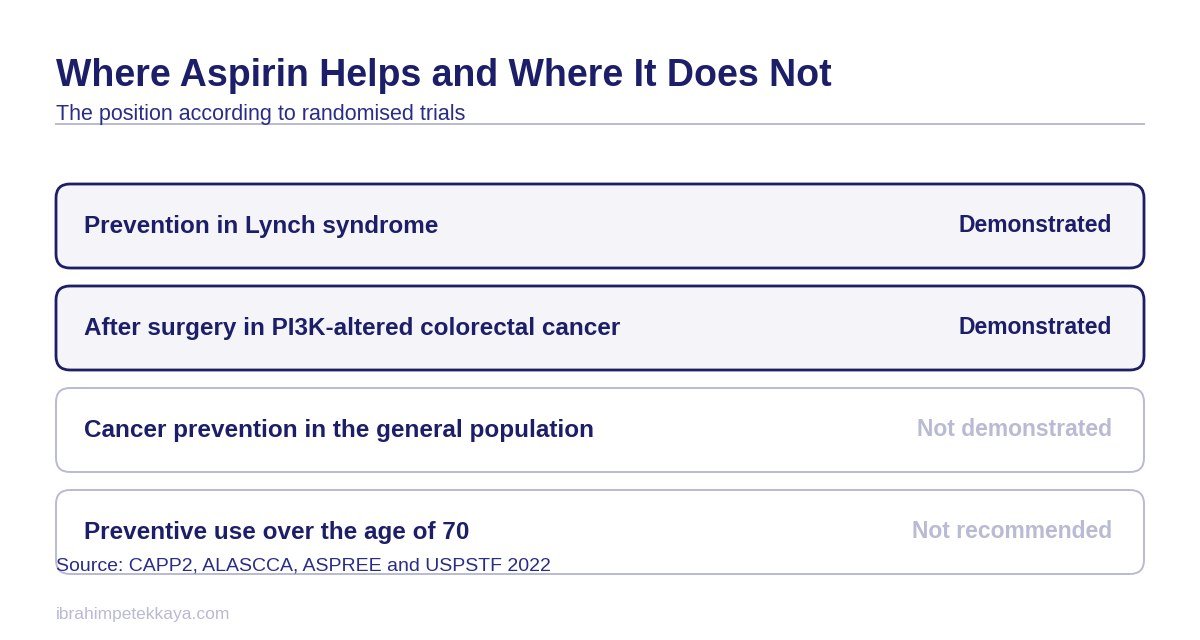
The relationship between aspirin and cancer cannot be summarised in one sentence, because the answer depends on the group of patients: four different situations give four different results.
Important: Nothing in this article is a recommendation to start or stop aspirin. Aspirin carries a risk of bleeding and its use is always a decision for a physician.
The Possible Mechanism Behind Aspirin and Cancer
The proposed mechanism is that aspirin blocks the COX enzymes involved in the inflammatory response. In colorectal cancer this pathway is known to contribute to cell proliferation, and the idea that PI3K-pathway alterations increase sensitivity to aspirin came from there.
The PI3K pathway carries growth and survival signals within the cell, and when it is altered the cell can keep producing a growth signal without an external stimulus. Aspirin is thought to act by suppressing inflammatory signals that intersect with that pathway, although the details are still being worked out and the evidence comes from the trial result, not the mechanism.
A second limb of the mechanism is the platelet. Aspirin suppresses platelet function for a prolonged period, and that suppression also affects how inflammatory signals are carried. Benefit and harm arising from the same effect is what explains why the two cannot be separated in this drug.
The direction of the evidence is therefore read from the trials rather than from the mechanism. Plausible as the mechanism looks, which group of patients sees benefit outweigh harm can only be shown by a trial conducted in that group.
This helps explain why aspirin works in a particular subgroup rather than in every patient. It also shows why the idea of a single preventive drug suitable for everyone does not hold.
Proven in Lynch Syndrome
The strongest evidence comes from Lynch syndrome, an inherited predisposition to colorectal cancer. In CAPP2, which randomised 861 carriers, colorectal cancer occurred less often in those who took aspirin for at least two years.
Ten-year follow-up showed the effect was durable: the risk of colorectal cancer was clearly lower in the aspirin group, and the protection persisted after the drug was stopped. One striking detail is that the effect emerged late; no difference was seen during the treatment period itself.
Lynch syndrome means carrying an inherited fault in a DNA repair gene, which markedly raises the risk of colorectal cancer. This group stands apart in the aspirin and cancer debate because the risk is high and the absolute gain from prevention is far larger than in the general population. That gain cannot be reached in someone at low risk, while the bleeding risk stays the same.
Part of why guidelines keep the recommendation in this group is the structure of surveillance. A regular colonoscopy programme is already in place in Lynch syndrome, and aspirin is weighed alongside it rather than as a substitute for it.
This is the strongest randomised evidence that aspirin prevents cancer in any population, and it underpins the support aspirin retains in guidelines. How Lynch syndrome is recognised is described on the hereditary cancer risk assessment page.
The PIK3CA Finding and What Followed
An observational study published in 2012 reported a striking result: among patients diagnosed with colorectal cancer, those whose tumour carried a PIK3CA mutation had markedly better cancer-specific survival if they used aspirin. In tumours without the mutation there was no association at all.
That finding remained a hypothesis for more than a decade; it was observational and needed testing. The test came from ALASCCA, a randomised trial in the Nordic countries: patients who had undergone surgery for colon or rectal cancer were screened for alterations in the PI3K pathway, and 626 of them were randomised to low-dose aspirin or placebo for three years.
The result was positive. In the group carrying a PIK3CA mutation, three-year recurrence was 7.7 per cent against 14.1 per cent. In a second group carrying other alterations in the same pathway, recurrence was 7.7 per cent against 16.8 per cent. Serious adverse events were more frequent in the aspirin arm.
Important: This trial was carried out after surgery and in a biomarker-selected group. It does not support taking aspirin for cancer prevention in the general population.
Send Your Reports for Assessment
Share your pathology, imaging and blood results on WhatsApp, or send them by email. Documents are reviewed before the consultation.
What This Trial Did Not Show
The result reported here is a three-year recurrence endpoint, not a survival figure. A fall in recurrence is a clinically meaningful outcome, but how far it translates into length of life cannot be read from these numbers, and whether the picture holds with longer follow-up is an open question.
The limits of the population are equally clear. The trial enrolled patients who had undergone surgery and in whom a PI3K-pathway alteration had been found, and no benefit has been demonstrated in tumours without an alteration in that pathway. That the finding has not yet entered the guidelines matters for the same reason: the decision to apply it is taken at board level.
The adverse-event side is part of the result. Serious adverse events being more frequent in the aspirin arm shows the benefit is not free of cost, and both columns are read together. What a PIK3CA alteration means in other tumours is covered in PIK3CA mutation.
Not Proven in the General Population
Pooled analyses of older trials suggested that daily aspirin reduced deaths from cancer over the long term. Those trials were conducted in middle-aged populations, and the effect appeared only in deaths after five years.
That optimistic picture changed with ASPREE, which randomised more than 19,000 people aged over 70. Aspirin did not reduce cancer incidence in this group, cancer mortality was higher among those taking it, and advanced-stage disease at diagnosis was more common. The investigators suggested aspirin may have an adverse effect on the later stages of cancer in older adults; this is a signal from a secondary analysis, not established causation.
Following these results the United States preventive services body changed its position. Its 2016 statement recommended aspirin for the primary prevention of both cardiovascular disease and colorectal cancer; the 2022 update removed colorectal cancer entirely, judging the evidence that aspirin reduces its incidence or mortality to be inadequate, and recommended against starting preventive aspirin over the age of 60.
The Bleeding Risk
This is the other half of the aspirin debate and it is often skipped. In ASPREE, major haemorrhage occurred at 8.6 events per 1,000 person-years in the aspirin group against 6.2 in the placebo group.
Bleeding risk rises with age, so in the age range where the expected cancer benefit falls and the bleeding risk climbs, the balance reverses. That is why guidelines advise against preventive aspirin in older adults.
- Gastrointestinal bleeding is the most common serious side effect.
- The risk of bleeding into the brain also rises.
- Risks combine in people taking anticoagulants.
- A stomach-protecting drug reduces but does not remove the risk.
- Whether to stop aspirin before surgery is assessed separately.
- Signs of bleeding — black stools, coffee-ground vomit, unexplained bruising — should be reported without delay.

What Counts as Evidence in Reducing Cancer Risk
This post explains the level of evidence behind preventive approaches and why the difference between observational and randomised data matters.
Common Misunderstandings
The first misunderstanding is that aspirin is a treatment. Everything described here falls under prevention or reducing recurrence; aspirin is not used to shrink an existing tumour and does not replace oncological treatment.
The second is that a drug sold without a prescription must be harmless. The bleeding risk of aspirin has been measured in randomised data and rises with age. Being available over the counter does not mean being free of risk.
The third is reading a relative figure as a personal gain. A relative reduction reported in one group gives a very different absolute gain once a person’s own risk is counted: a gain that matters in a high-risk group shrinks beyond measurement in someone at low risk, while the bleeding risk stays the same.
The fourth is treating the delayed protection as an accounting error. In the ten-year follow-up the effect appeared after the treatment period rather than during it, which led to the interpretation that aspirin acts on early cell populations. That is an interpretation, not a confirmed mechanism.
What Is Recommended Today
The current position of cancer organisations is that aspirin is not recommended for cancer prevention in the general population, while the recommendation stands in Lynch syndrome. Separately, a recent randomised trial showed that low-dose aspirin reduced recurrence in patients operated on for colorectal cancer whose tumour carries a PI3K-pathway alteration. That finding has not yet entered the guidelines; whether it is applied is decided by a tumour board. The role of diet is covered in diet and colorectal cancer.
- Aspirin use is decided by weighing cardiovascular risk against bleeding risk.
- If Lynch syndrome has been diagnosed, aspirin is discussed separately.
- After colorectal cancer surgery, ask whether PI3K-pathway alterations were tested for.
- If you already take aspirin for your heart, do not stop it on your own.
- Do not start aspirin for cancer prevention on your own initiative.
Physical activity is another subject after surgery where the evidence is strong; how it is handled alongside randomised data is set out in exercise in colon cancer.
This subject is a good example of how an observational finding is put to the test in a randomised trial. Decisions about treatment after surgery are described on the colorectal cancer page.
Frequently Asked Questions
Does aspirin protect against cancer?
Aspirin is not recommended for cancer prevention in the general population, where the evidence was judged inadequate. In Lynch syndrome, a protective effect has been shown in randomised trials.
Does aspirin work in people with a PIK3CA mutation?
In a randomised trial of patients operated on for colorectal cancer with PI3K-pathway alterations, three-year recurrence was markedly lower in the aspirin group.
Is aspirin harmful over the age of 70?
In ASPREE, aspirin did not reduce cancer incidence in people over 70 and cancer mortality was higher, while serious bleeding was more frequent. Starting it for prevention is therefore not recommended.
I take aspirin for my heart — should I stop?
No, not on your own. Aspirin given for cardiovascular disease has a different rationale, and the decision belongs with your physician.
How is the dose decided in Lynch syndrome?
Guidelines do not specify a standard dose or duration. The first trial used a high dose; because of bleeding risk a separate trial (CAPP3) compared doses, and reported that the low dose gave similar protection while serious bleeding occurred only in the high-dose arm. The dose is decided by a physician alone, after weighing bleeding risk; no figure in this article is a dose to act on by yourself.
Does aspirin cause bleeding?
Yes. Randomised data show that low-dose aspirin increases the risk of gastrointestinal and intracranial bleeding, and the risk rises with age.
Should aspirin be started after a colon cancer diagnosis?
Starting aspirin after a colon cancer diagnosis depends on the molecular features of the tumour. No benefit was shown in patients without PI3K-pathway alterations, and the decision is made with a physician.
Related Articles
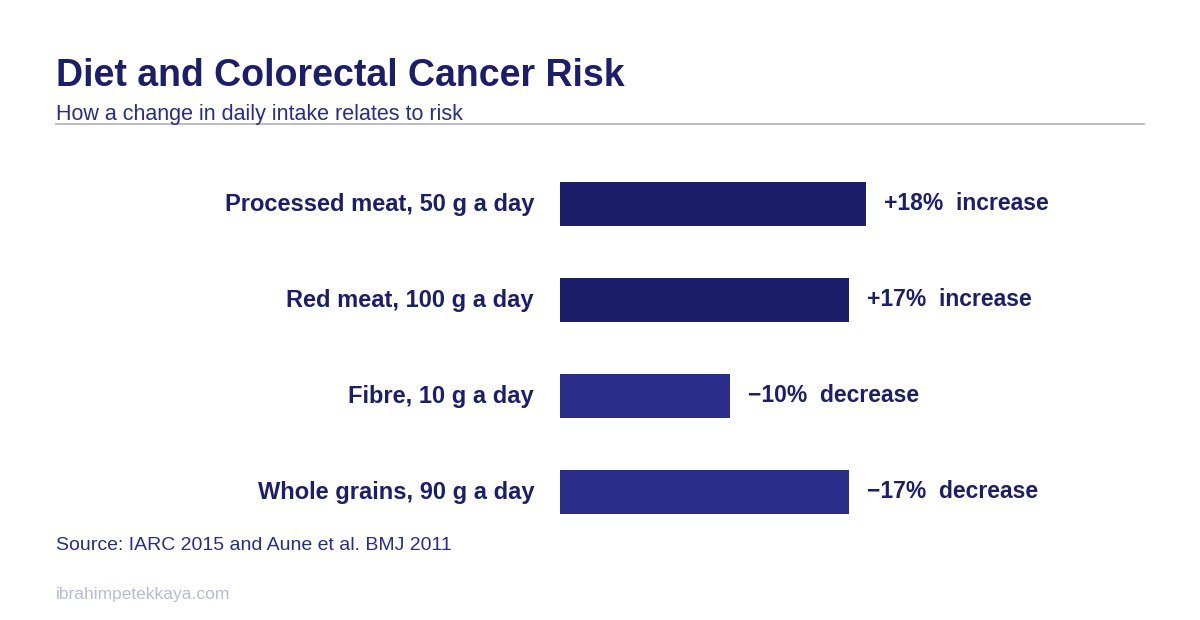
Diet and Colorectal Cancer: Fibre, the Gut Microbiome and the Evidence
Open the Page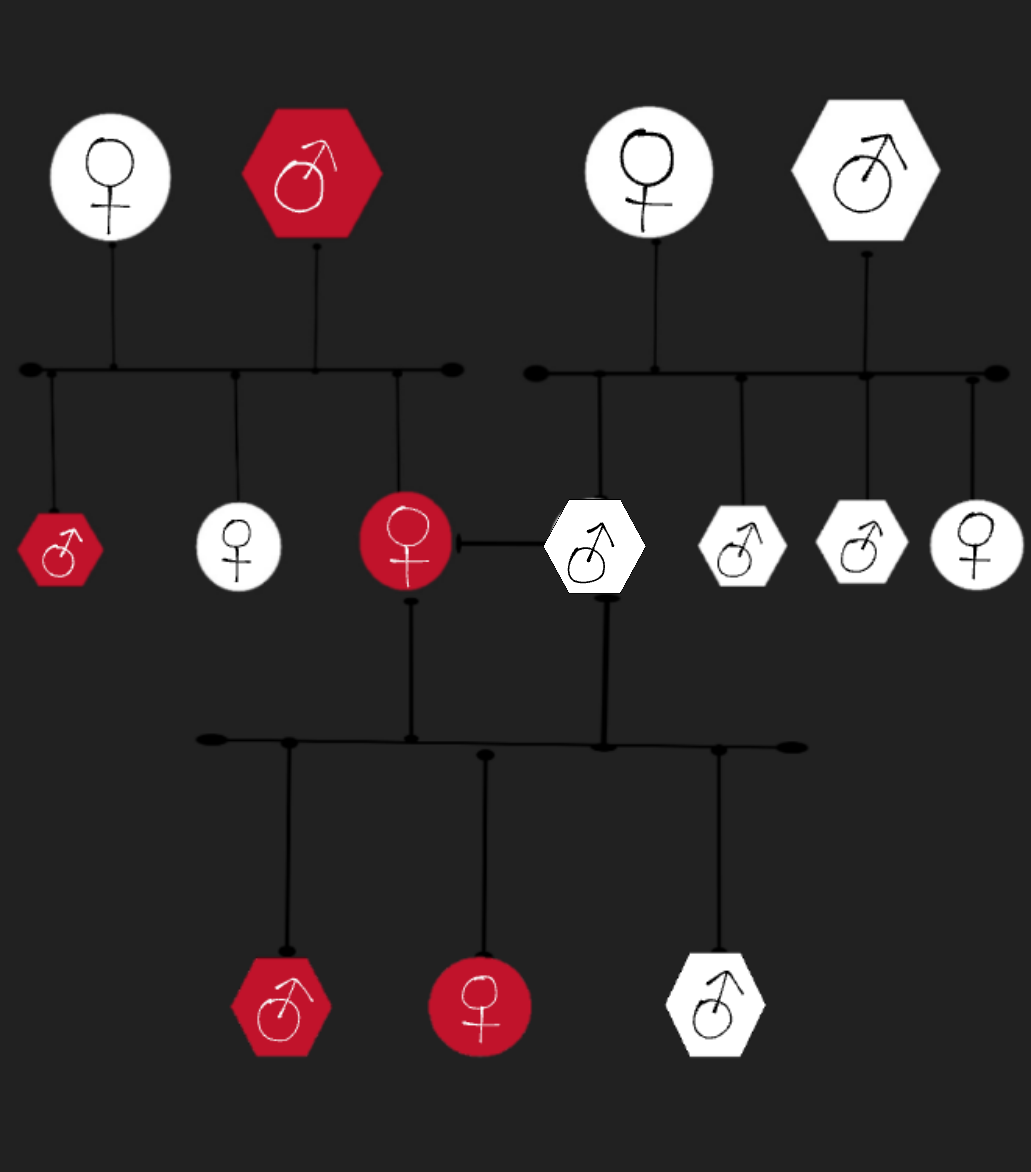
Is Cancer Hereditary?
Open the PageRelated Pages
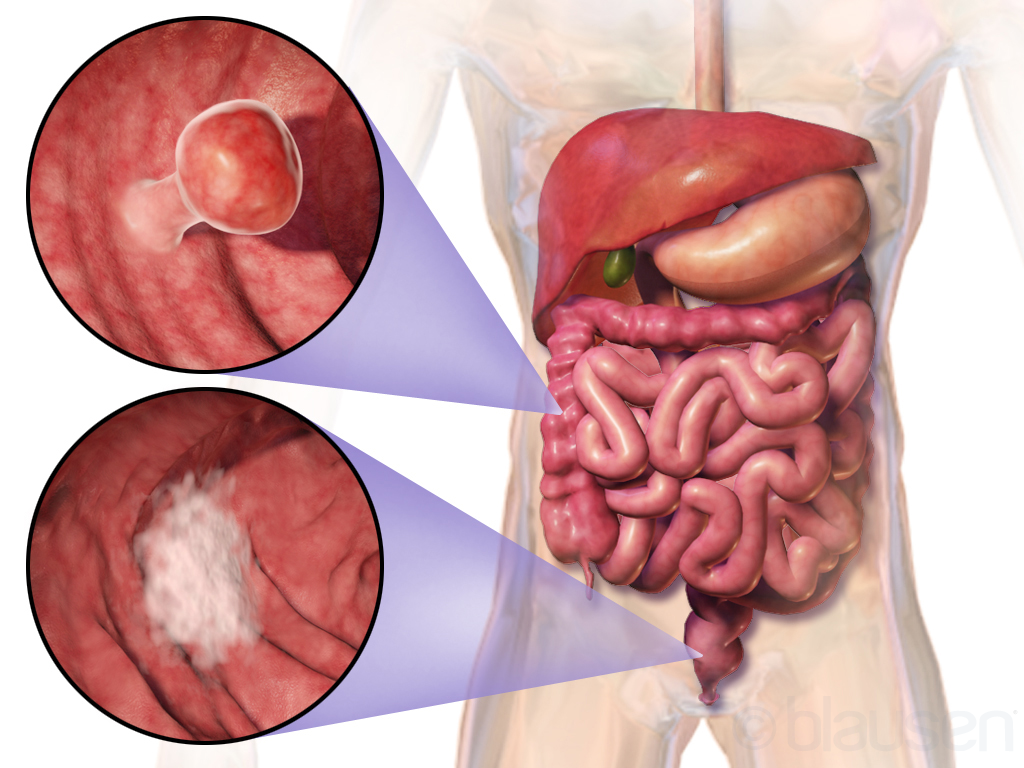
Colorectal Cancer
Open the Page
Hereditary Cancer Risk Assessment
Open the Page
Precision Oncology
Open the Page
Treatment Pathway
Open the PageSources
- Liao X, Lochhead P, Nishihara R et al. Aspirin Use, Tumor PIK3CA Mutation, and Colorectal-Cancer Survival. N Engl J Med 2012;367(17):1596-1606. Link
- Martling A, Hed Myrberg I, Nilbert M et al. Low-Dose Aspirin for PI3K-Altered Localized Colorectal Cancer (ALASCCA). N Engl J Med 2025;393(11):1051-1064. Link
- Burn J, Gerdes AM, Macrae F et al. Long-term effect of aspirin on cancer risk in carriers of hereditary colorectal cancer: an analysis from the CAPP2 randomised controlled trial. Lancet 2011;378(9809):2081-2087. Link
- Burn J, Sheth H, Elliott F et al. Cancer prevention with aspirin in hereditary colorectal cancer (Lynch syndrome), 10-year follow-up: CAPP2. Lancet 2020;395(10240):1855-1863. Link
- Rothwell PM, Fowkes FGR, Belch JFF et al. Effect of daily aspirin on long-term risk of death due to cancer: analysis of individual patient data from randomised trials. Lancet 2011;377(9759):31-41. Link
- McNeil JJ, Gibbs P, Orchard SG et al. Effect of Aspirin on Cancer Incidence and Mortality in Older Adults (ASPREE). J Natl Cancer Inst 2021;113(3):258-265. Link
- McNeil JJ, Wolfe R, Woods RL et al. Effect of Aspirin on Cardiovascular Events and Bleeding in the Healthy Elderly (ASPREE). N Engl J Med 2018;379(16):1509-1518. Link
- Bibbins-Domingo K; U.S. Preventive Services Task Force. Aspirin Use for the Primary Prevention of Cardiovascular Disease and Colorectal Cancer: USPSTF Recommendation Statement. Ann Intern Med 2016;164(12):836-845. Link
- US Preventive Services Task Force. Aspirin Use to Prevent Cardiovascular Disease: US Preventive Services Task Force Recommendation Statement. JAMA 2022;327(16):1577-1584. Link
- Ness RM, Llor X, Abbass MA et al. NCCN Guidelines Insights: Colorectal Cancer Screening, Version 1.2024. J Natl Compr Canc Netw 2024;22(7):438-446. Link
- Burn J, Borthwick GM, Elliott F et al. Aspirin for cancer prevention in individuals with Lynch syndrome: first results from the CaPP3 multicentre, randomised, double-blind, non-inferiority trial. Lancet Gastroenterol Hepatol 2026;11(9):760-774. Link