
Is Cancer Hereditary? The Short Answer
As a rule cancer is not an inherited disease. Most tumours arise from changes that accumulate during cell division and exist only in that person. In roughly 5 to 10 per cent of cases there is an alteration present from birth that can be passed on within a family.
The distinction matters because the two situations lead to different consequences. Acquired changes concern the tumour alone; an inherited alteration also concerns the person’s risk in other organs and the risk carried by first-degree relatives.
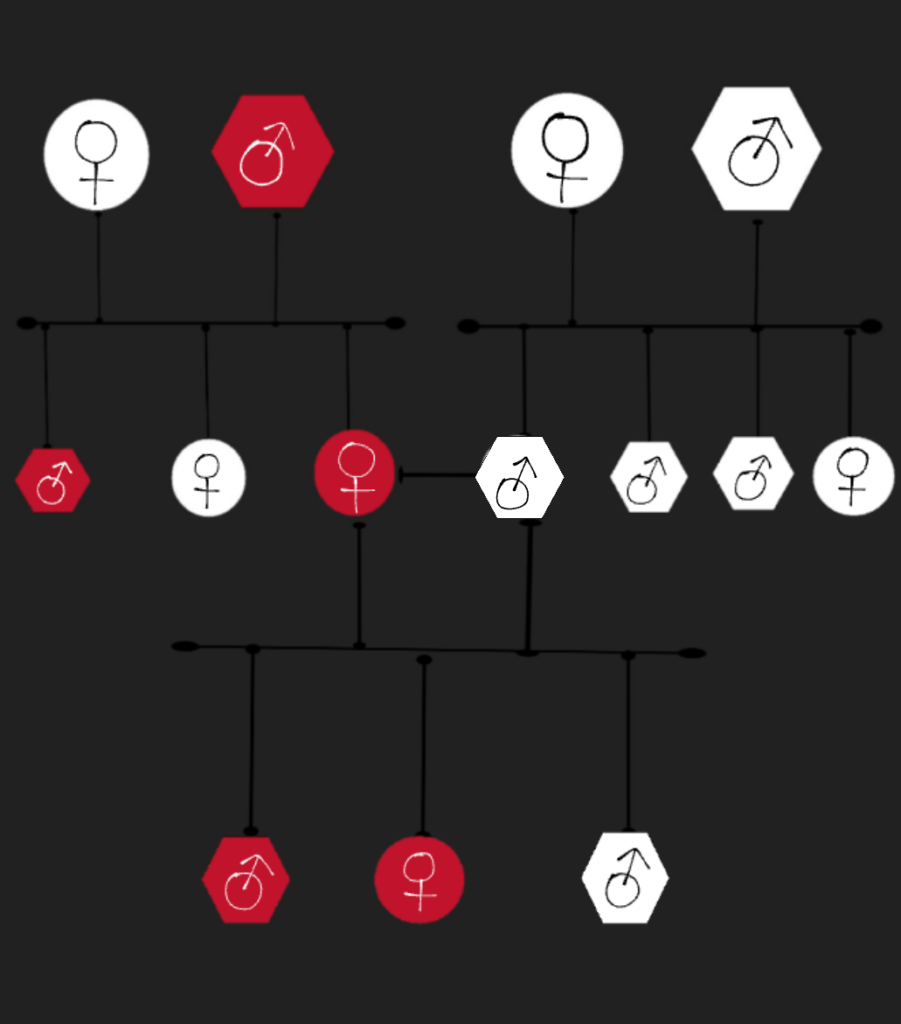
A common misreading is to treat any cancer in the family as evidence of inherited predisposition. Cancer is a common group of diseases, and two diagnoses in one family are often coincidence. Suspicion requires the pattern to meet defined criteria.
Carrying a predisposition does not mean developing cancer. What it means is a higher than average risk for particular tumour types — risk that can be managed with surveillance and, in some situations, preventive measures.
What Inherited Predisposition Does in the Cell
In an inherited predisposition the person carries a faulty copy of the gene concerned in every cell of the body. As long as the second copy is intact the cell works normally; a tumour requires that intact copy to be lost in the same cell as well. In someone without a predisposition the same outcome needs two separate changes to accumulate in one cell, a condition that lowers the probability considerably.
That difference explains the clinical picture. A younger age at diagnosis, involvement of both sides of the same organ and more than one primary tumour in the same person all follow from every cell starting one step ahead. It is why the criteria for suspicion are built around those features.
A large share of predisposition genes work in DNA repair. When repair capacity falls, the cell struggles to correct the damage that arises during division and genomic instability increases. The same deficiency also creates an opening in treatment: a cell with one weak repair route becomes more sensitive than a normal cell to a drug that closes the remaining route. The use of PARP inhibitors in tumours carrying a BRCA alteration rests on that logic.
When Inherited Predisposition Is Suspected
Suspicion comes from the pattern in the family tree. Assessment is recommended when any of the following is present.
- Several relatives with the same or related cancers.
- A diagnosis at a young age, such as breast cancer under 50.
- More than one primary tumour in the same person.
- Bilateral involvement, in both breasts or both kidneys.
- Specific diagnoses such as male breast cancer, ovarian cancer or pancreatic cancer.
- A known gene alteration already identified in the family.
These criteria are defined in the NCCN and ESMO guidelines. Assessment begins by drawing a three-generation pedigree, recording ages at diagnosis and tumour types. The process is described on the hereditary cancer risk assessment page.
Three errors recur when a pedigree is read. The first is the assumption that predisposition comes only from the mother; the genes linked to breast and ovarian cancer pass down the father’s side with equal probability. The second is that no pattern shows in small families, or where male relatives predominate or women died young; a quiet history does not show the absence of predisposition. The third is to answer the question is cancer hereditary by looking only for the same tumour type repeating, when the genes involved often affect several organs together.

Inherited Testing Versus Tumour Testing
Two different investigations sit behind the phrase genetic testing: one looks for inherited changes that can be passed on, the other reads the DNA of the tumour itself.
The Difference Between Germline and Tumour Testing
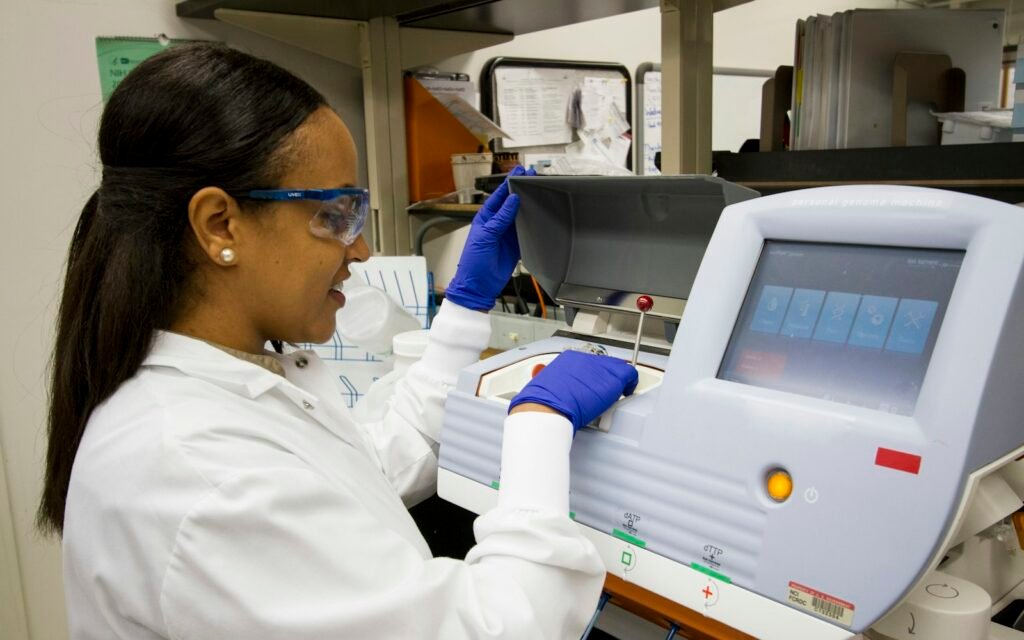
Both can run on the same instrument yet answer different questions. A germline test uses blood or saliva and looks for alterations present in every cell. A tumour test uses tissue or plasma and shows only what the tumour acquired.
| Criterion | Germline test | Tumour test |
|---|---|---|
| Sample | Blood or saliva | Tumour tissue or plasma |
| Alteration sought | Present from birth | Acquired later |
| Concerns the family | Yes | As a rule, no |
| Purpose | Risk management and surveillance | Treatment selection |
| Who receives the result | The person, and family with counselling | The patient only |
| Counselling required | Yes | Not routinely; but if an alteration that may be inherited is found, counselling and a confirmatory test are arranged |
Whether a BRCA alteration seen on a tumour panel is inherited can only be established with a confirmatory blood test. No advice is given to relatives before that confirmation.
Send Your Reports for Assessment
Share your pathology, imaging and blood results on WhatsApp, or send them by email. Documents are reviewed before the consultation.
The Genes Most Often Involved
Inherited predisposition is not limited to one gene. Panels examine dozens; for a subset, management is defined in guidelines.
| Gene | Associated cancers | Management |
|---|---|---|
| BRCA1 / BRCA2 | Breast, ovarian, pancreatic, prostate | Earlier surveillance, risk-reducing surgery option |
| Lynch syndrome genes (MLH1, MSH2, MSH6, PMS2) | Colorectal, endometrial, gastric, ovarian | Colonoscopy schedule, gynaecological surveillance |
| PALB2 | Breast, pancreatic, ovarian | Breast MRI surveillance; separate assessment of ovarian risk |
| TP53 (Li-Fraumeni) | Many tumour types | Dedicated surveillance protocol |
| CDH1 | Gastric, lobular breast | Gastroenterology and surgical assessment |
| APC | Colorectal polyposis | Early and frequent colonoscopy |
Risk figures vary by gene and family history. Kuchenbaecker and colleagues report cumulative breast cancer risk to age 80 of roughly 72 per cent in BRCA1 carriers and 69 per cent in BRCA2 carriers, with ovarian cancer risk of about 44 and 17 per cent respectively. These are group averages; individual risk is calculated with the family history.
Important: Not every alteration on a panel means risk. Variants of uncertain significance do not change a surveillance plan and cannot justify preventive surgery.
How Risk Figures Should Be Read
The risk figures quoted above are averages across large populations and do not state the fate of any one person. Two people carrying the same alteration in the same gene can have different lifetime risks, depending on how dense the family history is and on other factors. The figure used in the consultation therefore comes from reading the gene named on the panel together with the pedigree.
The second limit is that these figures are age-dependent. A lifetime risk describes a total spread across a whole life, and the same proportion does not apply to the next five or ten years. That is why surveillance schedules are built around age.
The third limit is the breadth of the panel. A gene that was not examined does not appear on the report, and it is accepted that predisposition factors beyond the known genes remain undescribed. A negative result alongside a strong family history therefore does not remove the surveillance plan. Variants of uncertain significance do not change a screening schedule and cannot justify preventive surgery; because classifications can change with new data, those reports are reviewed again at intervals.
Why Genetic Counselling Is Required
A germline test is the one oncology test whose result concerns people other than the person tested. Counselling is therefore given before and after it.
- The pre-test consultation draws the family history and sets out what the test can and cannot show.
- Possible outcomes — positive, negative, uncertain — and their consequences are discussed in advance.
- The sample is taken and the panel is run.
- At the result consultation a risk management plan is prepared.
- A route for informing relatives is planned; testing is offered to them only with their own consent.
Genetic results are special-category personal data. They are shared only with explicit consent, and clinical records are kept within that framework.
What Cancer Genetics Is
Genetics works like a cell’s instruction manual, and typing errors in it can give the cell the wrong command. Only a small proportion of cases are inherited.
What Each Result Means
- Positive
- A predisposition gene was found. It does not mean cancer will develop; a risk management plan is made and testing may be offered to first-degree relatives.
- Negative
- No detectable alteration on this panel. Where a family alteration is known, this is reassuring; where none is known, risk is not fully excluded because panels have limits.
- Uncertain (VUS)
- The meaning of the change is not known. Surveillance follows the family history, and the variant may be reclassified later.
The negative result is the one most often misread. Where the family history is strong, a negative panel does not remove risk; surveillance is then planned from the family history rather than the genetic result.
How Risk Is Managed in Carriers
Management has three strands: earlier and more frequent surveillance, risk-reducing medication where applicable, and risk-reducing surgery. Which applies depends on the gene, age, plans for children and personal preference.
- Carriers at high breast cancer risk may be offered MRI surveillance alongside mammography.
- In Lynch syndrome the colonoscopy interval is markedly shorter than population screening.
- Risk-reducing surgery for ovarian cancer is discussed once plans for children are complete.
- Imaging surveillance programmes are defined for families at high pancreatic risk.
- Stopping smoking and weight management affect total risk regardless of genetics.
Carrier status also raises the question of telling relatives. No one is obliged to share a result, but because first-degree relatives may carry the same alteration, how that conversation might happen is planned together during counselling. The timing and the manner are left to the person.
A decision about risk-reducing surgery differs from a treatment decision: there is no disease, and the decision rests on probability. These conversations usually run across several appointments and are not made in haste. How the treatment decision is made in breast cancer is covered in a separate article.
Continuity matters more than any single decision. Tumours found within a surveillance programme are caught earlier, which lightens the treatment that follows. Booking the year’s appointments in advance helps that continuity; the practicalities are on the patient guide page.
The detail of such a plan is personal and is not settled in a single visit. The surveillance schedule is reviewed each year as circumstances change.
Frequently Asked Questions
There is cancer in my family — will I get it too?
A family history can raise risk, but most cases are not inherited. What matters is how many relatives were affected, at what ages and with which tumour types. Those details are gathered in a pedigree and risk is assessed from it.
Who is offered hereditary cancer testing?
Testing is offered where there is early-onset disease, several related cancers in the family, more than one primary tumour, bilateral involvement or a known family alteration. The criteria are defined in guidelines and applied with genetic counselling.
If the test is negative, is my risk zero?
No. The absence of a detectable alteration does not remove all risk. Where the family history is strong, surveillance is planned from that history regardless of the genetic result.
Does carrying a BRCA alteration mean I will get cancer?
No. It means a higher than average risk for particular cancers. That risk is managed with surveillance, in some cases medication, and the option of risk-reducing surgery, decided with age, plans and preference in mind.
Will an alteration on my tumour panel pass to my family?
Most alterations on a tumour panel are acquired and are not passed on. Whether one is inherited is settled by a confirmatory blood test, and no advice is given to relatives before then.
Should my children be tested?
For adult-onset predispositions, testing is usually offered in adulthood. Timing follows the age at which surveillance for that gene begins and is discussed in counselling.
Will my results stay confidential?
Genetic results are special-category personal data and are shared only with explicit consent. Informing relatives is also planned with the person’s decision, within counselling.
Related Articles
How to Read an NGS Report: A Step-by-Step Guide
Open the Page
Driver Mutation or Passenger: How a Genomic Report Is Read
Open the PageRelated Pages
Hereditary Cancer Risk Assessment
Open the Page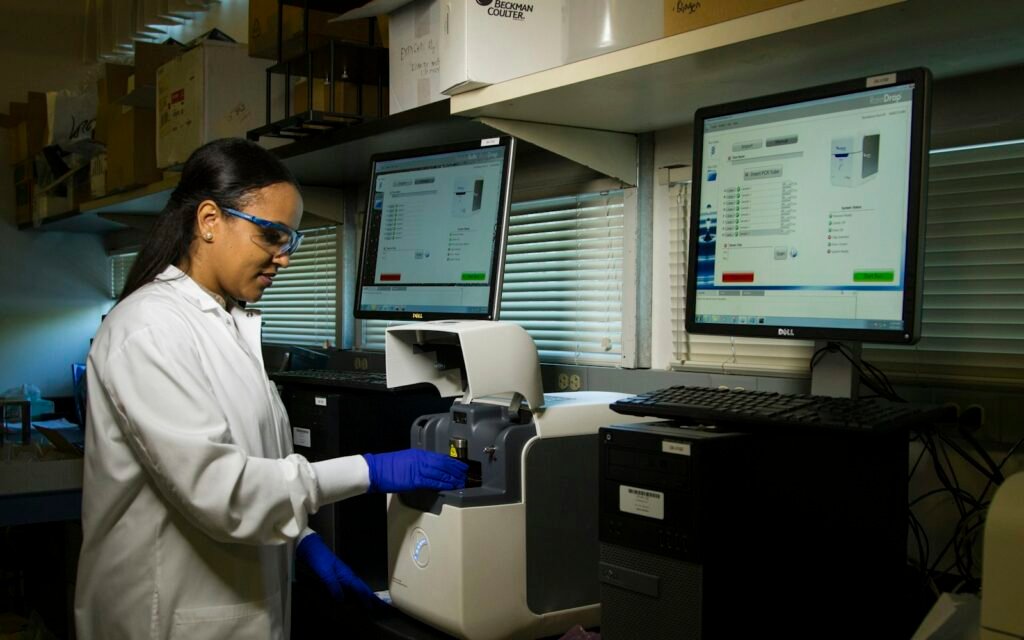
Precision Oncology
Open the Page
Breast Cancer Treatment
Open the Page
Patient Guide
Open the PageSources
- Kuchenbaecker KB, Hopper JL, Barnes DR et al. Risks of breast, ovarian, and contralateral breast cancer for BRCA1 and BRCA2 mutation carriers. JAMA 2017;317(23):2402-2416. Link
- Sessa C, Balmaña J, Bober SL et al. Risk reduction and screening of cancer in hereditary breast-ovarian cancer syndromes: ESMO Clinical Practice Guideline. Ann Oncol 2023;34(1):33-47. Link
- NCCN Clinical Practice Guidelines in Oncology: Genetic/Familial High-Risk Assessment — Breast, Ovarian, Pancreatic. Link
- Møller P, Seppälä T, Bernstein I et al. Cancer incidence and survival in Lynch syndrome patients receiving colonoscopic surveillance: Prospective Lynch Syndrome Database. Gut 2017;66(3):464-472. Link
- Rahman N. Realizing the promise of cancer predisposition genes. Nature 2014;505(7483):302-308. Link
- ESMO Clinical Practice Guidelines, guidelines by cancer type. Link
- Richards S, Aziz N, Bale S et al. Standards and guidelines for the interpretation of sequence variants: ACMG/AMP. Genet Med 2015;17(5):405-424. Link