
What the Cold Tumour Problem Is
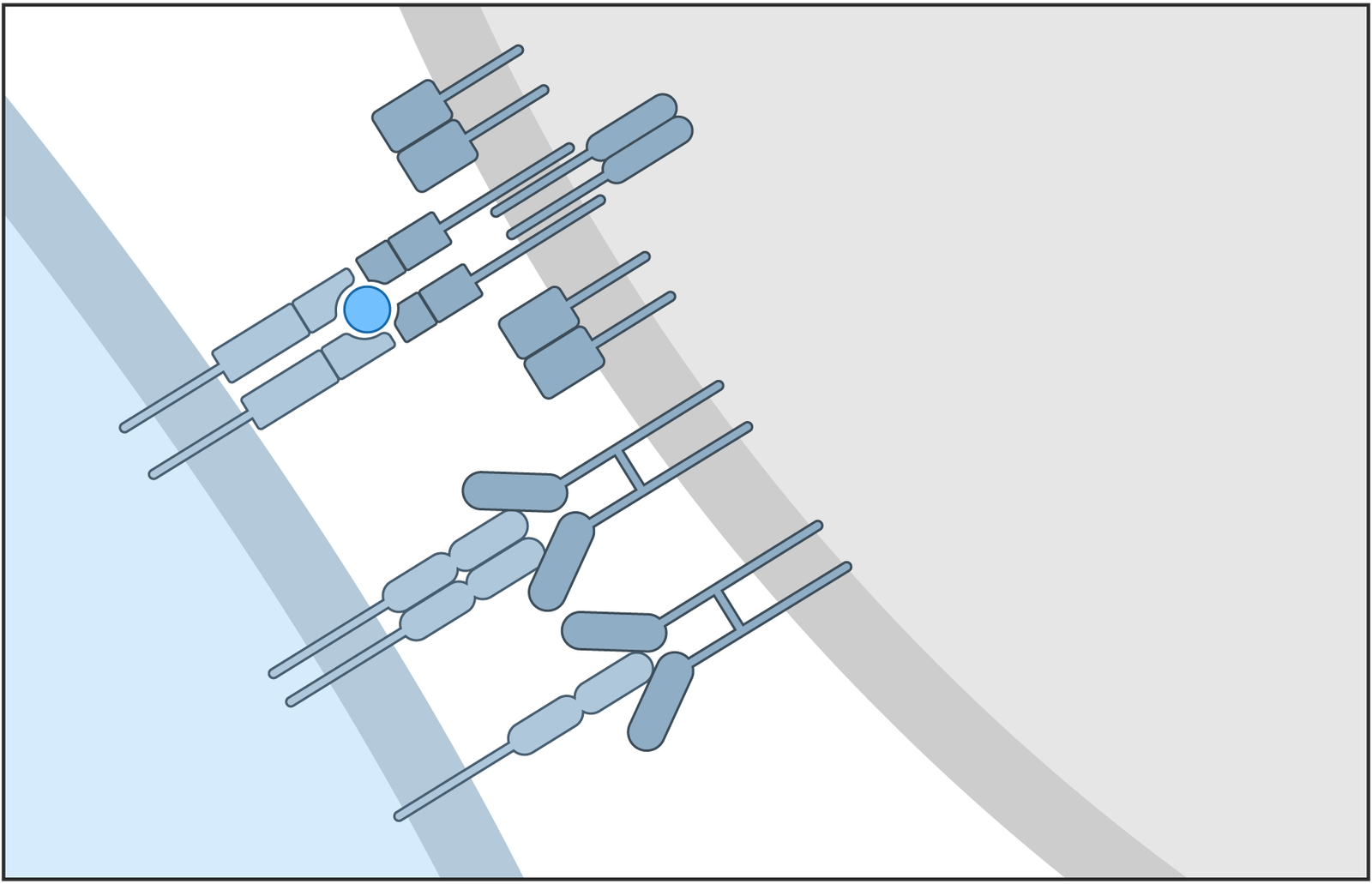
Checkpoint inhibitors work by lifting the brakes on immune cells. Once the brake is off, a T cell can recognise a tumour and attack it. For that mechanism to operate, however, the tumour has to be visible to the immune system in the first place.
In tumours described as immunologically cold, that condition is not met. PD-L1 expression is low, few T cells have entered the tumour and antigen presentation is inadequate. Checkpoint inhibitors usually fail to deliver the expected benefit in these tumours: there is a brake to release, but no engine pressing on it.
What oncology has been looking for over many years is therefore a way to make the tumour visible to the immune system through an external stimulus. Tumour vaccines, oncolytic viruses and pathway agonists have all been tried to that end. The general framework is set out on the immunotherapy page and its application in lung disease on the lung cancer page.
mRNA vaccines are an unexpected candidate on that list, because they have nothing to do with the tumour at all: what they contain encodes a viral protein. The question being asked is whether a vaccine that is not directed at the tumour, and that merely stimulates the immune system in general, changes the tumour response when it happens to fall close to the days on which checkpoint treatment begins.

Chemotherapy or Immunotherapy
The difference between chemotherapy and immunotherapy, and which patient each is chosen for.
What Kind of Study the Data Comes From
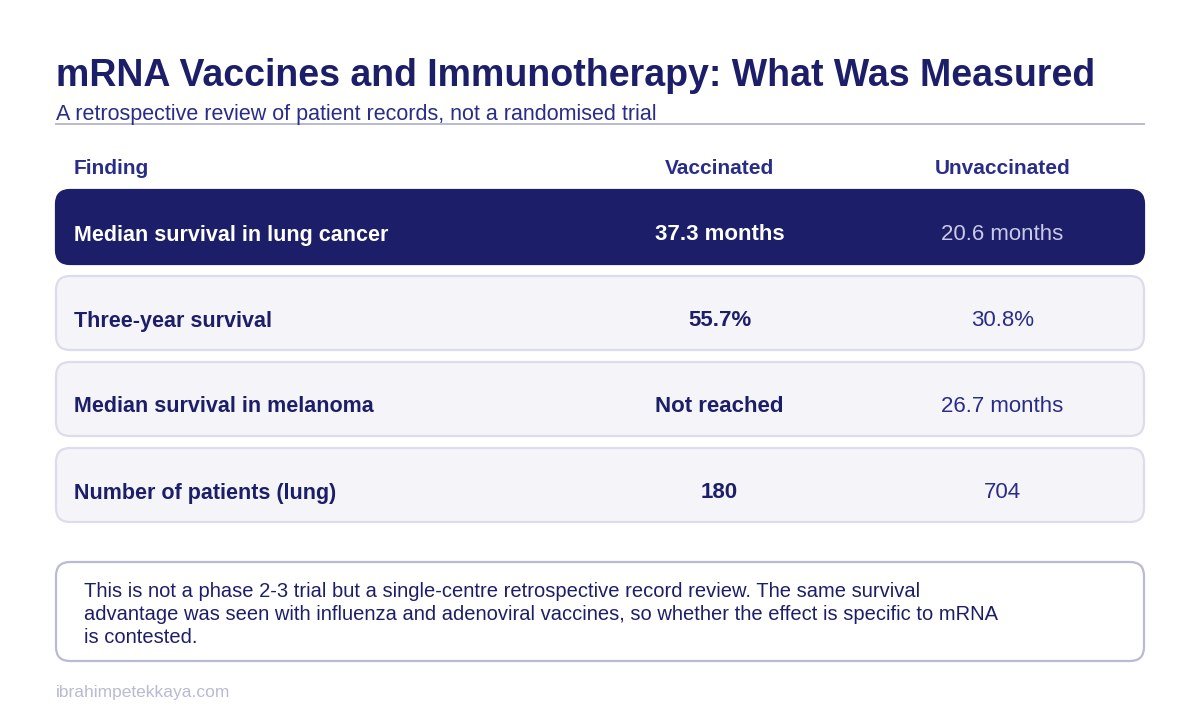
The nature of the source has to be stated before the answer, because this is the point most often misreported in press coverage. The authors describe their own work as a non-interventional, retrospective review of patient data. The data were extracted from the electronic health records of a single centre, and preclinical experiments in mouse models were added to them.
The practical meaning of that is unambiguous. The study has no phase number. The patients were not randomised. No prospective enrolment took place. No patient underwent any intervention for the purposes of the study; the vaccinations were ones already given, either at the patients’ own initiative or within the national vaccination programme.
The limit of a retrospective design is decisive here. Patients who were vaccinated may differ from those who were not in ways that have nothing to do with vaccination: a patient in better general condition, able to attend hospital regularly and to continue treatment without interruption, is more likely to have been vaccinated in the first place. Adjustments calculated from records balance only those differences that were actually measured.
Important: Every description of this work as a trial of a given phase is wrong. It is neither a phase 2 nor a phase 3 trial; it is the combination of a non-interventional retrospective record review with mouse experiments.
- Patients with stage III and stage IV non-small-cell lung cancer were examined.
- Patients with metastatic melanoma were assessed as a separate group.
- All patients were receiving anti-PD-1 or anti-PD-L1 treatment.
- The comparison was drawn between patients given mRNA vaccines within 100 days before or after the start of immunotherapy and unvaccinated patients of similar characteristics.
- The mechanism was separately tested in mouse melanoma and mouse lung carcinoma models.
Send Your Reports for Assessment
Share your pathology, imaging and blood results on WhatsApp, or send them by email. Documents are reviewed before the consultation.
The Difference Found in Lung Cancer
In the lung cancer group, 180 vaccinated patients were compared with 704 unvaccinated patients. Median overall survival was 37.3 months in the vaccinated group and 20.6 months in the unvaccinated group. The adjusted hazard ratio was reported as 0.51, with a p value below 0.0001.
Three-year overall survival was 55.7 per cent in the vaccinated group and 30.8 per cent in the unvaccinated group. The absolute difference is roughly twenty-five percentage points, and a difference of that size is not often seen in observational data, which is precisely why it has to be interrogated in detail.
The difference persisted in the subgroups split by stage. In stage III patients the hazard ratio was 0.37 with a p value of 0.0268, and in stage IV patients 0.52 with a p value of 0.0002. The effect is therefore not confined to a single stage.
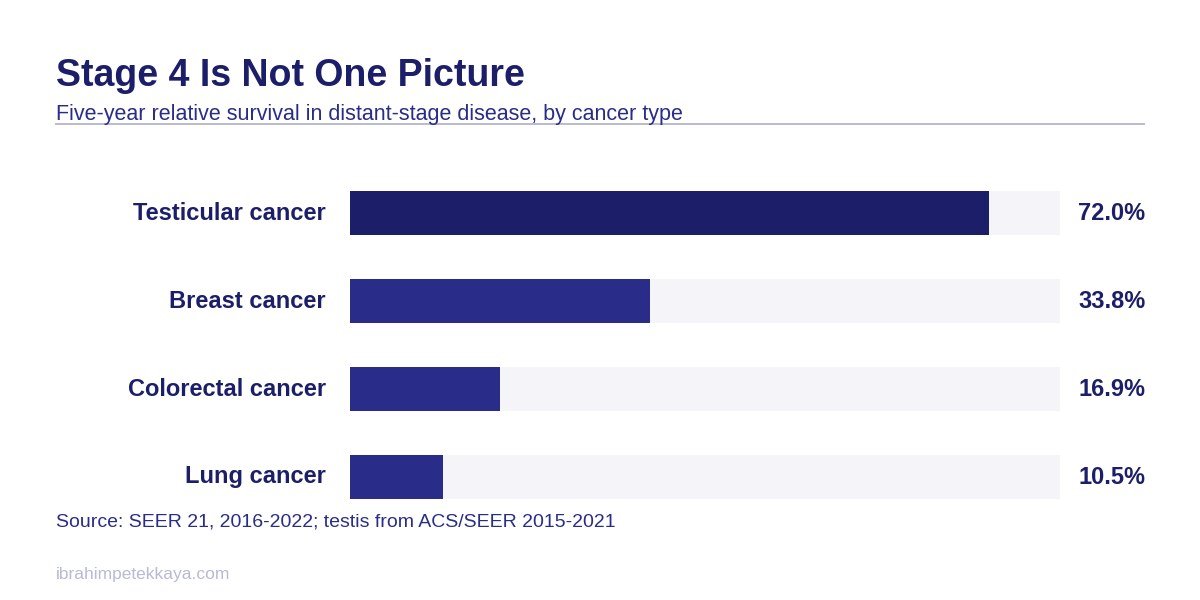
All of these figures come from a retrospective comparison. That the hazard ratios are adjusted serves to balance differences that could be measured; it does nothing for differences that could not. What staging itself means is set out in what stage 4 cancer means.
Median Survival Was Not Reached in Melanoma
In the melanoma group, 43 vaccinated patients were compared with 167 unvaccinated patients. One detail here is very frequently misreported and needs correcting: median overall survival was not reached in the vaccinated group. In the unvaccinated group median overall survival was 26.7 months.
That a median was not reached means more than half the patients were still alive throughout the follow-up period, so no midpoint existed to be calculated. When this is passed on as though the 26.7 months belonged to the vaccinated group, the result has been turned on its head.
The reported hazard ratio is 0.37 with a p value of 0.0048. Median progression-free survival was 10.3 months in the vaccinated group and 4.0 months in the unvaccinated group, with a hazard ratio of 0.63 and a p value of 0.0383 for that comparison.
The melanoma group is small: 43 patients is not a size that permits subgroup analysis. The general treatment framework for the disease is covered on the melanoma page.
| Group | Vaccinated | Unvaccinated | Status |
|---|---|---|---|
| Lung, median overall survival | 37.3 months | 20.6 months | Hazard ratio 0.51; retrospective |
| Lung, three-year survival | 55.7 per cent | 30.8 per cent | Retrospective comparison |
| Melanoma, median overall survival | Not reached | 26.7 months | Hazard ratio 0.37; 43 patients |
| Melanoma, progression-free survival | 10.3 months | 4.0 months | Hazard ratio 0.63; p value 0.0383 |
How mRNA Vaccines Are Said to Sensitise a Tumour
The proposed mechanism is built on type I interferon. After vaccination, interferon-alpha stood out as the most strongly induced cytokine, rising to roughly 280 times its baseline level. Type I interferon activates dendritic cells and macrophages, which in turn increases antigen presentation and the priming of CD8 T cells.
The response of the tumour to that is the interesting part: it raises its PD-L1 expression, which is to say it strengthens its own brake. If a checkpoint inhibitor is given over the same period, that brake is then released. The explanation put forward is that the timing of the two effects overlaps.
The mouse experiments support that explanation. When the type I interferon receptor was blocked, the effect on the tumour disappeared entirely, confirming that it runs through type I interferon. Blocking interleukin-1, by contrast, produced no change at all.
Three details in the human data have to be passed on accurately. The cytokine timings are not interchangeable: the cytokines significantly raised at six hours were interleukin-6 and interferon-gamma, while those significant at twenty-four hours were interferon-alpha, interferon-gamma, interferon-omega and CXCL10.
The second detail is that these cytokine measurements come not from cancer patients but from healthy volunteers who had been vaccinated. The third concerns the PD-L1 figures: the values of 31 per cent against 25 per cent are not positivity rates but mean tumour proportion scores, and they were calculated not from the survival group but from a separate population of 2,315 pathology reports.
In that same population, vaccinated patients were also more likely to cross the 50 per cent threshold: 36 per cent against 28 per cent. No comparable change was seen with influenza or pneumococcal vaccines. This is the only direct observation suggesting that the effect may differ from the general effect of having been vaccinated.
Important: No adverse event or safety analysis of any kind was carried out in the study. It cannot therefore be said that no additional harm was seen; the accurate statement is that safety was not assessed.
Is the Effect Really Specific to mRNA Vaccines
The answer to that is not clear today, and the evidence pointing the other way deserves to be taken seriously. An analysis published in 2026 used the national health insurance claims records of the United States: 121,676 patients starting systemic cancer treatment were examined, and among them 10,824 patients starting a checkpoint inhibitor.
The finding was this. Vaccination close to the start of treatment was associated with lower mortality, but that association was seen to the same degree with mRNA coronavirus vaccines, with adenoviral coronavirus vaccines and with influenza vaccines. The interaction effects across platforms were similar as well.
The conclusion of that analysis is explicit: population-level survival data are not sufficient to isolate a tumour-sensitising mechanism specific to mRNA vaccines. The picture is equally consistent with vaccinated people having been in better condition to begin with, and with residual confounding that was never measured.
A patient who is able to be vaccinated is a patient in better general condition, able to reach hospital and able to continue treatment. This selection bias is well recognised in oncology and can by itself generate a survival difference in observational comparisons.
The association itself, on the other hand, has been replicated. The same survival association was shown again in an independent cohort of 4,407 patients from a large healthcare organisation. The dispute is therefore not about whether the association exists but about how it should be interpreted causally.
Timing an Influenza Vaccine During Chemotherapy
How vaccine timing is planned while cancer treatment is under way and what the decision rests on.
What This Means for a Patient Today
The honest summary runs as follows. There is a real and replicated association, there is an attractive hypothesis supported by a mechanism, and whether the effect is specific to mRNA vaccines is an open question. None of those three statements should be read with any of the others dropped.
One point needs clarifying here: no prospective randomised trial is under way. None is registered; it has only been announced that such a trial is being designed. The phrase a confirmatory trial is ongoing is therefore not accurate today.
- Patients should not change their vaccination decisions on the basis of this work.
- A decision about vaccination during cancer treatment is taken on the grounds of protection against infection.
- Vaccine timing is planned by assessing the treatment calendar and the blood counts together.
- Vaccine timing can be raised with the doctor when a checkpoint inhibitor is being started, but no timing recommendation exists in the guidelines today.
- Monitoring for immune-related adverse events continues regardless of whether a vaccine was given.
The question a patient can usefully ask is not about the effect of a vaccine on the tumour but about their own treatment calendar: which vaccines are planned, which day of which cycle they will fall on, and where the period of deepest immune suppression sits. Those questions can be answered with the guidelines as they stand; the relationship between mRNA vaccines and tumour response cannot.
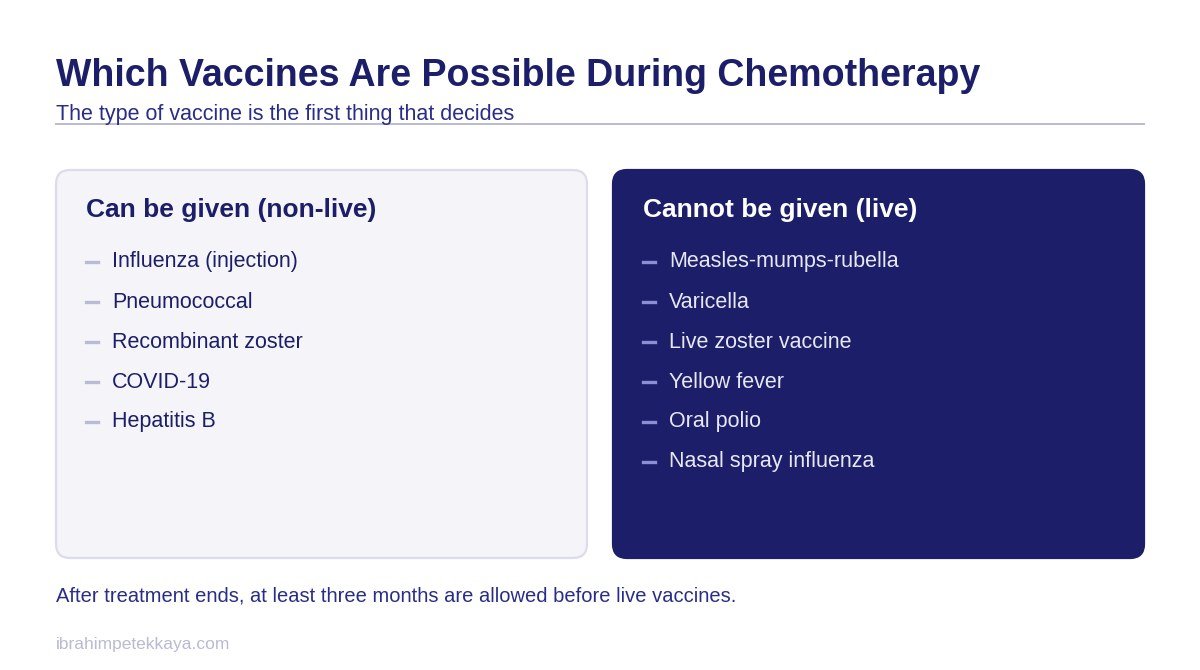
The reason for vaccination during cancer treatment is the risk of infection, not an expectation of improving the tumour response. That framework is set out in vaccines during chemotherapy and on the patient guide page.
How the decision is made is described on the treatment pathway page, and testing an opinion against a second doctor in how to get a second opinion. No data available today turn the relationship between mRNA vaccines and immunotherapy into a treatment recommendation.
Send Your Reports for Assessment
Share your pathology, imaging and blood results on WhatsApp, or send them by email. Documents are reviewed before the consultation.
Frequently Asked Questions
Do mRNA vaccines improve the effect of cancer treatment?
The evidence available today is not sufficient to say so. Retrospective records showed longer survival in vaccinated patients and the association was replicated in an independent cohort, but causation has not been shown and no prospective randomised trial exists.
What study do these results come from?
From a non-interventional retrospective review of the electronic health records of a single centre, combined with preclinical experiments in mouse models. The work has no phase number, no randomisation and no prospective enrolment.
How large was the difference in lung cancer?
Median overall survival was 37.3 months in 180 vaccinated patients and 20.6 months in 704 unvaccinated patients. The adjusted hazard ratio was 0.51 with a p value below 0.0001, and three-year survival was 55.7 per cent against 30.8 per cent.
How should the melanoma result be read?
Median overall survival was not reached in the vaccinated group; the value of 26.7 months belongs to the unvaccinated group. The hazard ratio was 0.37 with a p value of 0.0048, and there were only 43 vaccinated patients in the group.
What is the proposed mechanism?
A rise in type I interferon after vaccination activates dendritic cells and macrophages, increasing antigen presentation and CD8 T cell priming. The tumour answers by raising PD-L1 expression, and a checkpoint inhibitor given over the same period releases that brake.
Is the effect specific to mRNA vaccines?
In an analysis of national insurance claims records, the association with lower mortality was seen to the same degree with mRNA, adenoviral and influenza vaccines. On that analysis, population-level data do not isolate a mechanism specific to mRNA.
Were any additional side effects of vaccination seen?
Nothing can be said about this, because no adverse event or safety analysis was carried out in the study. Safety was not assessed; it was not assessed and found reassuring.
Related Articles
Related Pages
Immunotherapy
Open the Page
Lung Cancer
Open the Page
Treatment Pathway
Open the Page
Patient Guide
Open the PageSources
- Grippin AJ, Marconi C, Copling S et al. SARS-CoV-2 mRNA vaccines sensitize tumours to immune checkpoint blockade. Nature 2025;647(8089):488-497. Link
- Karadakic R, Keating NL, Barnett ML. Interpreting vaccine-associated survival differences in immune checkpoint inhibitor therapy. Proc Natl Acad Sci U S A 2026;123(36):e2621501123. Link
- Arbel R, Rokach L, Razi T, Tadmor T. Validation of SARS-CoV-2 mRNA vaccines sensitize tumors to immune checkpoint blockade in an independent cohort of 4,407 patients. Cancer Lett 2026;643:218319. Link
- Baden LR, Swaminathan S, Almyroudis NG et al. Prevention and Treatment of Cancer-Related Infections, Version 3.2024, NCCN Clinical Practice Guidelines in Oncology. J Natl Compr Canc Netw 2024;22(9):617-644. Link