
Early Detection of Cancer and Screening Are Not the Same
Screening means looking for disease in healthy people with no symptoms. Early diagnosis means investigating without delay once a symptom appears. The two work in different ways and require different evidence.
For a screening programme to count as working, it has to be shown to reduce deaths from that cancer. Finding more cancers is not enough, because some of what is found would never have caused a problem in that person’s lifetime.
The practical consequence is the route of access. Screening is a programme that runs on invitation or on an age range; early diagnosis starts the day the symptom appears. Confusing the two leaves a person with symptoms waiting for a screening slot.
Important: This is why there is no screening programme for every cancer. A test enters a population programme only once randomised trials have shown it reduces mortality.
The Conditions Under Which Screening Works
For a cancer to be screenable, the disease must pass through a period in which it causes no symptoms, the interval between the first cellular change and the first sign. If that interval is long enough, the disease can be caught at a detectable stage between two rounds. If it is short, screening steps over it, which is why fast-growing cancers appear between rounds.
The second condition is that treatment given at an early stage really does produce a better outcome than treatment given later. That condition does not hold for every cancer. Where stage does not change the result of treatment, finding the disease sooner only brings the date of diagnosis forward.
The second condition also explains the commonest misunderstanding in this field. Five-year survival looking higher in screen-detected patients is not on its own evidence of benefit; when the date of diagnosis is brought forward, the same date of death is spread over a longer period. Slow-growing tumours being caught more often at screening likewise makes the screened group look better than it is. The evidence is therefore judged on mortality alone.
The Screening Schedule in Türkiye
Türkiye runs a population-based screening programme for three cancers, provided free of charge by the Ministry of Health. Access is through family medicine practices and cancer early detection centres.
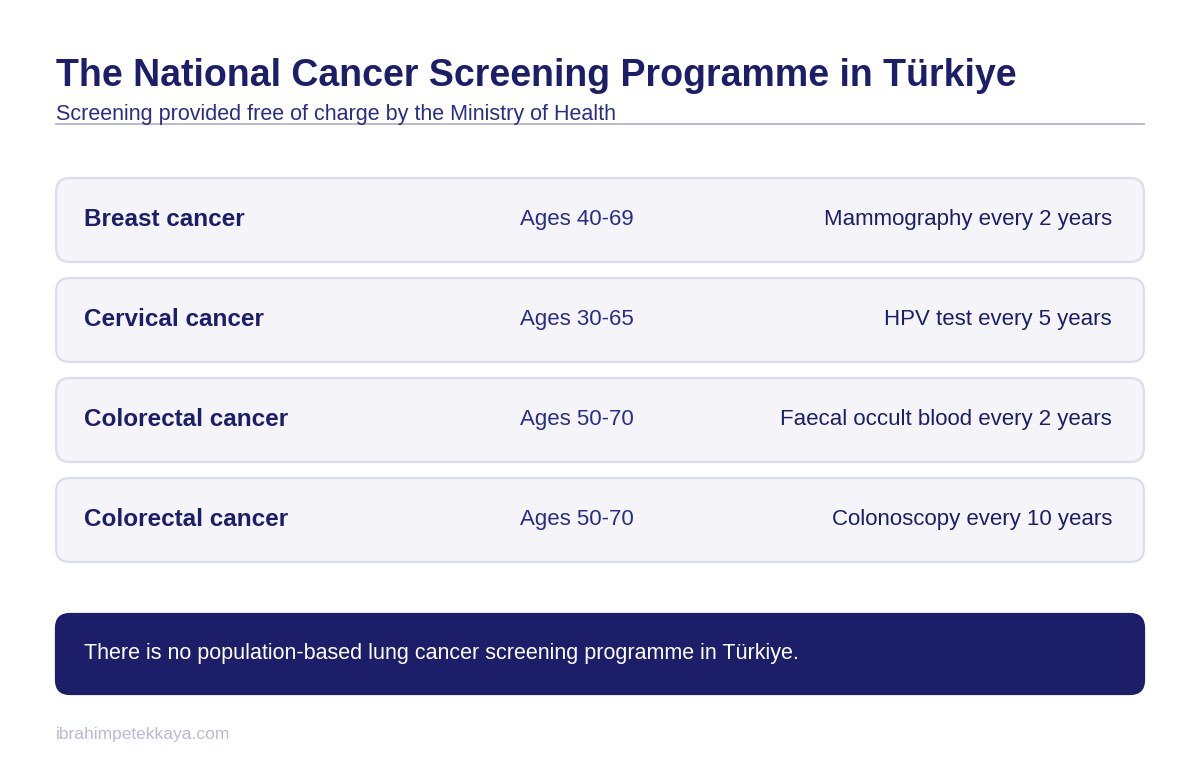
For cervical cancer, Türkiye moved to HPV testing as the primary screening method in 2014. Results from the programme covering one million women were published internationally and showed HPV-based screening can be delivered at national scale.
In breast screening, the national programme and some specialist societies differ. The radiology society recommends annual mammography from the age of 40, while the national programme screens every two years. The difference turns on where the balance is struck between the benefit and the burden of false positives, and it is debated worldwide.
There is a difference in colorectal screening as well. The programme in Türkiye starts at 50, while current recommendations in some countries have moved to 45, because of the rise in colorectal cancer at younger ages. Those with a family history start earlier in any case.
There is no population-based lung cancer screening programme in Türkiye. In a country with widespread smoking this is a notable gap and remains under discussion.
Being free does not by itself secure attendance. The invitation system working, appointments being obtainable and the result reaching the person are separate links in a chain, and a break in any of them lowers the expected benefit. Early detection of cancer is not only a question of a test but of follow-up.

Who the Screening Programmes Cover
Which age ranges the national screening programmes cover and how to apply for them.
Send Your Reports for Assessment
Share your pathology, imaging and blood results on WhatsApp, or send them by email. Documents are reviewed before the consultation.
What the Evidence Shows
The strength of the evidence is not the same for every test. The figures below come from randomised trials and from international expert working groups.
| Screening | Finding |
|---|---|
| Mammography | About 24% lower breast cancer mortality in women aged 50-69 invited to screening; about 40% in those who actually attend (this second figure carries the bias that attenders are healthier) |
| HPV test | 60-70% greater protection against invasive cervical cancer than cytology |
| Faecal occult blood | 32% lower colorectal cancer mortality with annual, 22% with biennial screening |
| Colonoscopy | 18% lower 10-year colorectal cancer incidence; no significant difference in mortality |
| Low-dose lung CT | About 20% lower lung cancer mortality |
The colonoscopy row deserves attention. In the European randomised NordICC trial, ten-year colorectal cancer risk in the invited group fell from 1.20 per cent to 0.98 per cent, while the difference in deaths from the cancer was not statistically significant. An important reason is that only 42 per cent of those invited actually had the colonoscopy.
For lung screening there are two large trials. In the American NLST trial of 53,454 heavy smokers, lung cancer mortality fell by about 20 per cent; in the European NELSON trial the mortality rate ratio in men was 0.76.
The Scope of These Trials
The lung screening results were obtained in people with a heavy smoking history, so the same benefit cannot be carried across to people who have never smoked or have a limited history. Who is screened is not a detail in these trials; it is a condition of the result itself.
What the colonoscopy trial shows is bound up with uptake. Only a proportion of those invited having the procedure shrinks the effect calculated across the invited group. The difference in mortality not reaching statistical significance is read in that light; the finding is not a demonstration that colonoscopy does not work.
The gap between the two figures reported for mammography is another face of the same problem. A reduction calculated across those invited and one across those who actually attend do not measure the same thing; the second carries the bias that attenders are generally healthier. That caveat is kept as stated.
The Harms of Screening
Yet recommending a screening test without naming its harms is not defensible.
- False positives: 96.4 per cent of positive lung screening results were not cancer.
- Overdiagnosis: finding and treating a cancer that would never have caused a problem.
- The burden of further tests: biopsy, additional imaging, procedural risk.
- Psychological burden: waiting and uncertainty.
- False negatives: a normal result creating false reassurance.
The number of false positives looks alarming at first. What it means is that a finding detected at screening was shown by further testing not to be cancer. The problem is the waiting, the procedures and the anxiety that imposes, and programmes continually revise thresholds and follow-up rules to reduce it.
The size of overdiagnosis has been measured in mammography: a substantial proportion of the small tumours found by screening were calculated never to progress to large tumours. The international working group reported sufficient evidence that mammography detects cancers that would never have caused harm, and that a false-positive mammogram has short-term negative psychological consequences.
The harms do not carry equal weight. A false positive imposes a temporary burden, while overdiagnosis produces a permanent one: a treatment given unnecessarily cannot be undone. Programmes set their age ranges and intervals by the weight of these two burdens.
Important: These harms do not mean screening is useless. The age ranges and intervals used are set precisely by calculating where the benefit outweighs the harm.
Who Falls Outside the Programme
Population programmes are designed for people at average risk. Those at higher risk are followed outside that schedule, under a separate plan.
- A family history of cancer at a young age.
- Carriers of a hereditary cancer syndrome, or those likely to be carriers.
- People previously treated for cancer.
- A history of bowel polyps.
- Long-standing inflammatory bowel disease.
- A heavy smoking history.
- Previous radiotherapy to the chest.
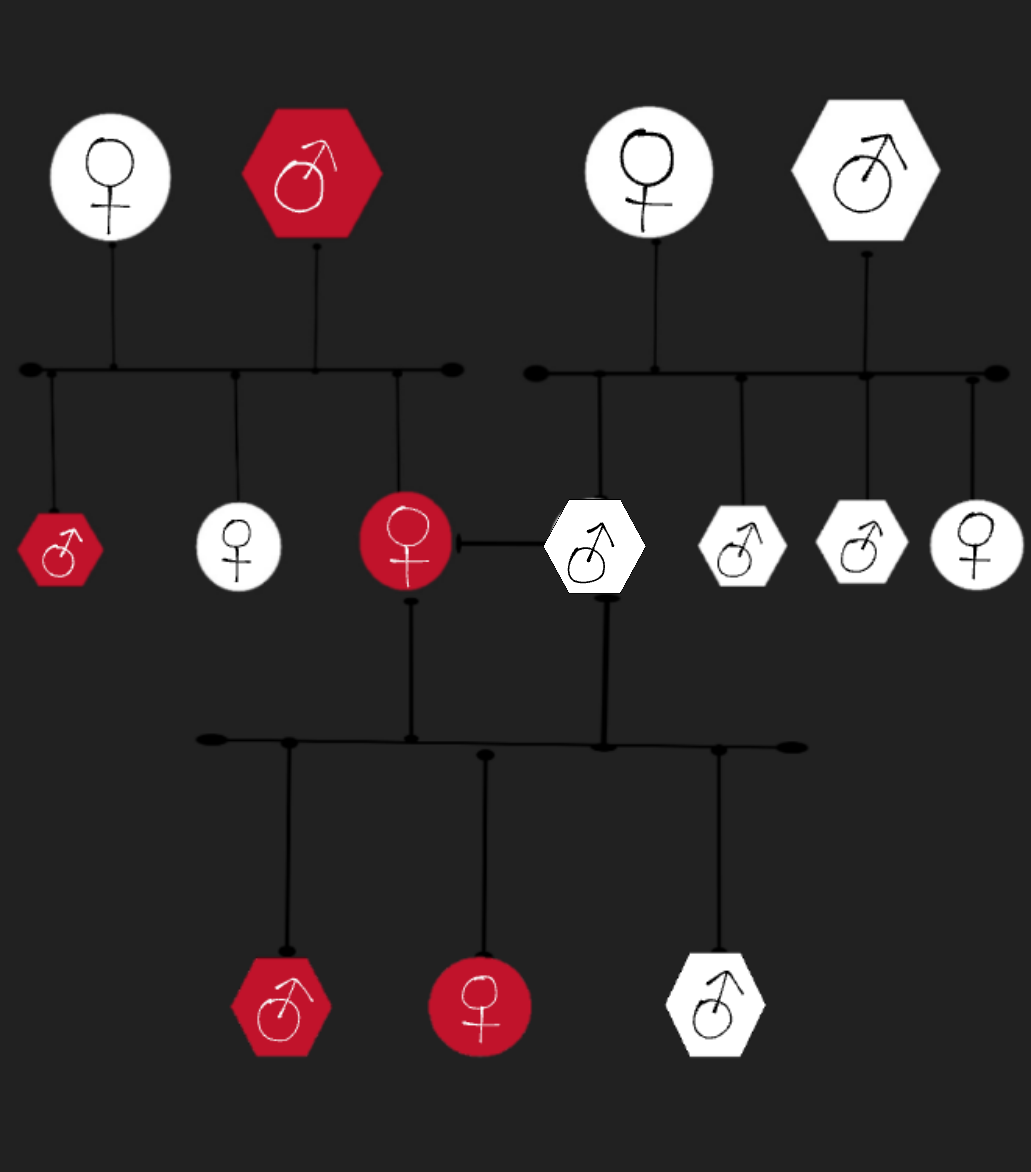
The practical way to make this distinction is a three-generation family tree at the first consultation: who, which cancer, at what age. Patients usually have this information, but it goes unrecorded because it is never asked for.
Family history is not the only source of raised risk. A treatment given in the past, a known precursor lesion or a long-standing inflammatory disease also changes the schedule, so the first assessment records personal medical history as well as age.
In these groups screening may start earlier, be done more often, or use a different method. The decision follows a personal and family risk assessment, described on the hereditary cancer risk assessment page.
Screening When There Is Cancer in the Family
Why the screening schedule differs for people with a family history of cancer.
How Screening Works in Practice
The biggest obstacle to being screened is not lack of information but postponement. Putting the appointment in a calendar when the invitation arrives, or when you reach the age range, is the single most effective step.
- Which test suits whom is decided in primary care, from age and risk.
- A copy of the results is kept; the next screening date is set from them.
- A normal result is not a reason to wait if a symptom appears.
- The interval is not shortened privately; more frequent screening adds harm, not benefit.
- With symptoms, the next screening appointment is not waited for; that is diagnosis.
- People in the age range can apply even if no invitation has arrived.
A clear screening result is not a guarantee. Cancers do appear between two rounds, and these are called interval cancers. The screening schedule and attention to symptoms are not substitutes for one another; they run together.
For a screening appointment the report of previous tests is enough rather than the images, although in mammography bringing the earlier films for comparison helps. Where there is cancer in the family, who had it, which cancer and at what age is taken in writing; those three details decide how the plan is adapted.
The last point is the most common mistake. Screening is for people without symptoms; where a symptom exists, the right route is direct assessment, described on the treatment pathway page.
Frequently Asked Questions
Does early detection of cancer really extend life?
For some cancers, yes. Mammography, HPV testing, faecal occult blood testing and low-dose lung CT have all been shown in randomised trials to reduce mortality. That evidence does not exist for every cancer.
Which cancers are screened for in Türkiye?
Breast, cervical and colorectal cancer are covered by the population programme. There is no population-based programme for lung cancer.
At what age does mammography start?
The national programme in Türkiye offers mammography every two years between the ages of 40 and 69. Where risk is higher, the plan is individualised.
How often is the HPV test done?
Every five years between the ages of 30 and 65 in the national programme. Screening stops at 65 in women whose last two tests were negative.
How often is a colonoscopy needed?
The national programme offers faecal occult blood testing every two years and colonoscopy every ten years between 50 and 70. A history of polyps shortens the interval.
Does screening have harms?
Yes. False positives, unnecessary investigations and overdiagnosis are its known harms. Programmes are built around the ages and intervals where benefit outweighs harm.
I have symptoms — should I wait for my screening appointment?
No. Screening is for people without symptoms. Where a symptom exists, direct assessment is needed.
Related Articles
Related Pages
Hereditary Cancer Risk Assessment
Open the Page
Treatment Pathway
Open the Page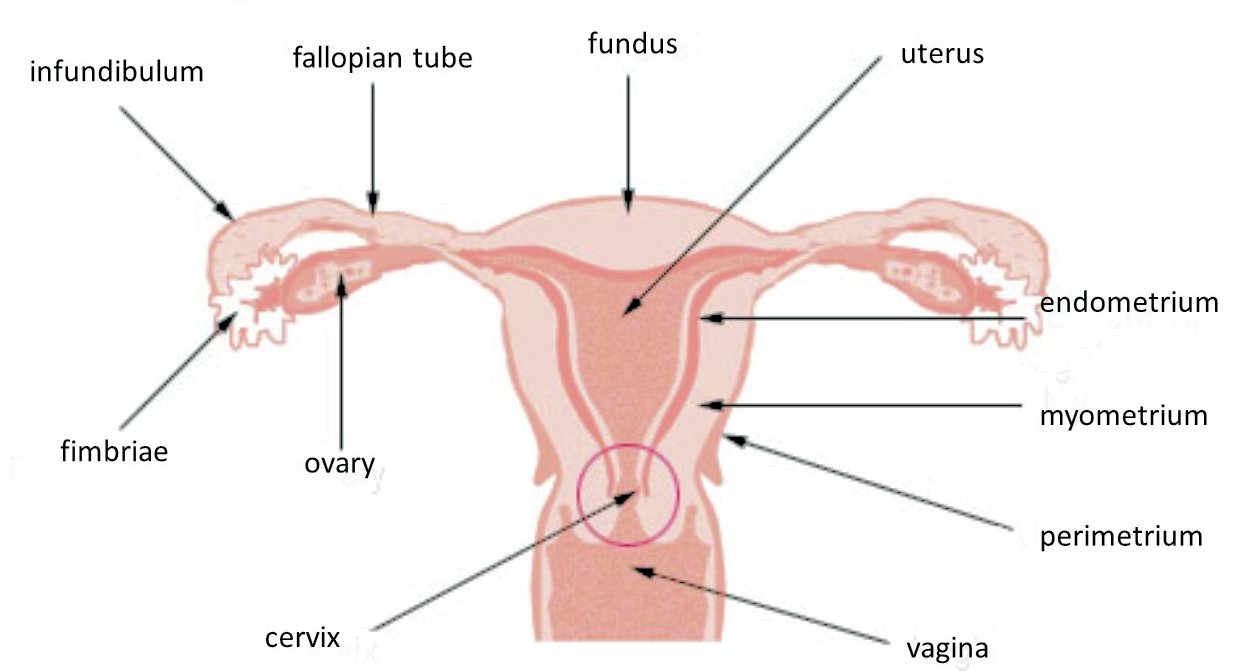
Cervical Cancer
Open the Page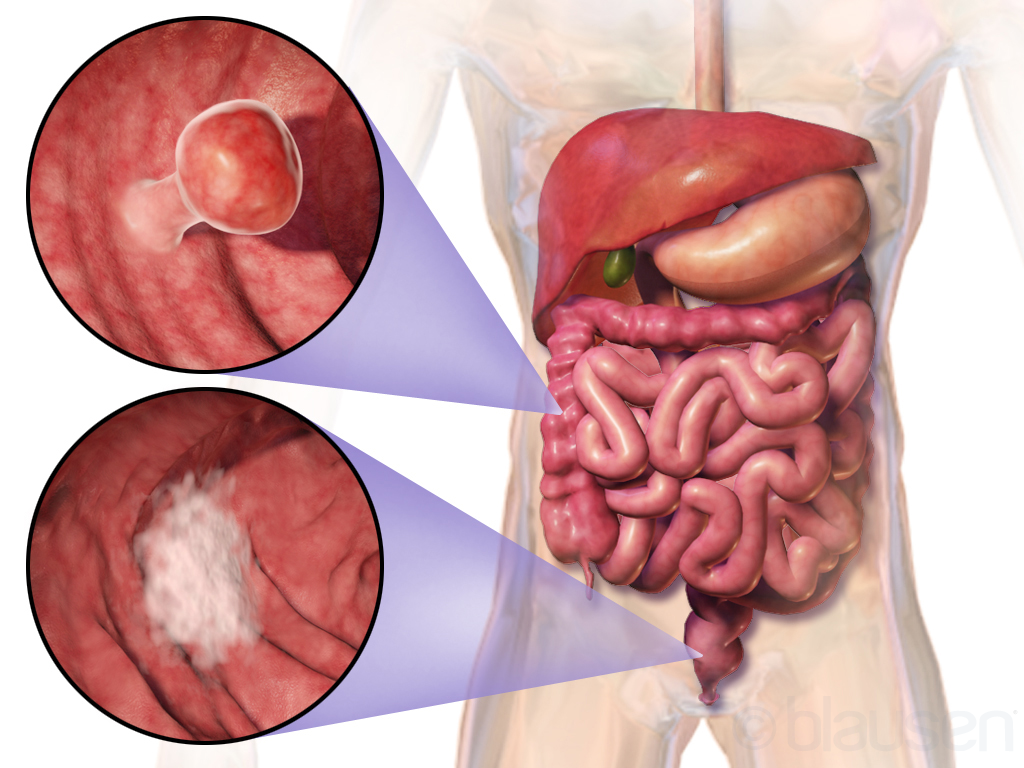
Colorectal Cancer
Open the PageSources
- Turkish Ministry of Health, Directorate General of Public Health, Department of Cancer. National cancer screening standards. Link
- Turkish Ministry of Health. Türkiye National Cancer Control Programme. Link
- Gultekin M, Zayifoglu Karaca M, Kucukyildiz I et al. Initial results of population based cervical cancer screening program using HPV testing in one million Turkish women. Int J Cancer 2018;142(9):1952-1958. Link
- Lauby-Secretan B, Scoccianti C, Loomis D et al. Breast-Cancer Screening — Viewpoint of the IARC Working Group. N Engl J Med 2015;372(24):2353-2358. Link
- Ronco G, Dillner J, Elfström KM et al. Efficacy of HPV-based screening for prevention of invasive cervical cancer: follow-up of four European randomised controlled trials. Lancet 2014;383(9916):524-532. Link
- Shaukat A, Mongin SJ, Geisser MS et al. Long-Term Mortality after Screening for Colorectal Cancer. N Engl J Med 2013;369(12):1106-1114. Link
- Bretthauer M, Løberg M, Wieszczy P et al. Effect of Colonoscopy Screening on Risks of Colorectal Cancer and Related Death (NordICC). N Engl J Med 2022;387(17):1547-1556. Link
- National Lung Screening Trial Research Team. Reduced Lung-Cancer Mortality with Low-Dose Computed Tomographic Screening. N Engl J Med 2011;365(5):395-409. Link
- de Koning HJ, van der Aalst CM, de Jong PA et al. Reduced Lung-Cancer Mortality with Volume CT Screening in a Randomized Trial (NELSON). N Engl J Med 2020;382(6):503-513. Link
- Welch HG, Prorok PC, O’Malley AJ, Kramer BS. Breast-Cancer Tumor Size, Overdiagnosis, and Mammography Screening Effectiveness. N Engl J Med 2016;375(15):1438-1447. Link
- World Health Organization. Global strategy to accelerate the elimination of cervical cancer as a public health problem. Geneva: WHO, 2020. Link
- IARC Handbooks of Cancer Prevention, Volume 15: Breast Cancer Screening. IARC/WHO 2016, Section 7. Link