
Who Has HPV Screening, and How Often?
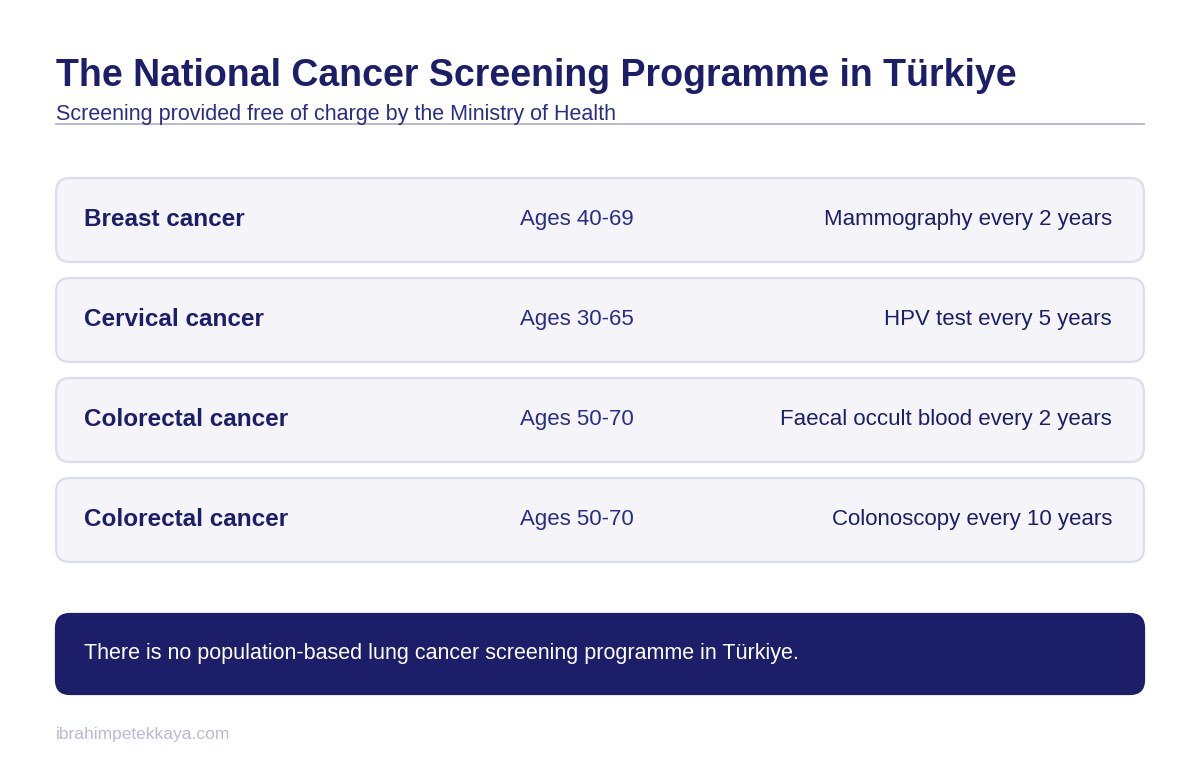
The national programme in Türkiye covers women aged 30 to 65 and is repeated every five years. Screening stops at 65 in women whose last two tests were negative. Türkiye moved to HPV testing as the primary method in 2014.
The World Health Organization likewise recommends starting at 30 in the general population of women, and considers an interval of five to ten years sufficient when an HPV test is used. After 50, screening can stop if the last two tests at the recommended interval were negative. For women living with HIV it recommends starting at 25 and repeating every three to five years.
The reasoning behind the age limits is biological. Infection is common before 30 and most of it transient, so looking for the virus then leads to investigating infections that would have cleared and to unnecessary procedures. Stopping at 65 rests on the reassurance accumulated negative results provide.
Important: HPV infection is very common before the age of 30 and most of it clears on its own. Screening with an HPV test before that age leads to unnecessary investigation of infections that will never need treatment.
Why an HPV Test Rather Than Cytology
A smear test looks for changes in the cells; an HPV test looks for the virus that causes those changes. That difference changes how much protection screening gives.
In the Ronco pooled follow-up of four European randomised trials covering 176,464 women, HPV-based screening prevented markedly more invasive cervical cancer than cytology. Among women with a negative entry screen, the cumulative incidence of invasive carcinoma at five and a half years was 8.7 per 100,000 against 36.0.
That result also explains the longer interval. A negative HPV test gives reassurance for longer than a negative smear, which is why the interval can be extended to five years.

The Difference Between an HPV Test and a Smear
What each of the two methods looks for, and why HPV testing has moved to the front of screening programmes.
Send Your Reports for Assessment
Share your pathology, imaging and blood results on WhatsApp, or send them by email. Documents are reviewed before the consultation.
What the Virus Does in the Cervix
HPV settles in the cells of the transformation zone, where two different epithelia meet. That zone renews itself continuously, which suits a virus depending on cell division. In most infections the immune system clears the virus and leaves no lasting trace.
Where it is not cleared, the picture changes. Some proteins the virus makes suppress the mechanisms by which a cell halts division and repairs damage, and as that continues, changes accumulate in the cells, mild at first and then more marked. This is why the precancerous period is described in steps: no step has to progress to the next, and regression is also seen.
That the process takes years explains why screening works. A long interval separates the virus settling from invasive cancer appearing, and HPV screening acts inside it, while the cell change is still treatable. The same length explains why a five-year interval is accepted as sufficient.
What a Positive Result Means
A positive HPV result does not mean cancer; most often it marks a transient infection.
In the Rodríguez population-based study, 67 per cent of 800 high-risk HPV infections cleared spontaneously within twelve months, so roughly two thirds of the infections behind a positive result clear within a year. Where the infection persisted beyond a year, the risk of CIN2 or worse being diagnosed within thirty months was 21 per cent. That figure pools all high-risk types; in women under thirty with a persistent HPV-16 infection the same risk rises to 53 per cent.
A question often asked is when and from whom the infection was acquired. HPV is very common and can remain silent for years, so a positive result does not indicate recent transmission. Because that uncertainty can create needless tension in relationships, the meaning of the result is worth explaining clearly from the outset.
What matters is not a single positive result but whether the infection persists, and the route afterwards depends on the viral type. Where HPV-16 or HPV-18 is found, a woman is referred for colposcopy even if the cell findings are normal. For other high-risk types the cells are examined first; if abnormal she goes to colposcopy, and if normal the test is repeated after a defined interval.
Three questions are worth asking at the results consultation: which type was found, how follow-up is planned for it, and when the next check is due. Knowing the type determines whether the route after HPV screening turns towards colposcopy or towards examination of the cells.
- A positive result shows the presence of a sexually transmitted virus; it is not a cancer diagnosis.
- It is not possible to say when the infection was acquired.
- Most infections clear on their own within a year.
- A persistent infection is what needs following.
- HPV-16 and HPV-18 require closer follow-up.
- Testing the partner is not routinely recommended.
- Condoms reduce the risk but do not remove it entirely.
What the Vaccine Has Achieved
The effect of the HPV vaccine is now demonstrated in real cancer counts rather than in models.
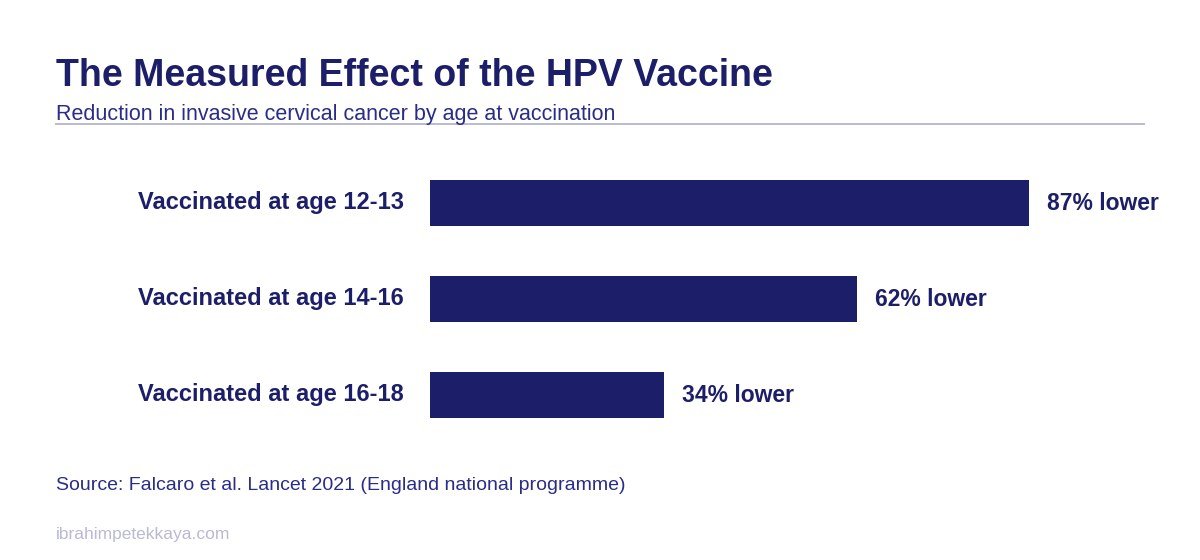
In the evaluation of the English national programme, the incidence of invasive cervical cancer fell by 87 per cent in women vaccinated at 12 to 13, by 62 per cent at 14 to 16 and by 34 per cent at 16 to 18. The reduction in high-grade cell change reached 97 per cent in the youngest vaccinated group.
A Swedish study following more than 1.6 million women produced a comparable picture: the risk of invasive cancer was markedly lower in those vaccinated before 17. The shared message of the two studies is that the vaccine works best when given before sexual activity begins.
Important: Being vaccinated does not remove the need for screening. The vaccine does not cover every type, and vaccinated women remain part of the screening programme.
How These Figures Were Obtained
The comparison between screening methods comes from the pooled follow-up of randomised trials in Europe. That is a high level of evidence, but programme structure, laboratory quality and uptake differ between countries, so a gain of the same size cannot be expected everywhere.
The spontaneous clearance rate comes from a single population-based study and measures a twelve-month period. The risk of cell change reported in persistent infection pools all high-risk types, and the difference between types sits inside that average; as stated above, the risk by individual type differs markedly.
The data on the vaccine come from analyses of national programme records and large follow-up cohorts, not from a randomised comparison. The stepwise reduction by age at vaccination is a pattern that strengthens the direction of the finding. Even so, screening programmes were also changing over the same period.
Self-Collected Samples
One way of increasing uptake is for the woman to take the sample herself. In an analysis pooling 56 accuracy studies and 25 participation trials, PCR-based HPV tests were as sensitive on self-collected samples as on samples taken by a clinician.
The effect on participation is more striking still: sending a self-sampling kit directly to the home roughly doubled participation compared with a reminder letter. Approaches requiring the woman to request a kit produced no significant increase.
The method has one limitation: a self-collected sample is used for the HPV test, and where the cells need examining a separate sample has to be taken at a clinic visit. A woman with a positive result is still expected to attend. The gain is not in completing the diagnosis but in bringing women who never attend into the programme.
That finding shows that the real problem in screening is access rather than method. The screening programmes as a whole are described in the early detection of cancer article.
HPV Is Not Only About the Cervix
The cancers attributable to HPV are not confined to the cervix. Worldwide, about 4.5 per cent of all cancers are attributable to HPV, and 83 per cent of those are cervical cancer.
The remainder comprises cancers of the anus, oropharynx, vulva, vagina and penis, and about half of HPV-attributable anal cancers occur in men. These data underpin the argument for not restricting vaccination to girls.
In oropharyngeal cancer the association with HPV is particularly marked in higher-income countries. These tumours behave differently from those caused by smoking and alcohol and can respond better to treatment, so tumours in the same region cannot be treated as one group.
In practice this means presenting the vaccine as aimed only at cervical cancer leaves out part of the picture. That some anal and oropharyngeal cancers in men are attributable to the same virus is why the debate about the scope of vaccination continues.
HPV-16 and HPV-18 account for 73 per cent of HPV-attributable cancers, and the types covered by the nine-valent vaccine for 90 per cent.
The World Health Organization’s Targets
The World Health Organization has set targets for 2030 to eliminate cervical cancer as a public health problem: 90 per cent of girls fully vaccinated by 15, 70 per cent of women screened with a high-performance test by 35 and again by 45, and 90 per cent of those found to have disease receiving the treatment they need.
In the first Turkish programme results covering one million women, HPV positivity was 3.5 per cent and uptake after the first invitation around 36.5 per cent, with HPV-16 the commonest type. That figure points to a problem of access rather than programme scope.
The Turkish programme, screening women aged 30 to 65 every five years, exceeds the minimum implied by the screening target. The difficulty is not its scope but participation.
Frequently Asked Questions
Who should have HPV screening?
In the national programme in Türkiye, women aged 30 to 65, every five years. Screening stops at 65 in those whose last two tests were negative.
My HPV test was positive — do I have cancer?
No. A positive result shows the presence of the virus and is not a cancer diagnosis. In the Rodríguez population-based study, 67 per cent of infections cleared spontaneously within twelve months.
What happens after a positive result?
The route depends on the viral type. HPV-16 and HPV-18 lead to a colposcopy referral even when the cell findings are normal. For other high-risk types the cells are examined first, and the test is repeated after a defined interval if they are normal.
Is the smear test no longer used?
HPV testing is used as the primary method, with cell examination used alongside it to assess positive results.
If I have been vaccinated, do I still need screening?
Yes. The vaccine does not cover every HPV type, and vaccinated women remain part of the screening programme.
When is the vaccine most effective?
Before sexual activity begins. In the English programme, invasive cancer fell by 87 per cent in those vaccinated at 12 to 13, against 34 per cent in those vaccinated at 16 to 18.
Can I take the sample myself?
With PCR-based tests, self-collected samples have been found as sensitive as those taken by a clinician. Sending the kit to the home roughly doubles participation.
Related Articles
Related Pages
Cervical Cancer
Open the Page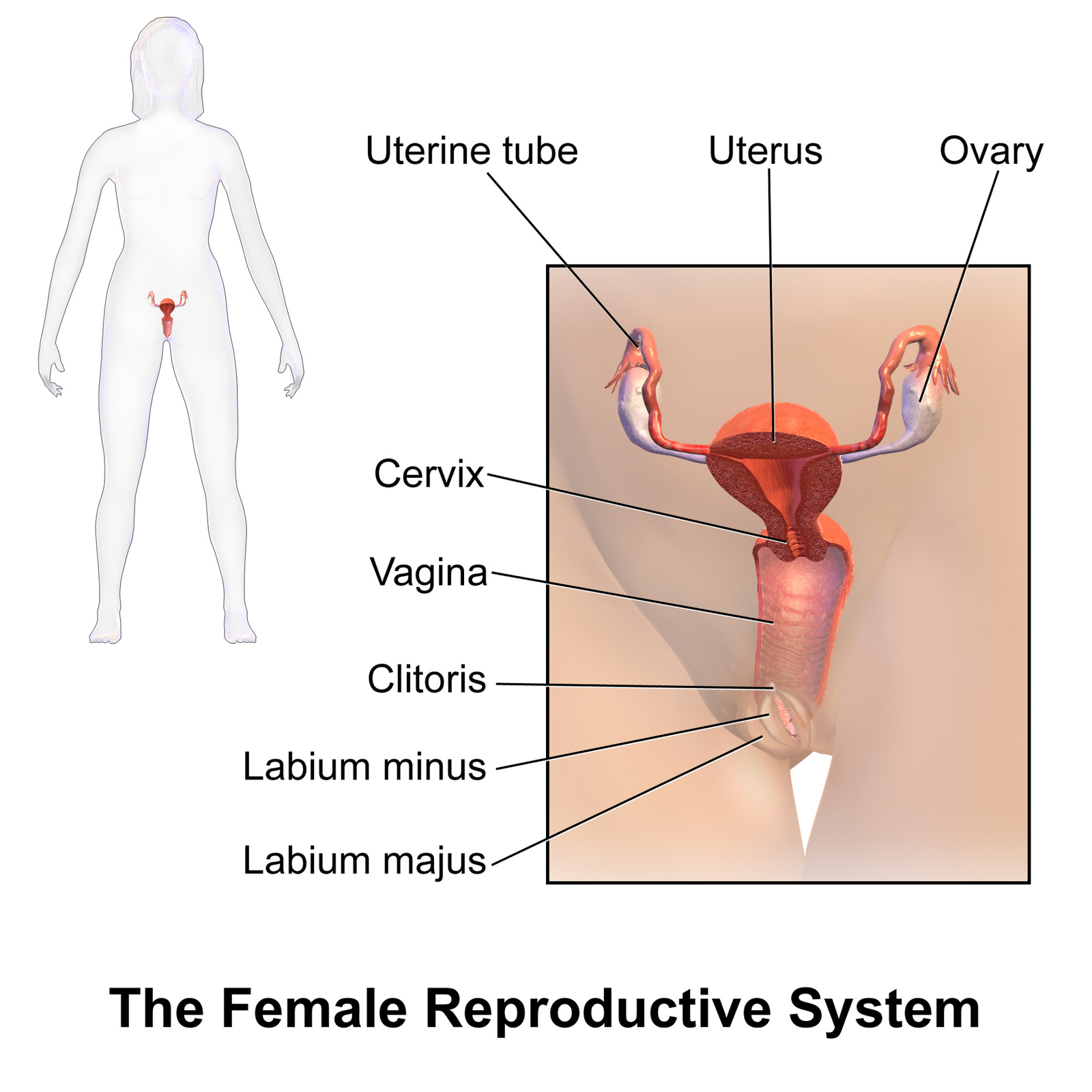
Gynaecological Cancers
Open the Page
Treatment Pathway
Open the Page
Ovarian Cancer
Open the PageSources
- Turkish Ministry of Health. National standards of the cervical cancer screening programme. Link
- Gultekin M, Zayifoglu Karaca M, Kucukyildiz I et al. Initial results of population based cervical cancer screening program using HPV testing in one million Turkish women. Int J Cancer 2018;142(9):1952-1958. Link
- World Health Organization. WHO guideline for screening and treatment of cervical pre-cancer lesions for cervical cancer prevention, 2nd edition. Geneva: WHO, 2021. Link
- World Health Organization. Global strategy to accelerate the elimination of cervical cancer as a public health problem. Geneva: WHO, 2020. Link
- Ronco G, Dillner J, Elfström KM et al. Efficacy of HPV-based screening for prevention of invasive cervical cancer: follow-up of four European randomised controlled trials. Lancet 2014;383(9916):524-532. Link
- Rodríguez AC, Schiffman M, Herrero R et al. Rapid Clearance of Human Papillomavirus and Implications for Clinical Focus on Persistent Infections. J Natl Cancer Inst 2008;100(7):513-517. Link
- Lei J, Ploner A, Elfström KM et al. HPV Vaccination and the Risk of Invasive Cervical Cancer. N Engl J Med 2020;383(14):1340-1348. Link
- Falcaro M, Castañon A, Ndlela B et al. The effects of the national HPV vaccination programme in England on cervical cancer and grade 3 cervical intraepithelial neoplasia incidence. Lancet 2021;398(10316):2084-2092. Link
- Drolet M, Bénard É, Pérez N, Brisson M et al. Population-level impact and herd effects following the introduction of human papillomavirus vaccination programmes: updated systematic review and meta-analysis. Lancet 2019;394(10197):497-509. Link
- Arbyn M, Smith SB, Temin S, Sultana F, Castle P. Detecting cervical precancer and reaching underscreened women by using HPV testing on self samples: updated meta-analyses. BMJ 2018;363:k4823. Link
- de Martel C, Plummer M, Vignat J, Franceschi S. Worldwide burden of cancer attributable to HPV by site, country and HPV type. Int J Cancer 2017;141(4):664-670. Link
- Yaslı G. Field evaluation of the cervical cancer screening programme in Türkiye. Sağlık ve Toplum 2022;32(3):14-22. Link