
What a Driver Mutation Is
A driver mutation is a genetic change that disturbs how a cell divides, dies and repairs itself, and in doing so directly drives tumour growth. Block its effect with a drug and growth usually slows, and the tumour often shrinks. A passenger alteration sits in the same cell and is copied along with it, but adds nothing to growth.
A tumour can carry thousands of alterations. Genome-wide studies of adult solid tumours suggest that on average only a handful qualify as drivers. The rest accumulate during cell division and carry no clinical consequence.
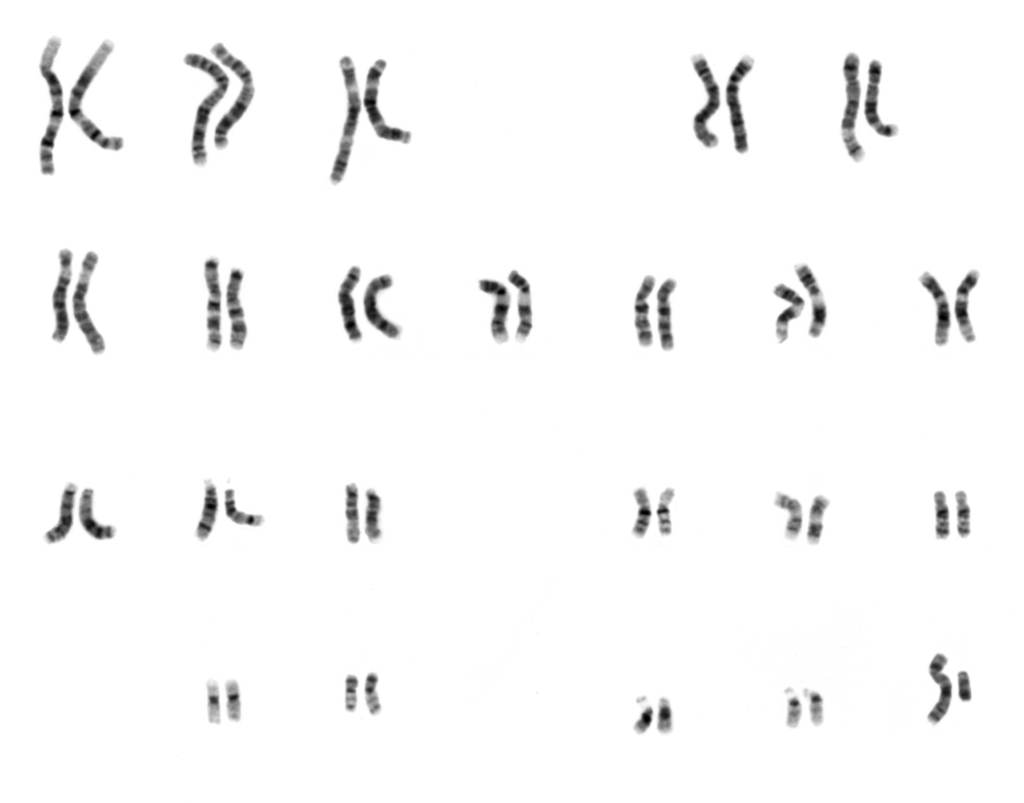
The count of alterations therefore means little on its own. What matters is which change tells the cell to grow. Reading the report begins with finding that signal.
The idea comes from large sequencing projects that mapped tumour genomes side by side. They showed that cancer arises not from a single fault but from changes that accumulate in particular signalling pathways. Alterations that switch a growth pathway on are called oncogenic; those that disable a braking gene are tumour suppressor alterations.
The two groups behave differently under treatment. A gain-of-function oncogene can often be blocked directly. Restoring a lost tumour suppressor is not possible with current drugs, so a second pathway the cell has become dependent on is targeted instead — the logic behind PARP inhibitors in BRCA-altered tumours.
Why a Single Alteration Can Drive a Tumour
Behind the idea of a driver sits an observation known as oncogene addiction. When a tumour hands growth over to one signalling pathway, it has no substitute once that pathway is blocked, and the cell enters its death programme instead of dividing. The rapid shrinkage some patients show on a targeted drug reflects that dependency; the same drug failing without it is the other face.
Dependency varies between tumours. Where the alteration arose early and sits in every tumour cell it is strong; where it appeared later in one population of cells, a drug may leave part of the tumour untouched. The report is read for how much of the tumour an alteration represents, not only its name.
One misunderstanding needs correcting: finding a driver mutation does not prove the tumour will respond. Dependency is a probability, not a guarantee. Different alterations in the same gene can affect the drug binding site differently, so the alteration itself is assessed, not the gene name.
How the Two Are Separated
The distinction rests on several pieces of information read together rather than a single criterion. For each alteration the molecular oncology team asks the same questions in order.
- Is this a known cancer gene in this tumour type?
- Does the change increase the gene’s function or abolish it?
- Has the same alteration been described in the literature and in variant databases?
- Does its variant allele fraction point to a dominant clone?
- Is there an approved drug, or one available within a trial, for this alteration?
Answers are checked against knowledge bases such as OncoKB and CIViC and against guideline texts. The ESCAT scale developed by ESMO then ranks the alteration by how far it can be acted on clinically, from level I to X. Level I means benefit has been shown in prospective trials in that tumour type and the match has entered clinical practice; its sub-tiers separate the kind of evidence: I-A randomised trials, I-B prospective non-randomised trials, and I-C basket trials run across tumour types.

Not Every Mutation Means a Targeted Drug
The board first asks whether the change drives the cancer, then whether it can be targeted with a drug; the work is more than reading the mutations listed in a report.
Levels of Evidence: The ESCAT Scale
For an alteration to count as actionable, the existence of a drug is not enough; benefit has to have been shown in that tumour type. The ESCAT scale makes that difference visible.
| Level | Meaning | Clinical consequence |
|---|---|---|
| I | Benefit shown in randomised trials in the same tumour type | Standard option |
| II | Meaningful responses in early phase trials | Considered in selected patients |
| III | Benefit shown in a different tumour type | Trial or off-label route |
| IV | Laboratory evidence only | Not sufficient for a decision |
| V | Response seen without survival benefit | Interpreted with caution |
| X | Clinical meaning unknown | Does not change the plan |
A level I finding can change the treatment plan outright. A level IV or X finding is usually recorded and no more. The classification is made at the molecular tumour board.
Send Your Reports for Assessment
Share your pathology, imaging and blood results on WhatsApp, or send them by email. Documents are reviewed before the consultation.
Known Drivers by Tumour Type
The same alteration carries different weight in different tumours. The examples below are the ones encountered most often in daily practice.
| Tumour | Driver alteration | Matching treatment |
|---|---|---|
| Lung adenocarcinoma | EGFR, ALK, ROS1, RET, MET, KRAS G12C | Targeted agents |
| Breast cancer | HER2 amplification, PIK3CA, ESR1 | Anti-HER2, PI3K and endocrine pathway drugs |
| Colorectal cancer | RAS, BRAF V600E, MSI-H | Anti-EGFR decision, BRAF agents, immunotherapy |
| Melanoma | BRAF V600 | BRAF and MEK inhibitors |
| Pancreatic cancer | KRAS (depending on the variant), BRCA1/2 | A targeted drug exists for KRAS G12C, but that variant is rare in pancreatic cancer; drugs for the other variants are still investigational. PARP inhibitors for BRCA |
| GIST | KIT, PDGFRA | Tyrosine kinase inhibitors |
This is not a treatment list. Who receives which drug depends on stage, previous lines and approval status; the sequence is described on the targeted therapy page.
For some alterations the choice of drug does not end with a single gene. Where a PIK3CA alteration becomes relevant, and alongside which endocrine treatment, is set out under PIK3CA mutation.
What the Molecular Tumour Board Gives the Patient
A comprehensive analysis can reveal many mutations, and they do not all play the same role. The video explains how passengers are separated from the driver.
Why Variant Allele Fraction Matters
The percentage on the report shows how many of the sequenced DNA fragments carried the alteration. A high fraction suggests the change is present across most of the tumour; a low one may mark a smaller subgroup of cells.
That helps to anticipate how much of the tumour a targeted drug would reach. Treating an alteration present only in a small clone may leave the rest untouched. The figure is always read together with the tumour cell content of the sample.
In practice the fraction orders the options: the alteration representing the dominant clone is taken first, one seen only in a small subclone second. Fractions from tissue and plasma in the same patient are expected to differ, because the two samples describe different cross-sections of the tumour.
Important: In plasma panels some low-fraction alterations come not from the tumour but from age-related clonal changes in blood cells. No treatment decision is taken before that distinction is made.
What to Look For in the Report
Most patients are confronted with a long list the first time they see the report. The order of reading is: the coverage of the panel, then the alterations found, then how each was classified, and finally the matches proposed.
- How many genes the panel covers and whether RNA fusions were sought.
- Tumour mutational burden and microsatellite instability results.
- For each alteration, the gene, the type of change and its fraction.
- The level of evidence and the tumour type it applies to.
- Whether variants of uncertain significance are listed separately.
Variants of uncertain significance sit in their own section and do not change treatment. That subject is covered in what VUS means on an NGS report.
The Limits of the Driver and Passenger Distinction
The split between driver and passenger is a classification built on current knowledge, not an absolute measurement. Variant databases rest on well-studied genes and the commoner tumour types. In rare tumours and little-studied genes, whether a change is a driver mutation or a passenger often remains unclear, and that uncertainty appears as a variant of uncertain significance.
An ESCAT level measures the evidence gathered in that tumour type, not the biology of the gene. A low level states that benefit has not been demonstrated, not that the alteration is unimportant; benefit not demonstrated is not benefit disproved. Classifications move up or down as new data appear, so an older report is reviewed again when a decision is due.
A further limit is reading the driver alone, since other alterations in the same tumour can change what it means. A co-occurring TP53 alteration is discussed under TP53 mutation, and the combinations that affect immunotherapy response in lung cancer under STK11 and KEAP1 mutations.
When No Driver Is Found
Not every patient has an actionable driver. In a proportion of those who undergo comprehensive profiling, either no driver is identified or the one found has no approved drug. That does not make the test a waste.
- The result can spare an ineffective treatment; a RAS-altered colorectal tumour is not given anti-EGFR therapy.
- Findings such as MSI-H or high tumour mutational burden can open the door to immunotherapy.
- An alteration may match the eligibility criteria of a clinical trial.
- Standard treatment continues and the result is revisited at progression.
Where standard options are exhausted, the early access and trial routes described on the treatments page come into play.
Part of it is timing. A panel run at diagnosis can inform the choice of first-line treatment, whereas the same panel after progression usually contributes only to the next line. Guidelines therefore advise requesting it early where an actionable alteration is likely.
Finding a Mutation Does Not Mean There Is a Drug
More than 23,000 genes can be analysed, but not every change carries the same clinical weight. The video explains how findings are classified.
Frequently Asked Questions
What is the difference between a driver mutation and a passenger?
A driver mutation directly steers tumour growth, and blocking it slows the tumour. A passenger sits in the same cell and is copied with it but adds nothing to growth. Treatment decisions follow the driver.
My report lists many mutations. Is that a bad sign?
The number alone does not measure how aggressive a disease is. What matters is which alteration drives growth. In some tumours a high mutational burden raises the chance of benefit from immunotherapy, which is assessed separately.
If a driver is found, does treatment always change?
No. The level of evidence in that tumour type, approval status and previous lines are weighed together. A level I finding on the ESCAT scale can change the plan directly, while a low-level finding is usually only recorded.
Does the same mutation mean the same thing in every cancer?
Not always. BRAF V600E underpins targeted treatment in melanoma, while in colorectal cancer it does not produce the same response alone and requires combination therapy. That is why evidence levels are always tied to tumour type.
Are driver mutations inherited?
Most arise in the tumour itself and are not passed on. A minority relate to an inherited predisposition. The distinction is settled by a germline test performed alongside the tumour panel.
What does variant allele fraction mean?
Variant allele fraction is the proportion of sequenced DNA fragments carrying the alteration. A high fraction suggests presence across most of the tumour, a low one a smaller subgroup. It is interpreted with the tumour cell content of the sample.
Can the driver change over time?
Yes. Under treatment a tumour can acquire new alterations and the dominant clone can shift. A test repeated at progression may show a different picture; that reflects the disease rather than an error.
Related Articles
Liquid Biopsy for Cancer: When It Is Used and What It Shows
Open the Page
What Does VUS Mean on an NGS Report?
Open the PageRelated Pages
Comprehensive Genomic Profiling
Open the Page
Molecular Tumour Board
Open the Page
Targeted Therapy
Open the Page
Precision Oncology
Open the PageSources
- Mateo J, Chakravarty D, Dienstmann R et al. A framework to rank genomic alterations as targets for cancer precision medicine: ESMO Scale for Clinical Actionability of molecular Targets (ESCAT). Ann Oncol 2018;29(9):1895-1902. Link
- Mosele MF, Westphalen CB, Stenzinger A et al. Recommendations for the use of next-generation sequencing (NGS) for patients with advanced cancer in 2024: ESMO Precision Medicine Working Group. Ann Oncol 2024;35(7):588-606. Link
- Li MM, Datto M, Duncavage EJ et al. Standards and Guidelines for the Interpretation and Reporting of Sequence Variants in Cancer (AMP/ASCO/CAP). J Mol Diagn 2017;19(1):4-23. Link
- Vogelstein B, Papadopoulos N, Velculescu VE et al. Cancer genome landscapes. Science 2013;339(6127):1546-1558. Link
- Chakravarty D, Gao J, Phillips S et al. OncoKB: A Precision Oncology Knowledge Base. JCO Precis Oncol 2017. Link
- Luchini C, Lawlor RT, Milella M, Scarpa A. Molecular Tumor Boards in Clinical Practice. Trends Cancer 2020;6(9):738-744. Link
- ESMO Clinical Practice Guidelines, guidelines by cancer type. Link