
What an NGS Report Contains
Next-generation sequencing (NGS) reads the DNA of hundreds of genes at once, from tumour tissue or from a blood sample. The result arrives as a report of 10 to 30 pages. It is requested to find features of the tumour that could direct treatment; the full process, from tissue block to written opinion, is described on the comprehensive genomic profiling page.
Laboratories lay reports out differently, but the sections are broadly the same:
- Actionable (clinically significant) variants
- Gene changes matched to an approved drug, a guideline recommendation or a clinical trial. The summary on the first page highlights these.
- Variants of uncertain significance
- Changes that were detected but whose meaning is not established; usually listed in an appendix in smaller type.
- Tumour mutational burden (TMB)
- The number of mutations per megabase of DNA. High values are associated with a greater chance of response to immunotherapy.
- Microsatellite instability (MSI)
- A sign that the DNA mismatch repair system is faulty; MSI-high tumours often respond to checkpoint inhibitors.
- Fusions and copy number changes
- Two genes joined together (for example NTRK, ALK or RET fusions) or a gene present in extra copies (for example HER2 amplification). Both can be actionable.
- Quality metrics
- Tumour cell content, sequencing depth and the list of genes tested. A low tumour fraction limits how much the result can be trusted.
Why a "Not yet Known" Category Exists
Every human genome carries millions of small differences, and most are harmless. When a laboratory finds a change in a gene, it asks three questions: does the change disrupt the protein's function, has it been seen before in people with cancer, and what have laboratory studies shown? If the evidence does not answer them, the variant is labelled uncertain: "not known", not "dangerous" and not "safe".
For inherited (germline) testing, the ACMG/AMP standard defines five classes: pathogenic, likely pathogenic, uncertain significance, likely benign and benign. For tumour (somatic) testing, the AMP/ASCO/CAP standard sorts variants into four tiers by clinical significance, and a VUS sits in tier III. In both systems, a VUS is not a basis for decisions.
Finding a VUS on a broad panel is expected: the more genes a panel reads, the more changes it finds that have nothing to do with treatment. Several VUS on a 500-gene report do not mean the test failed.
Important: A VUS is not used to start a targeted drug, to change a treatment or to recommend risk-reducing surgery. Offering a targeted therapy on the strength of a VUS alone is contrary to international standards. Nothing on this page replaces a consultation with your own oncologist or clinical geneticist.
Does a Genetic Report Always Point to a Treatment
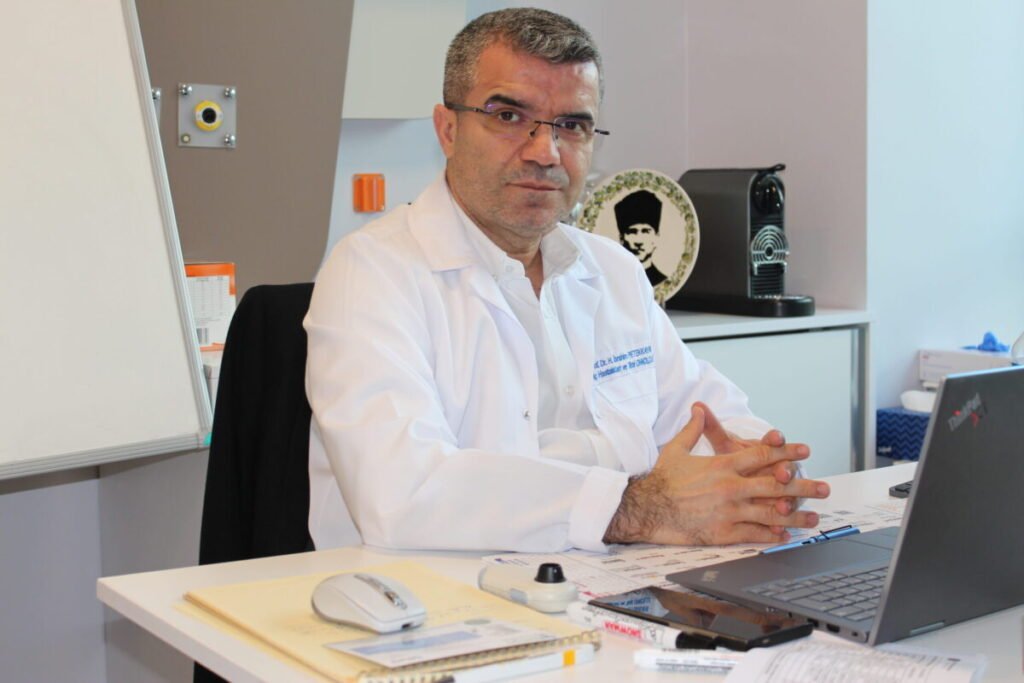
Genetic analyses sometimes give a clear direction and sometimes do not reach the expected target; the video explains how a report should be read.
Tiers, OncoKB Levels and ESCAT
For a variant to count as actionable, there must be evidence that a drug aimed at that change benefits patients with that cancer type. Three grading systems appear on reports and in tumour board discussions. The table sets them side by side.
| Strength of evidence | AMP/ASCO/CAP (2017) | OncoKB | ESMO ESCAT (2018) |
|---|---|---|---|
| Approved drug or standard-of-care recommendation in this cancer type | Tier I-A | Level 1 (FDA-recognised), level 2 (standard care) | I-A, I-B, I-C |
| Clinical trial evidence in this cancer type, no approval yet | Tier I-B or II-C | Level 3A | II-A, II-B |
| Approved drug in a different cancer type | Tier II-C | Level 3B | III-A |
| Preclinical (laboratory) evidence only | Tier II-D | Level 4 | IV |
| Clinical significance unknown (VUS) | Tier III | Not listed | Not scored |
| Associated with drug resistance | Tier I or II (resistance) | R1, R2 | Reported separately |
In practice, treatment decisions rest on tier I and II variants, OncoKB levels 1 to 3 and ESCAT I to II. The ESMO 2024 recommendations on NGS use ESCAT levels to state where broad panel testing should be routine: non-small cell lung cancer, colorectal cancer, prostate cancer, ovarian cancer and cholangiocarcinoma head that list. How the matched drugs work is explained on the targeted therapy page.
Send Your Reports for Assessment
Share your pathology, imaging and blood results on WhatsApp, or send them by email. Documents are reviewed before the consultation.
ClinVar, cBioPortal and Population Data
When a laboratory classifies a variant it consults public databases, and the clinical molecular oncology team working with Prof. Dr. H. Ibrahim Petekkaya (Ezel Bildik) re-checks every actionable variant and every VUS against the same sources before a case is presented.
ClinVar
An open archive run by the US National Center for Biotechnology Information in which laboratories submit their interpretations of variants. For a given variant you can see how many laboratories have classified it and whether they agree. Conflicting submissions are one of the commonest reasons a variant is reported as a VUS.
OncoKB
A knowledge base curated at Memorial Sloan Kettering Cancer Center that links variants to drugs with a level of evidence. It shows which cancer type the evidence applies to and whether the drug is approved, guideline-listed or investigational.
cBioPortal and Population Databases
cBioPortal gives open access to large tumour sequencing datasets, showing how often a variant occurs across cancer types and whether it lies in a hotspot, a position mutated repeatedly. Population databases such as gnomAD show how common a variant is in healthy people; a change carried by many healthy individuals is unlikely to be harmful.
VUS on Tumour Versus Germline Reports
A tumour NGS test looks for somatic changes, those acquired by the cancer cells and not passed to children. A variant in BRCA1, BRCA2, MLH1 or another hereditary cancer gene on a tumour report does not by itself mean it was inherited. ESMO recommends germline confirmation from blood or saliva when a tumour test finds a pathogenic variant in one of these genes; a VUS does not trigger that step.
On a germline panel, a VUS likewise does not lead to testing of relatives, because the concept of a carrier does not apply to an uncertain variant. Family members' risk is assessed from the personal and family history instead, as described on the hereditary cancer risk assessment page. Relatives cannot be told that they do or do not carry a risk; the result simply gives no information at present.
Not Every Mutation Carries the Same Weight
For well known changes such as EGFR, ALK and ROS1 the options are clearer; elsewhere the question is whether the finding really drives the tumour.
How the Molecular Tumour Board Reads the Report
An NGS report is never read in isolation. It is interpreted with the cancer type, stage, previous treatments, pathology and imaging. At Egepol Hospital in Izmir this review takes place at the molecular tumour board, which works through the following steps:
- Technical quality: is the tumour cell content adequate, and does the panel cover the genes relevant to this cancer?
- Actionable variants ranked by evidence level, separating approved drugs, clinical trials and off-label routes.
- The VUS list reviewed for hotspot positions or variants with new publications since the report was issued.
- Findings that raise suspicion of a hereditary syndrome flagged for germline testing and counselling.
- A written recommendation with its reasoning and evidence level, given to the patient and the referring oncologist.
The board does not recommend a drug on the basis of a VUS, but it records when the variant should be looked at again. International patients can have this review done on documents sent in advance; see the international patients page.
Reclassification and Who Tells You
Variant classification is not permanent. As new publications, functional experiments and population data appear, VUS are reclassified. In an analysis of hereditary cancer testing covering about 1.45 million individuals, around nine in ten reclassified VUS were downgraded to benign or likely benign and a small minority were upgraded to pathogenic. The report should therefore be kept in the patient's own records and re-examined at each point where a treatment decision is made, such as recurrence or a change of therapy.
Laboratories do not always notify patients or clinicians of a reclassification, and practice varies between countries. In Prof. Dr. H. Ibrahim Petekkaya's clinic, each VUS is explained to the patient in a sentence, listed in the file and re-queried against current databases at the next decision point. Patients who already have an NGS report from another centre and want it re-read can use the second opinion service; the wider range of services is summarised on the precision oncology page.
Frequently Asked Questions
Is a VUS a positive or a negative result?
Neither. A VUS is a change in a gene that the laboratory could not classify as harmful or harmless with the evidence available. It does not confirm a hereditary cancer syndrome, it does not identify a drug target and it does not rule anything out. Clinical decisions, whether about surgery, targeted drugs or testing relatives, are based on pathogenic and likely pathogenic variants or on actionable somatic variants, not on a VUS.
Should a VUS on a tumour report lead to a family test?
No. A tumour (somatic) report describes changes in the cancer cells, most of which were acquired and cannot be inherited. ESMO recommends germline confirmation when a tumour test finds a pathogenic variant in a hereditary cancer gene such as BRCA1, BRCA2 or the mismatch repair genes; a VUS does not trigger that step. Relatives are not tested for a VUS even when it is found on a germline panel.
Can a VUS be reclassified later?
Yes. The variant itself never changes; the knowledge about it does. As new publications, functional studies and population data accumulate, laboratories update classifications. In a large hereditary cancer testing series, most reclassified VUS moved to benign or likely benign, and a small minority to pathogenic. Keep the report, and ask your oncologist or the laboratory to re-check the classification every few years or before a major treatment decision.
What is the difference between tier 1, tier 2 and tier 3 variants?
In the AMP/ASCO/CAP system for tumour reports, tier I variants have strong clinical significance: an approved drug or a guideline recommendation in that cancer type. Tier II variants have potential significance: an approved drug in another cancer type or supporting clinical trial data. Tier III is a variant of unknown clinical significance, which is the VUS category. Tier IV variants are benign or likely benign and are usually not reported.
What if the report finds no actionable variant at all?
That is a common result and does not mean there is no treatment. Standard chemotherapy, immunotherapy and cancer-specific therapies are planned from guidelines as usual. Tumour mutational burden, microsatellite instability and PD-L1 on the same report may still support immunotherapy. If the tissue sample was small or old, a circulating tumour DNA blood test can be considered as a complementary assay. The result is reviewed together with all other findings at the molecular tumour board.
Can I have my NGS report reviewed remotely from abroad?
Yes. Prof. Dr. H. Ibrahim Petekkaya's clinic offers a remote document review: the NGS report, pathology report and a summary of treatment to date are sent in advance, the molecular oncology team checks each listed variant against current databases and the case is discussed at the molecular tumour board. A written opinion follows, and coordination is available in English. The review does not replace a full consultation and cannot be based on a VUS alone.
Related Articles

How Many Chemotherapy Cycles Will I Have, and Who Decides?
Sayfayı Açın
Why Biomarkers Set the Treatment Order in Metastatic Colorectal Cancer
Sayfayı AçınRelated Pages

Comprehensive Genomic Profiling
Sayfayı Açın
Molecular Tumour Board
Sayfayı Açın
Hereditary Cancer Risk Assessment
Sayfayı Açın
Targeted Therapy
Sayfayı Açın
Precision Oncology
Sayfayı AçınSources and Guidelines
- Li MM et al. Standards and guidelines for the interpretation and reporting of sequence variants in cancer: AMP, ASCO and CAP joint consensus. J Mol Diagn 2017;19(1):4-23. Link
- Richards S et al. Standards and guidelines for the interpretation of sequence variants: ACMG and AMP joint consensus. Genet Med 2015;17(5):405-424. Link
- Mateo J et al. A framework to rank genomic alterations as targets for cancer precision medicine: the ESMO Scale for Clinical Actionability of molecular Targets (ESCAT). Ann Oncol 2018;29(9):1895-1902. Link
- Mosele MF et al. Recommendations for the use of next-generation sequencing (NGS) for patients with advanced cancer in 2024: ESMO Precision Medicine Working Group. Ann Oncol 2024;35(7):588-606. Link
- Chakravarty D et al. OncoKB: a precision oncology knowledge base. JCO Precis Oncol 2017;1:1-16. Link
- Kuzbari Z et al. Germline-focused analysis of tumour-detected variants in 49 cancer predisposition genes: ESMO Precision Medicine Working Group recommendations. Ann Oncol 2023;34(3):215-227. Link
- Mersch J et al. Prevalence of variant reclassification following hereditary cancer genetic testing. JAMA 2018;320(12):1266-1274. Link
- OncoKB, Memorial Sloan Kettering Cancer Center. Link
- ClinVar, National Center for Biotechnology Information. Link
- cBioPortal for Cancer Genomics. Link