
What Triple-Negative Means
Triple-negative means that the oestrogen receptor (ER), progesterone receptor (PR) and HER2 results in the pathology report are all negative. These three results are determined on the biopsy tissue by a staining method called immunohistochemistry, with a FISH test added for HER2 where needed. About 10 to 15 per cent of breast cancers belong to this group (ESMO 2024 guideline).
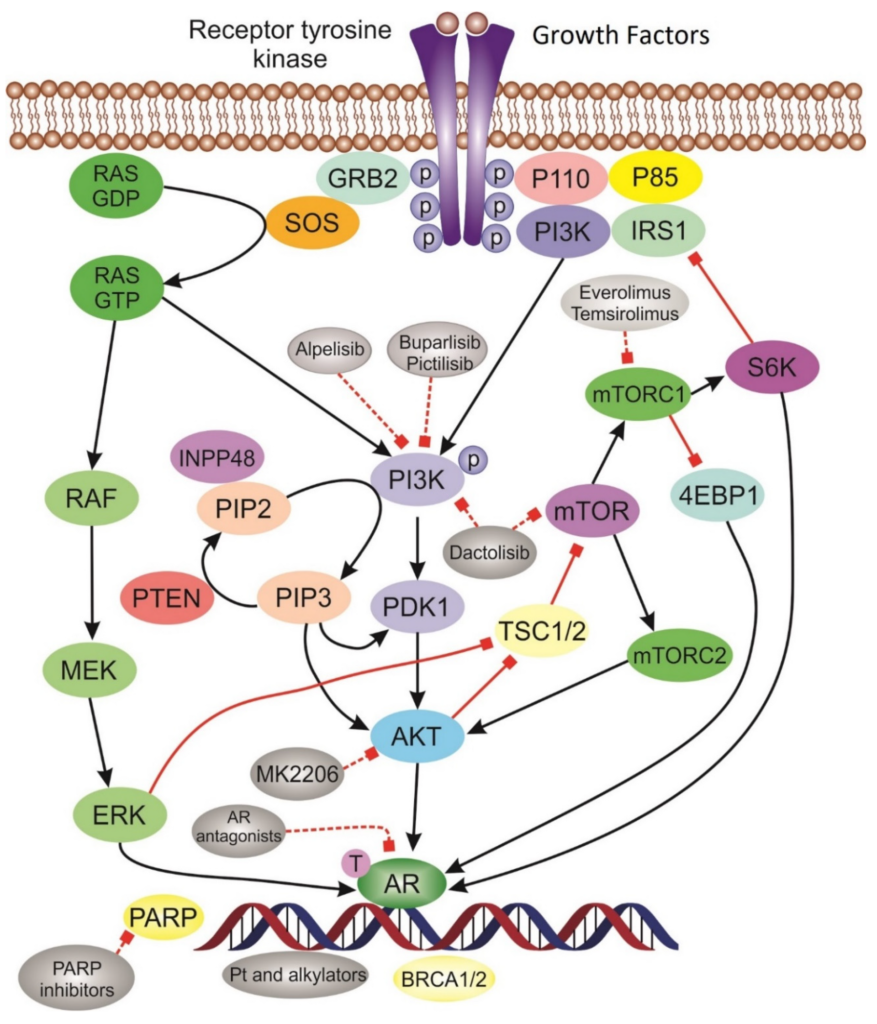
The word "negative" does not mean the disease is mild; it means the tumour does not grow through the hormone or HER2 pathways, so the drugs that block those pathways (tamoxifen, aromatase inhibitors, trastuzumab) do not work. Triple-negative breast cancer therefore relies more on chemotherapy than the other subtypes, and in recent years immunotherapy and antibody-drug conjugates have been developed specifically for it.
Triple-negative tumours are usually high grade and made up of rapidly dividing cells, which makes them sensitive to chemotherapy. Patients who respond well can achieve long-term control, but the recurrence risk is concentrated in the first three years, and follow-up is scheduled accordingly. The general comparison of subtypes is on the breast cancer treatment page; a pathology report from any country that states ER, PR and HER2 is enough to begin the assessment.
Who Is Affected
Triple-negative breast cancer is more common than other subtypes in women under 40, in carriers of a BRCA1 mutation and in women of African ancestry. About 70 per cent of breast cancers in BRCA1 carriers are triple-negative, so a triple-negative diagnosis is in itself a reason for hereditary testing. Factors such as early first period, late first birth and never having breastfed may act differently in this subtype than in others.
The symptoms are the same as in other breast cancers: a palpable lump, swelling in the armpit and skin changes. On a mammogram a triple-negative tumour can sometimes look smooth-edged and mimic a benign lump, which is why any rapidly growing lump needs a biopsy. A proportion of cancers that appear between screening rounds (interval cancers) are of this subtype.
A family history of breast, ovarian, pancreatic or prostate cancer, diagnosis under 50 or male breast cancer are signs of hereditary risk. In that case a hereditary cancer risk assessment with germline BRCA testing is planned; the result affects both the patient's treatment and the screening of first-degree relatives.
Treatment by Stage
Treatment of triple-negative breast cancer is planned by stage, and in tumours of stage 2 and above systemic therapy usually starts before surgery. Treatment choice is determined by the physician according to stage, pathology and molecular findings; surgical and radiotherapy decisions are taken with the relevant specialists, whether in Izmir or at the patient's home centre.
| Stage | Treatment principle | Duration |
|---|---|---|
| Stage 1 (tumour under 2 cm, node-negative) | Surgery first; chemotherapy after surgery if the tumour is over 0.5 cm (anthracycline and taxane, or taxane-based) | Three to six months |
| Stage 2 and 3 (tumour over 2 cm or node-positive) | Chemotherapy with pembrolizumab before surgery (KEYNOTE-522 regimen); then surgery and radiotherapy; pembrolizumab continues after surgery; capecitabine, or olaparib in BRCA carriers, for residual disease | Neoadjuvant phase about six months; adjuvant immunotherapy six months; olaparib one year |
| Stage 4 (metastatic) | Chemotherapy with pembrolizumab if PD-L1 CPS is 10 or higher; PARP inhibitor in BRCA carriers; sacituzumab govitecan, or trastuzumab deruxtecan if HER2-low, in later lines; chemotherapy for other patients | For as long as the drug is effective; no fixed limit |
Treatment before surgery has two aims: to shrink the tumour and to see the effect of the drugs in the surgical specimen. If no living tumour cells remain, this is called a pathological complete response; in the KEYNOTE-522 trial adding pembrolizumab raised this rate from 51 to 65 per cent. Patients with a pathological complete response have a markedly lower recurrence risk; if residual disease is found, additional treatment is given to lower that risk.
The chemotherapy regimen usually consists of 12 weeks of weekly paclitaxel and carboplatin followed by four cycles of an anthracycline; details are on the chemotherapy page. Radiotherapy follows surgery, in every patient after breast-conserving surgery and according to nodal involvement after mastectomy. For international patients, the neoadjuvant phase is the part usually given in Izmir; surgery, radiotherapy and the adjuvant pembrolizumab infusions can be planned at home or here, with a written plan shared with the home team. Immunotherapy given at home requires the same blood monitoring described below.
Please note: the information on this page describes general principles; it does not replace a medical consultation or an individual treatment plan.
Immunotherapy with Chemotherapy
Immunotherapy consists of drugs that release the PD-1 brake which stops immune cells recognising the tumour; in triple-negative breast cancer pembrolizumab is used together with chemotherapy. Chemotherapy breaks up tumour cells and exposes fragments the immune system can recognise; immunotherapy sustains that recognition. The combination has proved more effective than chemotherapy alone; the general principles are on the immunotherapy page.
In early disease (stage 2 and 3) pembrolizumab is given regardless of the PD-L1 result: eight cycles with chemotherapy before surgery and nine cycles alone after it. KEYNOTE-522 (phase III, NEJM 2020 and 2024) raised the three-year event-free survival rate from 76.8 to 84.5 per cent with this regimen and significantly improved overall survival. In metastatic disease, pembrolizumab is added to chemotherapy only in tumours with a PD-L1 combined positive score (CPS) of 10 or higher (KEYNOTE-355); below CPS 10 guidelines do not recommend immunotherapy.
The side effects of immunotherapy differ from those of chemotherapy, because the immune system can also attack healthy tissue. The most common are thyroid dysfunction (15 to 20 per cent), skin rash, diarrhoea or colitis, raised liver enzymes and, rarely, adrenal insufficiency. Thyroid, liver and kidney tests are therefore checked before every cycle, and new diarrhoea, breathlessness or severe fatigue must be reported immediately. Some hormone deficiencies are permanent and are replaced with a daily tablet for life.
In metastatic disease sacituzumab govitecan is an antibody-drug conjugate that binds the TROP2 protein; in the ASCENT trial (NEJM 2021) it delayed progression compared with chemotherapy in previously treated patients, and first-line use has been studied in later phase 3 trials of the ASCENT programme. Marketing authorisation and reimbursement change over time and differ by country; the position that applies to a given patient in Türkiye is checked at the consultation. The mechanism of these drugs is explained on the targeted therapy page.
BRCA and PARP Inhibitors
BRCA1 and BRCA2 are genes that repair damaged DNA; people born with a mutation in one of them have reduced repair capacity in their cells. PARP inhibitors (olaparib, talazoparib) block a second repair pathway, so that a BRCA-mutated tumour cell dies while healthy cells, which retain one repair route, are less affected. These drugs are taken by mouth and are effective only in patients with a germline BRCA mutation.
In early disease the OlympiA trial (phase III, NEJM 2021) showed that one year of olaparib improved invasive disease-free survival in high-risk patients with a germline BRCA mutation; guidelines recommend it for triple-negative patients with residual disease after neoadjuvant treatment. In metastatic disease olaparib (OlympiAD) and talazoparib (EMBRACA) prolonged progression-free survival compared with chemotherapy. When there is residual disease and no BRCA mutation, capecitabine (CREATE-X) is the option.
The common side effects of PARP inhibitors are nausea, fatigue and anaemia; blood counts are checked monthly, which can be arranged locally for patients who take the tablets at home. Because the result also concerns family members, genetic counselling and separate consent precede germline testing. Patients treated at another centre can ask for a second opinion on decisions arising from the test result.
Genomic Assessment
Three tests directly change treatment in triple-negative breast cancer: germline BRCA testing, PD-L1 testing and a re-evaluation of HER2-low status. When each test is requested depends on the stage; not every patient needs every test, and a test result does not always change treatment. All three can be run on the existing biopsy block or a blood sample, so a repeat biopsy is rarely needed for testing alone.
- Germline BRCA1/BRCA2 testing
- Performed on a blood sample. The NCCN guideline recommends it for every triple-negative patient diagnosed under 60 and for all metastatic patients; ESMO 2024 takes a similar approach. The result determines the PARP inhibitor decision and family screening.
- PD-L1 (CPS)
- Tested on tumour tissue by immunohistochemistry; the CPS counts staining in tumour and immune cells together. It is needed only for the immunotherapy decision in metastatic disease; in early disease pembrolizumab is given regardless of PD-L1.
- HER2-low status
- Tumours with a HER2 score of 1+ or 2+ (FISH-negative) may be eligible for trastuzumab deruxtecan in metastatic disease, so the pathologist may be asked to re-read the distinction between HER2 0 and 1+.
- Comprehensive genomic profiling
- In metastatic disease, or when standard lines are exhausted, many genes are screened at once on tumour tissue or by liquid biopsy (analysis of circulating tumour DNA in blood). Alterations such as PIK3CA, AKT1 or NTRK may be assessed for off-label use or clinical trial eligibility.
Response to treatment is assessed by examination and imaging before surgery and by the pathology report afterwards. In metastatic disease a CT or PET-CT is done every two to three cycles and tumour measurements are compared with the previous scan. Follow-up visits take place every three to four months for the first three years and every six months thereafter; routine CT or tumour marker tests are not recommended when there are no symptoms.
Frequently Asked Questions
What is triple-negative breast cancer?
Triple-negative breast cancer is a subtype in which the tumour cells lack all three of the oestrogen receptor, the progesterone receptor and the HER2 protein; it accounts for about 10 to 15 per cent of breast cancers. Because endocrine therapy and HER2-targeted drugs have no target in this tumour, treatment relies on chemotherapy, immunotherapy in selected patients and PARP inhibitors in BRCA carriers. It is more common in younger patients and in carriers of a BRCA1 mutation.
Why is endocrine therapy not used?
Endocrine therapy (tamoxifen, aromatase inhibitors) works by stopping oestrogen from binding to its receptor on the tumour cell; in a triple-negative tumour that receptor is absent, so the drug has nothing to act on. For the same reason HER2-targeted trastuzumab is not used. This does not mean there are no options: triple-negative tumours are sensitive to chemotherapy, and immunotherapy, PARP inhibitors and antibody-drug conjugates have been developed specifically for this subtype.
At which stage is immunotherapy used?
Immunotherapy with pembrolizumab is used in two situations in triple-negative breast cancer: in stage 2 and 3 disease together with chemotherapy before surgery and alone after it, regardless of PD-L1; and in metastatic disease only when the PD-L1 combined positive score is 10 or higher, added to chemotherapy. Guidelines do not recommend immunotherapy in stage 1 disease. In early disease the treatment lasts about a year in total; in metastatic disease it continues for as long as it works.
Why is BRCA testing requested?
BRCA testing looks for an inherited BRCA1 or BRCA2 mutation and is requested in triple-negative breast cancer for two reasons: if a mutation is found, PARP inhibitors such as olaparib become a treatment option, and screening of first-degree relatives can be planned. The NCCN guideline recommends testing for all triple-negative patients diagnosed under 60 and for all metastatic patients. The test uses a blood sample, and genetic counselling and separate consent come first; a result from a laboratory abroad can be used.
How is response assessed?
During treatment before surgery, response is followed by examination and ultrasound or MRI; the definitive assessment is the pathology examination of the surgical specimen. If no living tumour cells remain, a pathological complete response has been achieved, which is associated with a low risk of recurrence; if residual disease is found, additional treatment is planned. In metastatic disease a CT or PET-CT is done every two to three cycles and tumour measurements are compared with the previous scan, which can be performed at home and sent for review.
How is recurrence monitored?
The risk of recurrence in triple-negative breast cancer is concentrated in the first three years, so follow-up visits take place every three to four months for the first three years, every six months for the next two years and yearly thereafter. Each visit includes a physical examination, and a mammogram is done once a year. Routine CT, PET-CT or tumour marker tests are not recommended without symptoms. New bone pain, cough, headache or weight loss should be reported without waiting; the schedule can be shared with the home oncologist.
Related Pages

Breast Cancer Treatment
Open the Page
HER2-positive Breast Cancer
Open the Page
Immunotherapy
Open the Page
Chemotherapy
Open the Page
Targeted Therapy
Open the Page
Hereditary Cancer Risk Assessment
Open the Page
Second Opinion
Open the Page
International Patients
Open the PageSources and Guidelines
- Loibl S et al. Early breast cancer: ESMO Clinical Practice Guideline. Ann Oncol 2024;35(2):159-182. Link
- Gennari A et al. ESMO Clinical Practice Guideline for metastatic breast cancer. Ann Oncol 2021;32(12):1475-1495 (living guideline). Link
- National Comprehensive Cancer Network. NCCN Clinical Practice Guidelines in Oncology: Breast Cancer, version 4.2026. Link
- Schmid P et al. Pembrolizumab for early triple-negative breast cancer (KEYNOTE-522). N Engl J Med 2020;382:810-821. Link
- Schmid P et al. Overall survival with pembrolizumab in early-stage triple-negative breast cancer (KEYNOTE-522). N Engl J Med 2024;391:1981-1991. Link
- Cortes J et al. Pembrolizumab plus chemotherapy in advanced triple-negative breast cancer (KEYNOTE-355). N Engl J Med 2022;387:217-226. Link
- Tutt ANJ et al. Adjuvant olaparib for patients with BRCA1- or BRCA2-mutated breast cancer (OlympiA). N Engl J Med 2021;384:2394-2405. Link
- Bardia A et al. Sacituzumab govitecan in metastatic triple-negative breast cancer (ASCENT). N Engl J Med 2021;384:1529-1541. Link
- Masuda N et al. Adjuvant capecitabine for breast cancer after preoperative chemotherapy (CREATE-X). N Engl J Med 2017;376:2147-2159. Link
- U.S. Food and Drug Administration. Oncology (cancer) / hematologic malignancies approval notifications. Link
- Turkish Society of Medical Oncology. Guidelines and patient information resources. Link
- National Cancer Institute. Breast Cancer Treatment (PDQ), patient version. Link