
What Sarcomas Are and Their Types
Sarcoma is the collective name for malignant tumours that arise from the body's connective tissues: muscle, fat, blood vessels, nerve sheaths, bone and cartilage. It is a different family of cancer from the carcinomas that arise from the lining of organs. Soft tissue sarcomas make up about 1 per cent of adult cancers and bone sarcomas about 0.2 per cent; in Europe four to five new soft tissue sarcomas are diagnosed per 100,000 people each year (ESMO 2021 guideline). The WHO classification lists more than 70 subtypes, and the subtype determines every step of treatment.
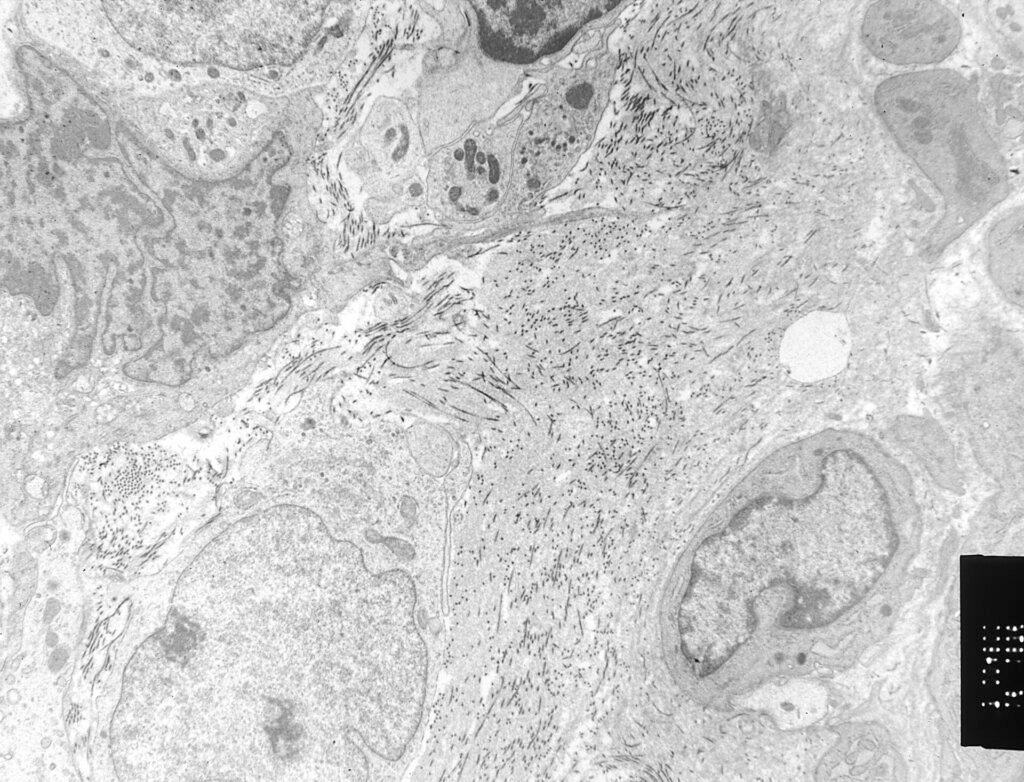
Sarcomas are considered in three main groups: soft tissue sarcomas of the limbs, trunk, retroperitoneum (the back of the abdomen) or internal organs; bone sarcomas such as osteosarcoma, Ewing sarcoma and chondrosarcoma; and gastrointestinal stromal tumour (GIST), which arises from the wall of the digestive tract and has its own biology. The medical oncologist plans chemotherapy and targeted therapy; surgery is performed by orthopaedic oncology or general surgery and radiotherapy by radiation oncology, and decisions are taken together at a sarcoma tumour board.
| Group | Common subtypes | Typical site | Place of systemic treatment |
|---|---|---|---|
| Soft tissue sarcoma | Liposarcoma, leiomyosarcoma, undifferentiated pleomorphic sarcoma, synovial sarcoma, angiosarcoma | Thigh, arm, retroperitoneum, uterus | Chemotherapy around surgery for high-risk tumours; chemotherapy or pazopanib by subtype in metastatic disease |
| Bone sarcoma | Osteosarcoma, Ewing sarcoma, chondrosarcoma | Around the knee, shoulder, pelvis, ribs | Chemotherapy is central in osteosarcoma and Ewing sarcoma; chondrosarcoma does not respond to chemotherapy and surgery is the main treatment |
| GIST | KIT-mutant, PDGFRA-mutant, SDH-deficient | Stomach, small bowel | Resistant to chemotherapy; imatinib and sequential targeted drugs |
Symptoms and Diagnosis: Where the Biopsy Should Be Done
The most common symptom of a soft tissue sarcoma is a lump that is growing and usually painless; any mass larger than 5 cm, lying deep beneath the muscle layer, continuing to grow or becoming painful is assessed for sarcoma (NCCN guideline). Bone sarcomas cause bone pain that is worse at night and not relieved by rest, swelling and fractures after minor injury. Sarcomas inside the abdomen or retroperitoneum can grow very large before causing symptoms, and GIST may present with abdominal fullness, anaemia or bleeding from the digestive tract.
The first step when sarcoma is suspected is imaging: MRI for masses in the limbs and trunk, CT for masses inside the abdomen, and plain X-ray with MRI for bone tumours. Tissue is needed for diagnosis, and how that tissue is obtained affects the treatment. The ESMO guideline recommends a core needle biopsy planned by the surgical team that will later remove the tumour, along a track that can be excised at the operation. An unplanned open biopsy, or piecemeal removal of a mass mistaken for a benign lipoma, can seed tumour cells into the surrounding tissue and make a second, wider operation necessary.
Pathological diagnosis is difficult in sarcoma. Guidelines recommend that the subtype, grade and molecular findings are confirmed by a pathologist experienced in sarcoma, and a second pathology opinion changes the diagnosis in a meaningful proportion of cases. For this reason guidelines ask that every suspected sarcoma is managed from diagnosis in, or in collaboration with, a centre experienced in sarcoma. International patients can send their pathology report, slides or tumour block and imaging for review before any treatment is planned; the steps are described on the treatment pathway page.
Staging and Grade
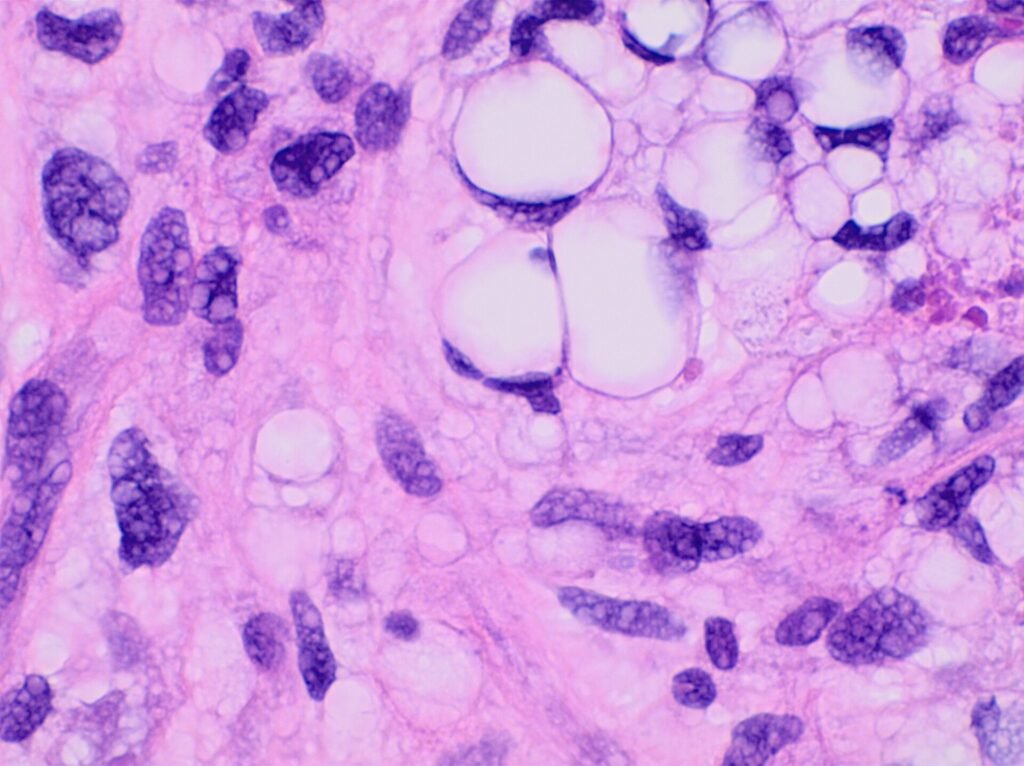
Two measures determine treatment in sarcoma: grade and stage. Grade (FNCLCC system, 1 to 3) scores how fast the cells divide under the microscope, how closely they resemble normal tissue and how much dead tissue is present; grade 3 tumours grow quickly and have a high risk of metastasis (spread), while grade 1 tumours grow slowly and do not respond to chemotherapy. Stage (AJCC 8th edition) combines tumour size (thresholds of 5, 10 and 15 cm), depth, lymph node involvement and distant metastasis: stage 1 is low grade and limited, stages 2 and 3 are high grade and large, and stage 4 is metastatic disease.
A CT scan of the chest is mandatory for staging because soft tissue sarcomas spread most often to the lungs; some subtypes, such as myxoid liposarcoma and Ewing sarcoma, also need abdominal and bone imaging or PET-CT. Tumour size, grade, depth, subtype and the patient's age are combined to estimate the risk of recurrence; tools such as Sarculator, recommended in the ESMO guideline, use this risk in the chemotherapy decision. The choice of treatment is made by the physician on the basis of stage, pathology and molecular findings.
Important: The information on this page describes general principles and does not replace a consultation or an individual treatment plan. Licensing and reimbursement status differ from drug to drug and, as of 21 September 2026, are discussed in their current form at the consultation.
Systemic Treatment by Subtype
In localised soft tissue sarcoma the main treatment is wide surgical excision with a margin of healthy tissue; for tumours larger than 5 cm, deep-seated and high grade, radiotherapy before or after surgery reduces local recurrence. Chemotherapy is not given to everyone; its benefit depends on the subtype and the risk of recurrence. In high-risk limb and trunk sarcomas (grade 3, over 5 cm, deep), three cycles of doxorubicin and ifosfamide before surgery reduced recurrence and death in the ISG-STS 1001 trial, and guidelines recommend this approach in selected patients by tumour board decision. In Ewing sarcoma, osteosarcoma and rhabdomyosarcoma, chemotherapy is a central part of treatment.
In metastatic soft tissue sarcoma the aim of treatment is to control the disease, relieve symptoms and protect quality of life; in selected patients with a small number of lung metastases, surgical removal of the metastases can give long-term control. First-line treatment is doxorubicin, with ifosfamide added when a rapid response is needed or surgery is planned (EORTC 62012). Later lines are chosen by subtype, as summarised below. Chemotherapy can be given in Izmir and surgery at home, or the reverse, when the pathology and imaging are shared between the two teams; neoadjuvant chemotherapy requires a stay of about nine to ten weeks for three cycles. General principles are explained on the chemotherapy and targeted therapy pages.
- Doxorubicin
- First-line chemotherapy in metastatic soft tissue sarcoma; given intravenously every three weeks for up to six cycles. Because the cumulative dose can damage the heart muscle, it is monitored with echocardiography; hair loss, nausea and low blood counts are common side effects.
- Ifosfamide
- Chemotherapy added to doxorubicin or used alone; particularly active in synovial sarcoma. Given with a protective drug (mesna) to prevent bladder damage; kidney function and alertness are monitored.
- Trabectedin
- Used after chemotherapy in liposarcoma and leiomyosarcoma; given as a 24-hour intravenous infusion, with liver enzymes checked every cycle. Eribulin has also prolonged survival in liposarcoma at the same line.
- Pazopanib
- An oral targeted therapy for advanced non-adipocytic sarcomas after chemotherapy; it delayed progression in the PALETTE trial. Blood pressure, liver enzymes and thyroid function are monitored.
- Imatinib
- An oral drug that targets the KIT and PDGFRA proteins in GIST, described in the next section. It is also used in rare subtypes such as dermatofibrosarcoma protuberans.
Adult Ewing sarcoma and osteosarcoma are treated much as in children: osteosarcoma with methotrexate, doxorubicin and cisplatin (MAP) before and after surgery, and Ewing sarcoma with alternating vincristine, doxorubicin and cyclophosphamide with ifosfamide and etoposide for nine to 12 months, with surgery or radiotherapy placed between the cycles. These intensive regimens can affect fertility; sperm or egg freezing is discussed with young patients before treatment starts.
GIST Treatment
Gastrointestinal stromal tumour (GIST) arises from the pacemaker cells that regulate movement in the wall of the digestive tract; it occurs most often in the stomach (60 per cent) and small bowel (30 per cent), and about 80 per cent of cases carry a KIT mutation and 10 per cent a PDGFRA mutation. In localised GIST the main treatment is complete removal of the tumour; lymph node dissection is not required. The risk of recurrence is classed as low, intermediate or high according to tumour size, the number of dividing cells (mitoses) and the site, and this class determines the drug decision.
In patients at high risk of recurrence, three years of imatinib after surgery (400 mg daily by mouth) reduced recurrence and death in the SSG XVIII trial; ESMO and NCCN guidelines regard this duration as standard, and extension to five years is under study. For large tumours, or where surgery would otherwise require removal of an organ, imatinib is given for six to 12 months before the operation to shrink the tumour. In metastatic or unresectable GIST, imatinib continues until the disease progresses; the dose is increased to 800 mg for KIT exon 9 mutations, and avapritinib is used for the PDGFRA D842V mutation, against which imatinib is ineffective.
When resistance to imatinib develops, sunitinib, then regorafenib and, as a fourth line, ripretinib are used in sequence; each delayed progression in a phase 3 trial. Common side effects of imatinib are swelling around the eyes, muscle cramps, diarrhoea, fatigue and anaemia; it is taken with food and plenty of water. Chemotherapy is ineffective in GIST and is not used. Mutation analysis before treatment is required by the guidelines because the mutation type changes both the drug and the dose. Imatinib prescribed in Izmir can be continued at home with blood tests every three months and a CT scan every three to six months shared with the home oncologist.
Genomic Assessment: Fusion Analysis and NTRK
In sarcoma, molecular testing is the tool that makes the diagnosis certain: subtype-specific changes such as the SS18-SSX fusion in synovial sarcoma, EWSR1-FLI1 in Ewing sarcoma, PAX3-FOXO1 in alveolar rhabdomyosarcoma and MDM2 amplification in well-differentiated liposarcoma confirm or correct the pathological diagnosis. These fusions are detected by FISH, RT-PCR or next-generation sequencing (NGS), and guidelines require molecular confirmation in every sarcoma whose diagnosis is uncertain. In GIST, KIT and PDGFRA mutation analysis is standard before treatment.
Comprehensive genomic profiling (a broad tumour genetic test) answers a second question after the diagnosis: does the tumour carry a targetable change? In sarcomas with an NTRK fusion (infantile fibrosarcoma and rare adult sarcomas), larotrectinib or entrectinib is approved regardless of tumour type and produces a high response rate; an ALK fusion in inflammatory myofibroblastic tumour, the EZH2 inhibitor tazemetostat in epithelioid sarcoma and the gamma-secretase inhibitor nirogacestat in desmoid tumour follow the same logic. These changes are rare and the result does not change treatment in most patients, but in metastatic disease where standard lines are exhausted, options are not declared exhausted without this search. The testing process and how to read the report are described on the comprehensive genomic profiling page.
Rare subtypes, uncertain pathology and unusual findings are discussed at the molecular tumour board; clinical trials and off-label use are considered only as a matter for assessment. Inherited (germline) mutations play a role in a small proportion of sarcomas; Li-Fraumeni syndrome (TP53), neurofibromatosis type 1 and hereditary retinoblastoma are investigated when the diagnosis is made at a young age or several cancers cluster in the family. A diagnosis made or a plan started at another centre can be reviewed as a second opinion; other cancers are listed on the cancer types page.
Frequently Asked Questions
Is sarcoma a cancer?
Yes. Sarcoma is a malignant tumour arising from bone, muscle, fat, blood vessels or connective tissue, and so it is a cancer. It is a different family from the carcinomas that arise from the lining of organs (breast, lung, bowel cancer and others) and accounts for about 1 per cent of adult cancers. There are more than 70 subtypes; some grow slowly and some quickly. Benign soft tissue tumours such as lipomas are not sarcomas; the distinction is made by biopsy and pathological examination.
How long does sarcoma treatment take?
The duration depends on subtype and stage. In early-stage soft tissue sarcoma needing only surgery and radiotherapy, active treatment finishes within two to three months. In high-risk tumours, chemotherapy before and after surgery gives a total of six to eight months. Osteosarcoma and Ewing sarcoma need about nine to 12 months of chemotherapy combined with surgery and radiotherapy. In GIST, imatinib is taken for three years after surgery. In metastatic disease, treatment continues while the drug is working, and the duration varies from person to person.
What is GIST?
GIST (gastrointestinal stromal tumour) is a sarcoma arising from the pacemaker cells in the wall of the digestive tract, most often in the stomach or small bowel. About 80 per cent of cases carry a KIT mutation and 10 per cent a PDGFRA mutation, targeted by the oral drug imatinib. Small, low-risk GIST is treated by surgery alone; high-risk tumours receive three years of imatinib after surgery, and metastatic disease receives imatinib until it progresses. The mutation type changes the drug and the dose.
Does chemotherapy work for sarcoma?
In some situations, yes. The benefit depends on the subtype: Ewing sarcoma, osteosarcoma, rhabdomyosarcoma and synovial sarcoma are sensitive to chemotherapy, and in these tumours it is a central part of treatment. In high-risk soft tissue sarcomas (over 5 cm, deep, grade 3), doxorubicin with ifosfamide around surgery reduces the risk of recurrence. In metastatic disease, chemotherapy shrinks the tumour, relieves symptoms and can prolong survival. Low-grade sarcomas and GIST do not respond to chemotherapy; GIST is treated with targeted therapy. The decision is made at the sarcoma tumour board.
Why is a sarcoma-experienced centre recommended?
Because sarcoma is rare and its subtypes behave very differently. The ESMO guideline recommends that every suspected sarcoma is managed from diagnosis in, or in collaboration with, a centre experienced in sarcoma. A poorly planned biopsy or piecemeal removal of the tumour makes the later operation harder, and confirmation of the subtype by an experienced pathologist changes treatment in a meaningful proportion of cases. In such a centre, orthopaedic oncology, pathology, radiation oncology and medical oncology decide together at one tumour board, an approach that guidelines associate with better outcomes.
Are childhood and adult sarcomas different?
Yes, both the types and the treating teams differ. Rhabdomyosarcoma, Ewing sarcoma and osteosarcoma are common in children, and patients under 18 are treated by paediatric oncology. In adults, liposarcoma, leiomyosarcoma and GIST predominate, and medical oncology is responsible. Ewing sarcoma and osteosarcoma also occur in young adults, who are treated with intensive chemotherapy similar to the childhood protocols and, where needed, planned jointly with paediatric oncology. Fertility preservation is discussed with young adults before treatment begins.
Can my sarcoma subtype be reviewed by a second pathologist?
Yes, and guidelines recommend it. The original pathology report, the stained slides or unstained sections and, where possible, the paraffin tumour block can be sent for review by a pathologist experienced in sarcoma; molecular tests such as fusion analysis or KIT and PDGFRA mutation testing are added when the diagnosis is uncertain. The review usually takes two to three weeks. Prof. Dr. H. Ibrahim Petekkaya then discusses the confirmed subtype and its treatment implications with the patient and, on request, with the home oncologist in writing.
Related Pages
Chemotherapy
Open the Page
Targeted Therapy
Open the Page
Comprehensive Genomic Profiling
Open the Page
Molecular Tumour Board
Open the Page
Second Opinion
Open the Page
Treatment Pathway
Open the Page
Cancer Types
Open the PageSources and Guidelines
- Gronchi A et al. Soft tissue and visceral sarcomas: ESMO-EURACAN-GENTURIS Clinical Practice Guidelines. Ann Oncol 2021;32(11):1348-1365. Link
- Casali PG et al. Gastrointestinal stromal tumours: ESMO-EURACAN-GENTURIS Clinical Practice Guidelines. Ann Oncol 2022;33(1):20-33. Link
- Strauss SJ et al. Bone sarcomas: ESMO-EURACAN-GENTURIS-ERN PaedCan Clinical Practice Guideline. Ann Oncol 2021;32(12):1520-1536. Link
- National Comprehensive Cancer Network. NCCN Clinical Practice Guidelines in Oncology: Soft Tissue Sarcoma. Link
- National Comprehensive Cancer Network. NCCN Clinical Practice Guidelines in Oncology: Gastrointestinal Stromal Tumors. Link
- Judson I et al. Doxorubicin alone versus intensified doxorubicin plus ifosfamide for first-line treatment of advanced soft-tissue sarcoma (EORTC 62012). Lancet Oncol 2014;15(4):415-423. Link
- Gronchi A et al. Histotype-tailored neoadjuvant chemotherapy versus standard chemotherapy in patients with high-risk soft-tissue sarcomas (ISG-STS 1001). Lancet Oncol 2017;18(6):812-822. Link
- van der Graaf WT et al. Pazopanib for metastatic soft-tissue sarcoma (PALETTE). Lancet 2012;379(9829):1879-1886. Link
- Demetri GD et al. Efficacy and safety of trabectedin or dacarbazine for metastatic liposarcoma or leiomyosarcoma. J Clin Oncol 2016;34(8):786-793. Link
- Joensuu H et al. One vs three years of adjuvant imatinib for operable gastrointestinal stromal tumor (SSG XVIII). JAMA 2012;307(12):1265-1272. Link
- Drilon A et al. Efficacy of larotrectinib in TRK fusion-positive cancers in adults and children. N Engl J Med 2018;378:731-739. Link
- Cancer Research UK. Soft tissue sarcoma: symptoms, diagnosis and treatment. Link
- International Agency for Research on Cancer (WHO). GLOBOCAN 2022, Global Cancer Observatory. Link
- Turkish Society of Medical Oncology. Guidelines and patient information resources. Link