
Symptoms and Risk Factors
The most common symptoms of pancreatic cancer are painless jaundice (yellowing of the skin and eyes), upper abdominal pain that spreads to the back, loss of appetite and unexplained weight loss. Dark urine, pale and greasy stools, itching and nausea often accompany the jaundice. Diabetes that starts after the age of 50, or long-controlled diabetes that suddenly worsens, can be the first sign. Because symptoms appear late, more than half of patients already have metastatic disease at diagnosis.
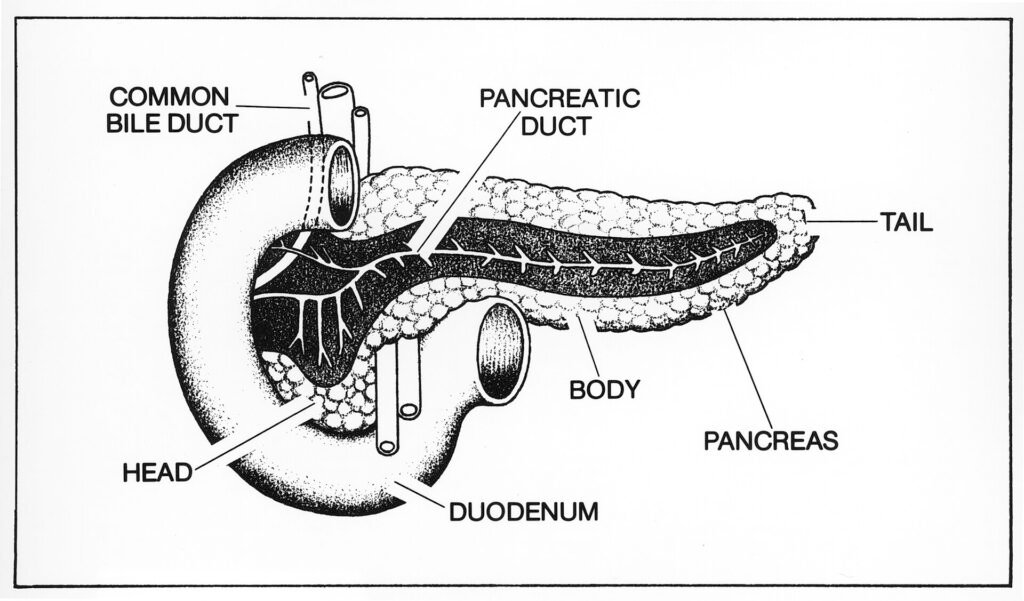
The pancreas lies behind the stomach at the back of the upper abdomen. Its head sits in the curve of the duodenum, where the main bile duct passes through it, which explains why tumours of the head cause early jaundice; tumours of the body and tail cause symptoms later. About 90 per cent of pancreatic cancers are ductal adenocarcinomas arising from the cells that line the ducts, and this page describes that tumour. Neuroendocrine tumours of the pancreas are rarer, behave differently and are treated differently.
According to IARC GLOBOCAN 2022, about 511,000 people are diagnosed with pancreatic cancer each year worldwide and it is the sixth most common cause of cancer death. Most patients are over 60. Smoking is the most important modifiable risk factor; obesity, long-standing diabetes, chronic pancreatitis and heavy alcohol use also raise the risk. A family history of pancreatic cancer, a known mutation in BRCA1, BRCA2, PALB2, ATM or a Lynch syndrome gene, and hereditary pancreatitis are markers of inherited risk. Screening is not recommended for the general population; annual MRI or endoscopic ultrasound surveillance is offered only to high-risk families in specialist centres. Anyone with new jaundice, back-radiating abdominal pain with weight loss or unexplained changes in blood sugar should see a doctor without delay.
Diagnosis and Staging
The first step in diagnosing pancreatic cancer is a thin-slice, pancreas-protocol CT scan, which shows the size of the tumour and its relationship to the major abdominal blood vessels. Tissue diagnosis is obtained by fine-needle biopsy under endoscopic ultrasound (EUS). In some patients who are going straight to surgery the operation may proceed without a biopsy, but a tissue diagnosis is required before any chemotherapy. The blood marker CA 19-9 does not establish the diagnosis, but it is useful for monitoring response; it can be falsely high while jaundice is present.
Alongside the TNM stage, pancreatic cancer is classified by resectability, because the treatment decision hinges on whether the tumour touches the coeliac artery, the superior mesenteric artery or the portal vein. PET-CT or liver MRI is added when metastasis is suspected, and a laparoscopy may be needed before surgery to look for small peritoneal deposits that CT cannot show. Treatment is selected by the treating oncologist on the basis of stage, pathology and molecular findings, and surgical decisions are made together with a hepatopancreatobiliary surgeon.
| Class | Definition | Aim and approach |
|---|---|---|
| Resectable | No contact with the major arteries; no or limited portal vein contact; about 15 to 20 per cent of cases | Long-term control; surgery followed by six months of adjuvant chemotherapy. Chemotherapy first is considered with high-risk features (high CA 19-9, large tumour) |
| Borderline resectable | Arterial contact of less than 180 degrees or partial portal vein involvement that can be reconstructed | Long-term control; two to four months of chemotherapy first (with chemoradiotherapy if needed), then surgery if the tumour responds |
| Locally advanced (unresectable) | Arterial encasement of more than 180 degrees or a portal vein that cannot be reconstructed; no distant spread; about 30 per cent of cases | Disease control; four to six months of chemotherapy, then reassessment. Surgery becomes possible in a minority whose tumour shrinks |
| Metastatic | Spread to the liver, peritoneum, lungs or distant lymph nodes; about 50 per cent of cases | Disease and symptom control; chemotherapy, targeted therapy where a biomarker allows it, and supportive care |
Assessment of Resectability from Abroad
Whether a tumour is borderline resectable can usually be judged from a good-quality pancreas-protocol CT, so patients abroad are asked to send the scan in DICOM format together with the radiology report, the pathology report and recent blood tests including bilirubin and CA 19-9. The review states which resectability class the tumour is likely to fall into and which sequence of treatment would be considered; the final decision is made at a multidisciplinary meeting with the surgeon after the patient is seen. The steps are set out on the treatment pathway page.

KRAS and Oral Treatment in Pancreatic Cancer
KRAS mutations are the most common change in pancreatic cancer. The video covers the oral treatment now used in advanced disease and how its side effect profile differs from classical chemotherapy.
Chemotherapy Options
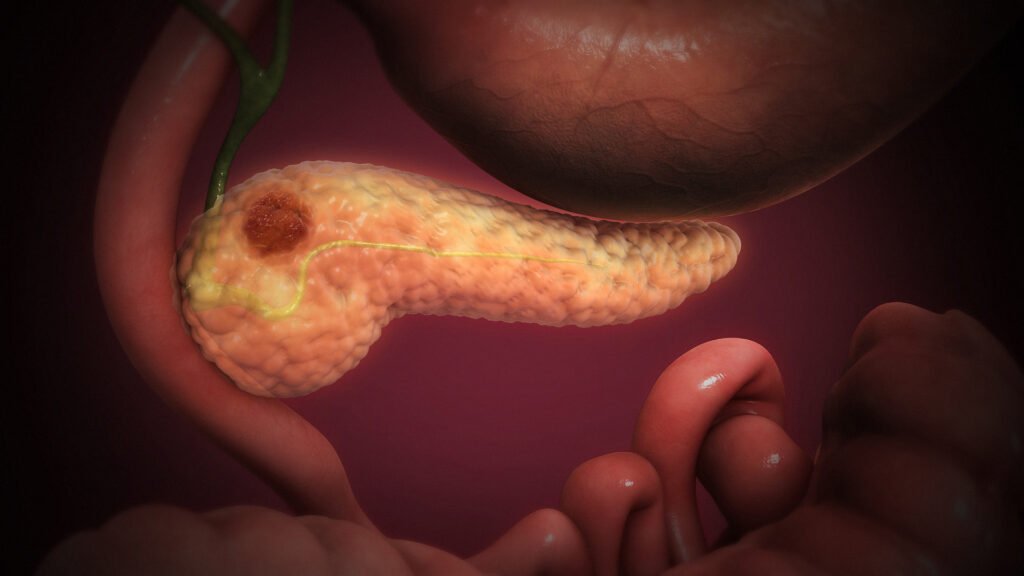
Chemotherapy for pancreatic cancer is chosen according to the patient's general fitness (performance status), age, bilirubin level and other illnesses. Fit patients receive the four-drug regimen mFOLFIRINOX, which the PRODIGE 4 trial showed to be more effective than gemcitabine alone in metastatic disease. Patients with intermediate fitness receive gemcitabine with nab-paclitaxel (MPACT trial), and frailer patients receive gemcitabine alone. The general principles of chemotherapy are explained on a separate page.
- mFOLFIRINOX
- 5-fluorouracil, folinic acid, irinotecan and oxaliplatin at modified doses, every two weeks with a 46-hour home infusion pump. The standard for fit patients after surgery (six months, PRODIGE 24 trial) and in advanced disease. Main side effects are diarrhoea, tiredness, low blood counts and neuropathy.
- Gemcitabine with nab-paclitaxel
- Given on days 1, 8 and 15 of a four-week cycle. An alternative first-line regimen for patients who are not fit enough for mFOLFIRINOX or who have a high bilirubin. Side effects include neuropathy, hair loss and low blood counts.
- NALIRIFOX
- Liposomal irinotecan with 5-fluorouracil, folinic acid and oxaliplatin. In the NAPOLI 3 trial it improved on gemcitabine with nab-paclitaxel in first-line metastatic disease and is an option where liposomal irinotecan is available.
- Gemcitabine alone or with capecitabine
- Used for frailer patients and, after surgery, for those who cannot tolerate mFOLFIRINOX. Generally well tolerated; the main side effects are tiredness, mild nausea and low blood counts.
Adjuvant chemotherapy after surgery is standard even when the tumour has been completely removed, because the risk of microscopic spread is high. It starts within 12 weeks of the operation once the patient has recovered. In metastatic disease, first-line chemotherapy continues for as long as the disease is controlled and side effects are acceptable; response is checked with CT and CA 19-9 every two to three months. Second-line treatment switches to the other class of drugs: a fluorouracil-based regimen after gemcitabine, or a gemcitabine-based regimen after mFOLFIRINOX. Side effects are reviewed before every cycle and doses adjusted accordingly.
Scheduling Cycles for a Patient from Abroad
mFOLFIRINOX is given every 14 days and the pump is removed after 46 hours, so an international patient starting treatment in Izmir needs to plan for a stay that covers the first cycles, the blood tests before each cycle and the first response assessment. Some patients then continue the same regimen with their oncologist at home. When this is planned, the regimen, doses, growth-factor support and side-effect record are handed over in writing in English, and the response scan is reviewed by both teams.
Important: The information on this page describes general principles. It does not replace a consultation or an individual treatment plan. Licensing and access to specific drugs differ between countries and are discussed at the consultation. Treatments presented as new that are not in the guidelines are questioned on their level of evidence.
Treatment Before Surgery
Chemotherapy before surgery (neoadjuvant treatment) is the standard approach for borderline resectable and locally advanced pancreatic cancer. ESMO 2023 and NCCN guidelines recommend two to four months of mFOLFIRINOX or gemcitabine with nab-paclitaxel rather than immediate surgery in these patients. The aims are to pull the tumour away from the vessels, allow an operation with clear margins and control microscopic spread early. If the disease progresses quickly during this period, it becomes clear that the patient would not benefit from a major operation, and an unnecessary procedure is avoided.
After chemotherapy, the response is assessed with CT and CA 19-9. Patients whose vessel contact has decreased or whose marker has fallen clearly are scheduled for surgery. Some centres add a short course of chemoradiotherapy or stereotactic radiotherapy before the operation; this is decided at a meeting of the hepatopancreatobiliary surgeon, radiation oncologist and medical oncologist. Even in resectable tumours, neoadjuvant treatment is considered when risk features such as a high CA 19-9 or a large tumour are present. This is an area where guidelines are still evolving.
A patient with jaundice has an endoscopic biliary stent placed before chemotherapy and waits for the bilirubin to fall, because irinotecan and gemcitabine are processed by the liver. Fever and chills after stenting are signs of cholangitis (bile duct infection) and are assessed the same day. A patient who has already been told elsewhere that surgery is or is not possible may ask for a second opinion; this does not imply rejecting the first team's plan.
Genomic Assessment
Genetic assessment in pancreatic cancer works on two levels: inherited (germline) mutations found in a blood sample, and changes in the tumour tissue (somatic changes). The NCCN guideline recommends germline testing for every patient with pancreatic adenocarcinoma regardless of age or family history, because about 5 to 10 per cent carry a mutation in BRCA1, BRCA2, PALB2, ATM or a Lynch syndrome gene. This assessment is described on the hereditary cancer risk assessment page, and germline results are usually available within two to three weeks.
Patients with a germline BRCA1, BRCA2 or PALB2 mutation are preferentially treated with platinum-containing chemotherapy (mFOLFIRINOX). According to the POLO trial, patients whose disease has not progressed after at least 16 weeks of platinum treatment can switch to maintenance olaparib tablets, which prolong the time before the disease grows again. In the tumour, MSI-high or MMR-deficient status (about 1 per cent) opens the option of immunotherapy, and an NTRK fusion opens the option of larotrectinib or entrectinib. Comprehensive genomic profiling (a broad tumour genetic test) screens for these targets in one run; the process is explained on the comprehensive genomic profiling page.
About 90 per cent of pancreatic cancers carry a KRAS mutation. For the KRAS G12C subtype (1 to 2 per cent), sotorasib and adagrasib are second-line options. Daraxonrasib, which targets a broader range of RAS mutations, is being studied in previously treated metastatic pancreatic cancer in a phase 3 trial; it is not licensed and is available only inside a clinical trial. Marketing authorisation and reimbursement change over time and differ by country; the position that applies to a given patient in Türkiye is checked at the consultation. Rare findings and patients who have exhausted standard lines are discussed at the molecular tumour board, where clinical trial participation is a matter for assessment only. A test result does not always change treatment.
Nutrition and Supportive Care
Nutritional support is an integral part of pancreatic cancer treatment, because most patients develop enzyme insufficiency, loss of appetite and muscle loss. Pancreatic enzyme replacement (lipase capsules taken with meals) reduces greasy stools, bloating and weight loss, and the ESMO guideline recommends considering it for all patients. Small frequent meals, adequate protein and, where needed, oral nutritional supplements are planned with a dietitian, and diabetes is managed together with an endocrinologist.
Pain arises from pressure on the nerve plexus behind the abdomen and is controlled in steps: regular analgesics, opioids when needed and, if the response is inadequate, a coeliac plexus block performed under endoscopic ultrasound. Pain control does not delay treatment and is not a last resort. The risk of blood clots is high in pancreatic cancer; swelling of one leg or sudden breathlessness is assessed the same day.
Support When Returning Home Between Cycles
Patients who travel home between cycles receive a written plan in English covering enzyme doses, analgesic doses and the symptoms that should prompt contact with a doctor, so that their local physician can continue the same approach. Dietary needs, religious observance or a companion's presence are taken into account in planning when the patient mentions them. The other cancers of the digestive tract and their shared biomarker logic are described on the gastrointestinal cancers page. Methods described as alternative that do not appear in the guidelines are not treatment options; because such products may interact with chemotherapy drugs, every product taken should be reported to the oncologist.
Frequently Asked Questions
Is pancreatic cancer treatable?
Yes. Pancreatic cancer is treated at every stage, but the aim of treatment depends on the stage. For tumours that can be removed, surgery combined with chemotherapy aims at long-term control. For borderline resectable and locally advanced tumours, chemotherapy is given first and the chance of surgery is reassessed. In metastatic disease the aim is to keep the disease under control, relieve symptoms and protect quality of life. Outcomes vary from person to person according to stage, general fitness and response, and guideline figures are interpreted individually at the consultation.
What is FOLFIRINOX?
FOLFIRINOX is a four-drug chemotherapy regimen used in pancreatic cancer: 5-fluorouracil, folinic acid, irinotecan and oxaliplatin. It is given intravenously every two weeks, with the 5-fluorouracil running as a 46-hour infusion through a portable pump. A reduced-dose version (mFOLFIRINOX) is preferred to limit side effects. Fit patients receive it for six months after surgery, and in metastatic disease it continues for as long as it works. The most common side effects are diarrhoea, tiredness, low blood counts and numbness in the hands and feet.
Why is chemotherapy given before surgery?
Chemotherapy before surgery (neoadjuvant treatment) is given in borderline resectable and locally advanced pancreatic cancer, where the tumour lies close to major blood vessels. It shrinks the tumour, controls microscopic spread early and improves the chance of removing the tumour with clear margins. Usually two to four months of mFOLFIRINOX or gemcitabine with nab-paclitaxel are given, then the response is assessed with CT and CA 19-9. It also reveals fast-growing disease that would not benefit from surgery. The decision is made jointly by the surgeon and medical oncologist.
Why is genetic testing requested?
Genetic testing in pancreatic cancer serves two purposes. A germline blood test looks for inherited mutations in BRCA1, BRCA2, PALB2 and related genes; NCCN recommends it for every patient because carriers respond better to platinum chemotherapy and can receive maintenance olaparib. Tumour tissue testing looks for KRAS, MSI, NTRK and other targets that open further options. If an inherited mutation is found, family members can be offered screening. Testing can be done on blood and biopsy samples sent from abroad.
How is jaundice managed?
Jaundice in pancreatic cancer is caused by the tumour blocking the bile duct, and it must be relieved before chemotherapy begins because a high bilirubin level prevents the liver from processing the drugs. A stent is placed in the bile duct by endoscopy; bilirubin usually falls within two to four weeks and chemotherapy then starts. If surgery is planned within a short time, the surgeon may proceed without a stent. Fever, chills or worsening jaundice after stenting suggest a blocked or infected stent and need same-day assessment.
Are pancreatic enzymes needed?
Most people with pancreatic cancer need enzyme replacement. When the tumour or surgery reduces the digestive enzymes that the pancreas produces, greasy stools, bloating, diarrhoea and weight loss follow. Pancreatic enzyme capsules taken with every meal and snack replace what is missing, and the ESMO guideline notes that they reduce weight loss and malnutrition. The dose is matched to the fat content of meals with a dietitian. Enzyme replacement continues throughout chemotherapy and for a long period after surgery.
Related Pages
Gastrointestinal Cancers
Open the Page
Chemotherapy
Open the Page
Hereditary Cancer Risk Assessment
Open the Page
Comprehensive Genomic Profiling
Open the Page
Molecular Tumour Board
Open the Page
Second Opinion
Open the Page
Targeted Therapy
Open the Page
International Patients
Open the PageSources and Guidelines
- Conroy T et al. Pancreatic cancer: ESMO Clinical Practice Guideline for diagnosis, treatment and follow-up. Ann Oncol 2023;34(11):987-1002. Link
- National Comprehensive Cancer Network. NCCN Clinical Practice Guidelines in Oncology: Pancreatic Adenocarcinoma. Link
- Conroy T et al. FOLFIRINOX versus gemcitabine for metastatic pancreatic cancer (PRODIGE 4/ACCORD 11). N Engl J Med 2011;364:1817-1825. Link
- Conroy T et al. FOLFIRINOX or gemcitabine as adjuvant therapy for pancreatic cancer (PRODIGE 24/CCTG PA.6). N Engl J Med 2018;379:2395-2406. Link
- Von Hoff DD et al. Increased survival in pancreatic cancer with nab-paclitaxel plus gemcitabine (MPACT). N Engl J Med 2013;369:1691-1703. Link
- Golan T et al. Maintenance olaparib for germline BRCA-mutated metastatic pancreatic cancer (POLO). N Engl J Med 2019;381:317-327. Link
- Wainberg ZA et al. NALIRIFOX versus nab-paclitaxel and gemcitabine in treatment-naive patients with metastatic pancreatic ductal adenocarcinoma (NAPOLI 3). Lancet 2023;402(10409):1272-1281. Link
- U.S. Food and Drug Administration. Oncology (cancer) / hematologic malignancies approval notifications (RAS and KRAS G12C inhibitors). Link
- International Agency for Research on Cancer (WHO). GLOBOCAN 2022, Global Cancer Observatory. Link
- National Cancer Institute. Pancreatic Cancer Treatment (PDQ), patient version. Link
- Cancer Research UK. Pancreatic cancer: symptoms, stages and treatment. Link
- Republic of Türkiye Ministry of Health, General Directorate of Public Health. Cancer statistics. Link