
Symptoms and Risk Factors
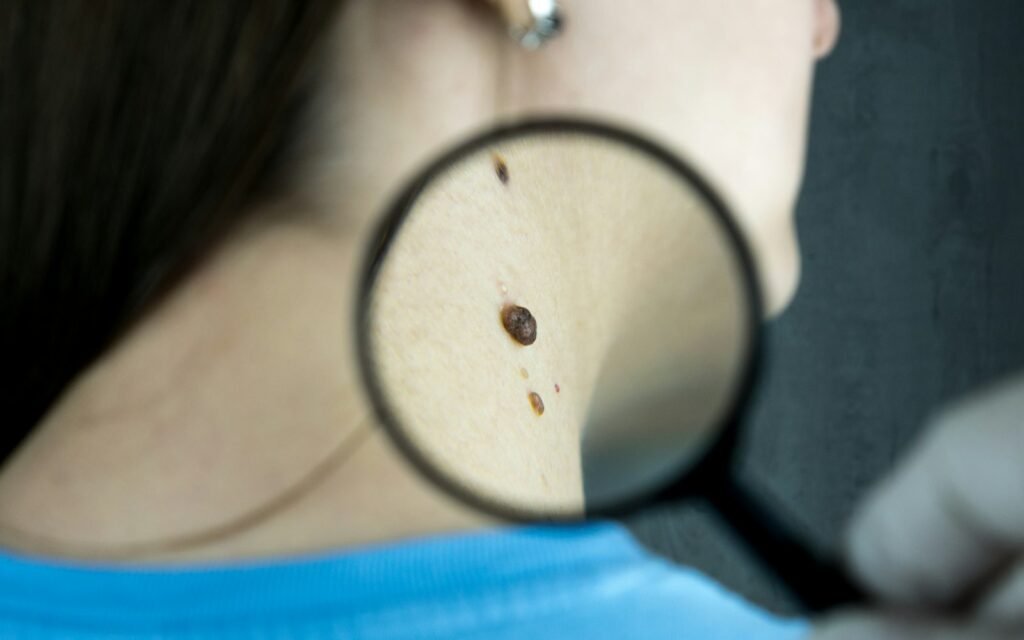
Melanoma is a skin cancer that arises from the pigment cells (melanocytes), and its most common sign is a change in the shape, colour or size of an existing mole or the appearance of a new dark lesion. Itching, bleeding, crusting and a mole becoming raised are warning signs. A dark streak running along a nail, a dark patch on the palm or sole, and a pigmented area inside the mouth can also be melanoma. A single mole that looks different from all the others (the ugly duckling sign) is assessed regardless of the ABCDE criteria, which are explained on the skin cancers page.
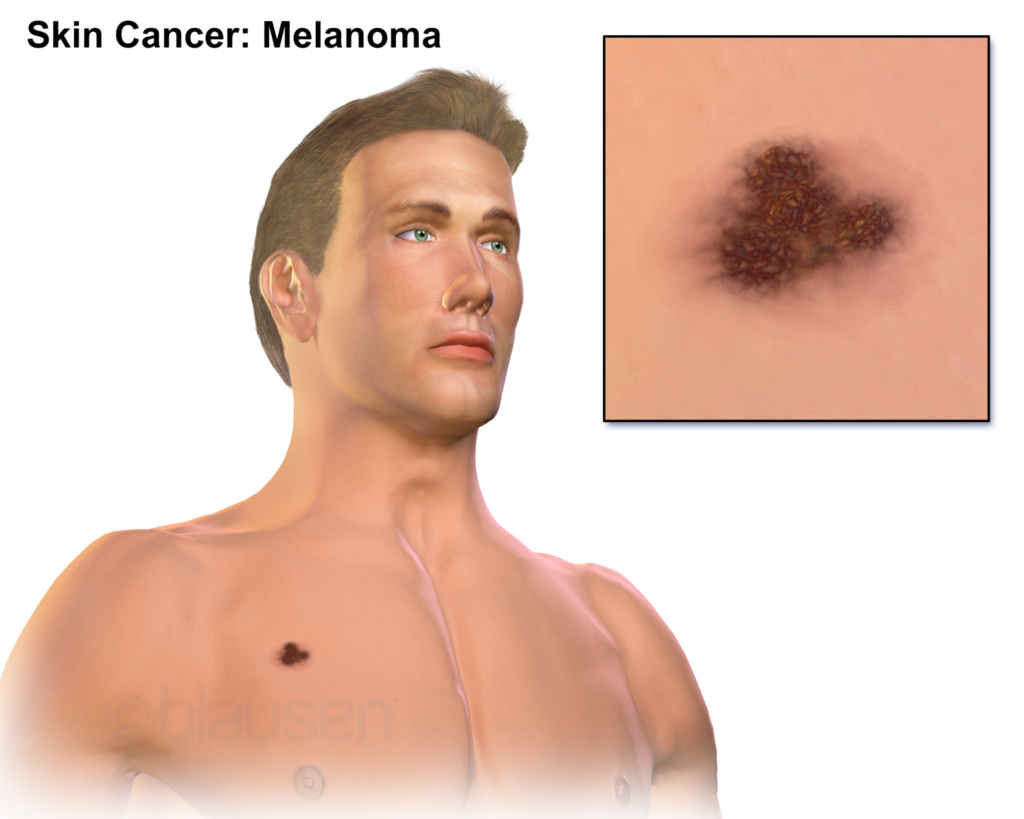
According to IARC GLOBOCAN 2022, about 330,000 melanomas are diagnosed worldwide each year, with the highest rates in Australia, New Zealand, Northern Europe and North America. Melanoma makes up about 5 per cent of skin cancers but accounts for most deaths from skin cancer; diagnosed at an early stage, it is controlled by surgery in the large majority of cases.
Ultraviolet light is the main risk factor: sunburn in childhood and adolescence, intermittent intense sun exposure and sunbeds. Fair skin, red or blond hair, many or atypical moles, a family history of melanoma, a previous melanoma and immunosuppressive treatment raise the risk. In families with several melanomas or a combination of melanoma and pancreatic cancer, an inherited CDKN2A mutation can be investigated. Anyone with a changing or new mole should see a dermatologist; early diagnosis is the step that changes treatment most.
Staging
Melanoma is diagnosed by removing the suspicious lesion whole with a narrow margin (excisional biopsy) and examining it under the microscope. Two findings in the pathology report determine the stage and the treatment: the Breslow thickness (the depth of the tumour in millimetres) and ulceration (loss of the skin surface over the tumour). If the thickness is 0.8 mm or more, or ulceration is present, a sentinel lymph node biopsy (removal of the first lymph node that drains the tumour) is performed to look for spread; the surgical team does this in the same session as the wide re-excision.
Staging follows the AJCC 8th edition TNM system. From stage 3 onwards, PET-CT or CT of the chest and abdomen, an MRI of the brain and a blood LDH level are obtained. Treatment is selected by the treating oncologist on the basis of stage, pathology and molecular findings; surgical decisions are taken with plastic or general surgery and radiotherapy decisions with radiation oncology.
| Stage | Breslow thickness and ulceration | Lymph nodes and metastasis | Usual approach |
|---|---|---|---|
| Stage 1A and 1B | Under 1 mm; or 1 to 2 mm without ulceration | None | Wide excision; sentinel node biopsy above 0.8 mm; no further treatment |
| Stage 2A | 1 to 2 mm with ulceration; or 2 to 4 mm without ulceration | None | Wide excision and sentinel node biopsy; adjuvant therapy not standard |
| Stage 2B and 2C | 2 to 4 mm with ulceration; or over 4 mm | None | Surgery followed by one year of adjuvant anti-PD-1 immunotherapy |
| Stage 3 | Any thickness | Sentinel or clinically detectable node involvement, in-transit or satellite metastases | Surgery and one year of adjuvant immunotherapy or a BRAF and MEK inhibitor; immunotherapy before surgery when nodes are clinically involved |
| Stage 4 | Any thickness | Metastasis (spread) to distant skin, lymph nodes, lungs, liver, brain or other organs | Immunotherapy combinations; BRAF and MEK inhibitors with a BRAF mutation; surgery and radiotherapy in selected cases |
Review of Slides and Reports from Abroad
A patient who has already had the melanoma removed in another country can send the histology report, the sentinel node result, the staging scans in DICOM format and any BRAF result. If BRAF has not been tested, unstained slides or the tumour block can be brought to Izmir and tested there. The review states the stage, whether adjuvant or neoadjuvant treatment is likely to be recommended and which options apply; a patient who has been given a plan elsewhere can also ask for a second opinion on it.
BRAF, NRAS and c-KIT Testing
Testing the tumour tissue for a BRAF V600 mutation (a somatic test) is mandatory in stage 3 and 4 melanoma, because the result determines both adjuvant treatment and drug selection in metastatic disease. According to ESMO 2025 and NCCN guidelines, about 40 to 50 per cent of melanomas carry a BRAF V600E or V600K mutation, more often in younger patients and in skin not chronically exposed to the sun. The test is screened rapidly by immunohistochemistry and confirmed by PCR or next-generation sequencing (NGS); results usually take five to 10 working days.
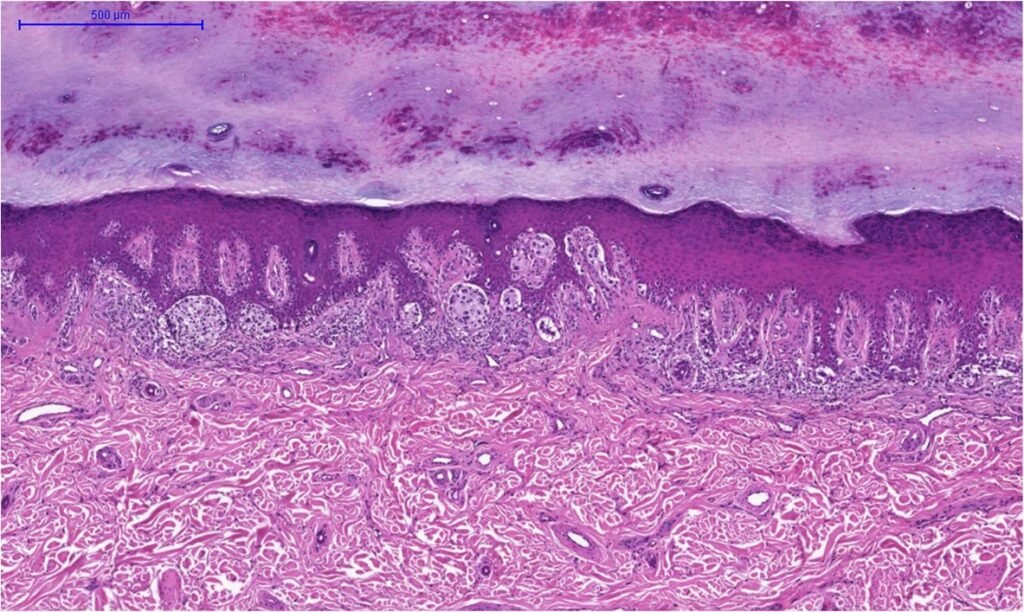
NRAS mutations are found in about 20 to 25 per cent of melanomas. As of 21 September 2026 no targeted drug is standard for these patients; treatment rests on immunotherapy, and MEK inhibitors are a matter for clinical trials or molecular tumour board discussion only. c-KIT mutations occur in 10 to 15 per cent of acral (palm, sole, nail) and mucosal melanomas, and imatinib is a second-line option for these patients. Comprehensive genomic profiling (a broad tumour genetic test) screens these three genes and rarer changes such as NF1 in one run; the process is described on the comprehensive genomic profiling page.
Uveal (eye) melanoma has a different biology from skin melanoma: it does not carry BRAF mutations, and in metastatic disease tebentafusp is used in patients with the appropriate tissue type. Rare subtypes, tumours with more than one mutation and patients who have exhausted standard lines are discussed at the molecular tumour board. A test result does not always change treatment, but in stage 3 and 4 the plan is not finalised before the BRAF result is known.
Who Receives Adjuvant Therapy
Adjuvant therapy, meaning treatment given after surgery to reduce the risk of recurrence, is given for one year in stage 2B, 2C and 3 melanoma. Anti-PD-1 immunotherapy (pembrolizumab or nivolumab) is used regardless of BRAF status; the KEYNOTE-054 and CheckMate 238 trials in stage 3 and the KEYNOTE-716 trial in stage 2B and 2C showed a reduction in the risk of recurrence of about 35 to 45 per cent. For patients with a BRAF V600 mutation and stage 3 disease, one year of dabrafenib with trametinib is an equivalent option according to the COMBI-AD trial; the choice depends on the side-effect profile and the patient's preference.
Immunotherapy before surgery (neoadjuvant treatment) has been one of the standard approaches in stage 3 melanoma since 2024. In the NADINA trial, patients with clinically detectable lymph node involvement received two cycles of nivolumab with ipilimumab before surgery; those with a complete or near-complete response in the surgical specimen needed no further treatment, and the approach reduced recurrence markedly compared with one year of adjuvant nivolumab. The decision is made together with the surgeon, and for an international patient the two cycles and the operation can be scheduled in Izmir, or the drug treatment in Izmir and surgery at home when the two teams agree the timing.
Adjuvant therapy is not given in stage 1 or 2A melanoma; follow-up for these patients consists of dermatology examinations and self-examination. The risk of side effects with adjuvant immunotherapy is the same as in metastatic disease, and some immune-related effects such as an underactive thyroid can be permanent; in patients whose recurrence risk is relatively low, this risk is weighed with the patient. Adjuvant pembrolizumab and nivolumab are licensed in Türkiye; access arrangements for a visiting patient are confirmed before the first infusion.
Important: The information on this page describes general principles. It does not replace a consultation or an individual treatment plan. Licensing and access to specific drugs differ between countries and are discussed at the consultation as they stand on 21 September 2026.
Immunotherapy in Metastatic Melanoma
Immunotherapy with immune checkpoint inhibitors is the first-line treatment for metastatic melanoma regardless of BRAF status, and melanoma is one of the cancers most sensitive to these drugs. They release the brakes (PD-1, CTLA-4, LAG-3) that stop immune cells from recognising the tumour. The effect is usually visible on imaging within two to three months, and in patients who respond it can persist after treatment stops. The general principles are explained on the immunotherapy page.
- Nivolumab
- A PD-1 inhibitor given intravenously every two or four weeks, alone or combined with ipilimumab or relatlimab. Nivolumab with relatlimab (a LAG-3 inhibitor) prolonged disease control compared with nivolumab alone in the RELATIVITY-047 trial, with fewer side effects than the ipilimumab combination. The relatlimab combination is not yet available in every country; its status in Türkiye is confirmed at the consultation.
- Pembrolizumab
- A PD-1 inhibitor given every three or six weeks. In the KEYNOTE-006 trial it was more effective than ipilimumab and became the standard for single-agent anti-PD-1 therapy. It can be sufficient on its own in patients with a low tumour burden and no brain metastases.
- Ipilimumab
- A CTLA-4 inhibitor used not alone but in four cycles with nivolumab, after which nivolumab continues alone. In the CheckMate 067 trial this combination gave long-term control in about half of patients at 10 years. It has the highest side-effect rate: more than half of patients develop a serious immune-related effect (colitis, hepatitis, hypophysitis), so close monitoring is required.
For patients with brain metastases that cause no symptoms, nivolumab with ipilimumab is the first choice (CheckMate 204); stereotactic radiosurgery is added for large or symptomatic lesions. Immune-related side effects are asked about at every cycle: diarrhoea, rash, tiredness, headache, breathlessness and changes in liver and thyroid tests. Endocrine effects such as an underactive thyroid, pituitary failure and type 1 diabetes are usually permanent and need lifelong hormone replacement, but they do not require stopping treatment. A patient who returns home between cycles receives a written monitoring plan in English listing the blood tests and the symptoms that should prompt urgent contact, so that the home physician can act on them.
For patients whose disease is resistant to anti-PD-1 therapy, tumour-infiltrating lymphocyte (TIL) therapy (lifileucel) and the oncolytic virus RP1 with nivolumab have been studied as second-line options in previously treated melanoma. A personalised mRNA melanoma vaccine (V940) with pembrolizumab is being tested in the adjuvant setting in the INTerpath-001 phase 3 trial; this vaccine is not licensed and is available only inside a clinical trial. Marketing authorisation and reimbursement change over time and differ by country; the position that applies to a given patient in Türkiye is checked at the consultation.
BRAF and MEK Inhibitors
BRAF and MEK inhibitors are oral targeted drugs that cut the growth signal at two points in melanomas carrying a BRAF V600 mutation, and they are always used as a pair: dabrafenib with trametinib, encorafenib with binimetinib or vemurafenib with cobimetinib. A BRAF inhibitor alone is no longer given because of resistance and skin side effects. In the COMBI-d, COMBI-v and COLUMBUS trials, about 65 to 70 per cent of patients had tumour shrinkage, and responses usually began within weeks. The principles of this drug class are explained on the targeted therapy page.
In metastatic BRAF-mutant melanoma, immunotherapy is preferred first; the DREAMseq trial showed longer survival when nivolumab with ipilimumab was given before targeted therapy rather than the reverse order. BRAF and MEK inhibitors are used when a rapid response is needed (symptomatic bulky disease, high LDH, brain metastases requiring steroids) and after progression on immunotherapy. As adjuvant treatment, 12 months of dabrafenib with trametinib is an option equivalent to immunotherapy. Because the drugs are taken by mouth, an international patient does not need to stay in Izmir for the whole course; after the first weeks of monitoring, follow-up can continue with the home physician using a written plan.
The most common side effects are fever (in more than half of patients on dabrafenib with trametinib), tiredness, rash, joint pain, photosensitivity (vemurafenib), blurred vision and a reduced pumping strength of the heart. Fever is managed by pausing the drug briefly, and an echocardiogram and eye examination are done before treatment and every three months. Targeted therapy continues until the disease progresses; when resistance develops, treatment switches to immunotherapy or a clinical trial is considered.
Frequently Asked Questions
How long does melanoma treatment take?
The duration depends on the stage. In stage 1 and 2A, treatment ends with surgery within weeks. Adjuvant treatment after surgery lasts one year: immunotherapy in stage 2B and 2C, and immunotherapy or a BRAF and MEK inhibitor in stage 3; in stage 3 patients treated with immunotherapy before surgery, the total may be shorter depending on the response. In metastatic disease, immunotherapy is usually given for up to two years and targeted drugs for as long as they work. The timeline varies from person to person.
What does a BRAF mutation mean?
BRAF is a protein that passes growth signals inside the cell. About 40 to 50 per cent of melanomas carry a mutation at the V600 position of the BRAF gene, which keeps the growth signal switched on. The mutation is tested in the tumour tissue and is not inherited. Patients with a BRAF V600 mutation can be treated with oral BRAF and MEK inhibitors (dabrafenib with trametinib, encorafenib with binimetinib) after surgery or in metastatic disease. Without the mutation these drugs are not given; immunotherapy is used in both groups.
How long is adjuvant immunotherapy?
Adjuvant immunotherapy after melanoma surgery is given for 12 months. Pembrolizumab is infused every three or six weeks and nivolumab every two or four weeks; the KEYNOTE-054, KEYNOTE-716 and CheckMate 238 trials showed that this course reduces the risk of recurrence in stage 2B, 2C and 3 disease. If a serious immune-related side effect develops, treatment is stopped early, and most of the protective effect is retained. In stage 3, patients with a BRAF mutation may choose 12 months of dabrafenib with trametinib instead.
Does melanoma respond to immunotherapy?
Yes. Melanoma is one of the cancers most sensitive to immunotherapy. In the CheckMate 067 trial, about half of the patients with metastatic melanoma treated with nivolumab and ipilimumab were alive at 10 years, and in most responders the disease stayed controlled after treatment stopped. Tumour shrinkage occurs in about 40 to 45 per cent of patients on anti-PD-1 therapy alone and in 43 per cent on nivolumab with relatlimab. Response varies from person to person; PD-L1, tumour burden and LDH help to predict it but do not decide it.
Can brain metastases be treated?
Yes. In patients with melanoma brain metastases that cause no symptoms and need no steroids, nivolumab with ipilimumab shrank the brain lesions in about 55 per cent of patients in the CheckMate 204 trial, with responses lasting years. Dabrafenib with trametinib also crosses into the brain and acts quickly in BRAF-mutant disease. Stereotactic radiosurgery (focused radiotherapy) is combined with drug treatment for a small number of lesions or large ones, and surgery is an option for a single large, symptomatic lesion. Decisions are made with neurosurgery and radiation oncology.
How often should moles be checked?
After melanoma, dermatology examinations are every six to 12 months for five years in stage 1, and every three to six months for three years in stage 2 and 3, then every six to 12 months; after five years a yearly check continues for life. In higher stages, imaging is added every six to 12 months for three years. Patients examine their own skin monthly and report any new or changing mole, a lump in the scar or a swelling near the lymph nodes without waiting.
Related Pages
Skin Cancers
Open the Page
Basal Cell Carcinoma
Open the Page
Immunotherapy
Open the Page
Targeted Therapy
Open the Page
Comprehensive Genomic Profiling
Open the Page
Molecular Tumour Board
Open the Page
Second Opinion
Open the Page
International Patients
Open the PageSources and Guidelines
- Amaral T et al. Cutaneous melanoma: ESMO Clinical Practice Guideline for diagnosis, treatment and follow-up. Ann Oncol 2025;36(1):10-30. Link
- National Comprehensive Cancer Network. NCCN Clinical Practice Guidelines in Oncology: Melanoma: Cutaneous. Link
- Gershenwald JE et al. Melanoma staging: evidence-based changes in the AJCC eighth edition cancer staging manual. CA Cancer J Clin 2017;67(6):472-492. Link
- Wolchok JD et al. Final, 10-year outcomes with nivolumab plus ipilimumab in advanced melanoma (CheckMate 067). N Engl J Med 2025;392:11-22. Link
- Tawbi HA et al. Relatlimab and nivolumab versus nivolumab in untreated advanced melanoma (RELATIVITY-047). N Engl J Med 2022;386:24-34. Link
- Tawbi HA et al. Combined nivolumab and ipilimumab in melanoma metastatic to the brain (CheckMate 204). N Engl J Med 2018;379:722-730. Link
- Eggermont AMM et al. Adjuvant pembrolizumab versus placebo in resected stage III melanoma (KEYNOTE-054). N Engl J Med 2018;378:1789-1801. Link
- Luke JJ et al. Pembrolizumab versus placebo as adjuvant therapy in completely resected stage IIB or IIC melanoma (KEYNOTE-716). Lancet 2022;399(10336):1718-1729. Link
- Long GV et al. Adjuvant dabrafenib plus trametinib in stage III BRAF-mutated melanoma (COMBI-AD). N Engl J Med 2017;377:1813-1823. Link
- Blank CU et al. Neoadjuvant nivolumab and ipilimumab in resectable stage III melanoma (NADINA). N Engl J Med 2024;391:1696-1708. Link
- Atkins MB et al. Combination dabrafenib and trametinib versus combination nivolumab and ipilimumab for patients with advanced BRAF-mutant melanoma (DREAMseq). J Clin Oncol 2023;41(2):186-197. Link
- U.S. Food and Drug Administration. Oncology (cancer) / hematologic malignancies approval notifications (RP1, lifileucel). Link
- International Agency for Research on Cancer (WHO). GLOBOCAN 2022, Global Cancer Observatory. Link
- Cancer Research UK. Melanoma skin cancer: symptoms, stages and treatment. Link