
How Immunotherapy Works
Immunotherapy works by releasing the immune system to act against the tumour rather than by killing the cancer cell directly. Immune cells called T lymphocytes can normally recognise and destroy cancer cells, but the tumour uses proteins such as PD-L1 to bind to a "brake" on the T cell (PD-1) and switch the attack off. Checkpoint inhibitors break that connection and release the brake.
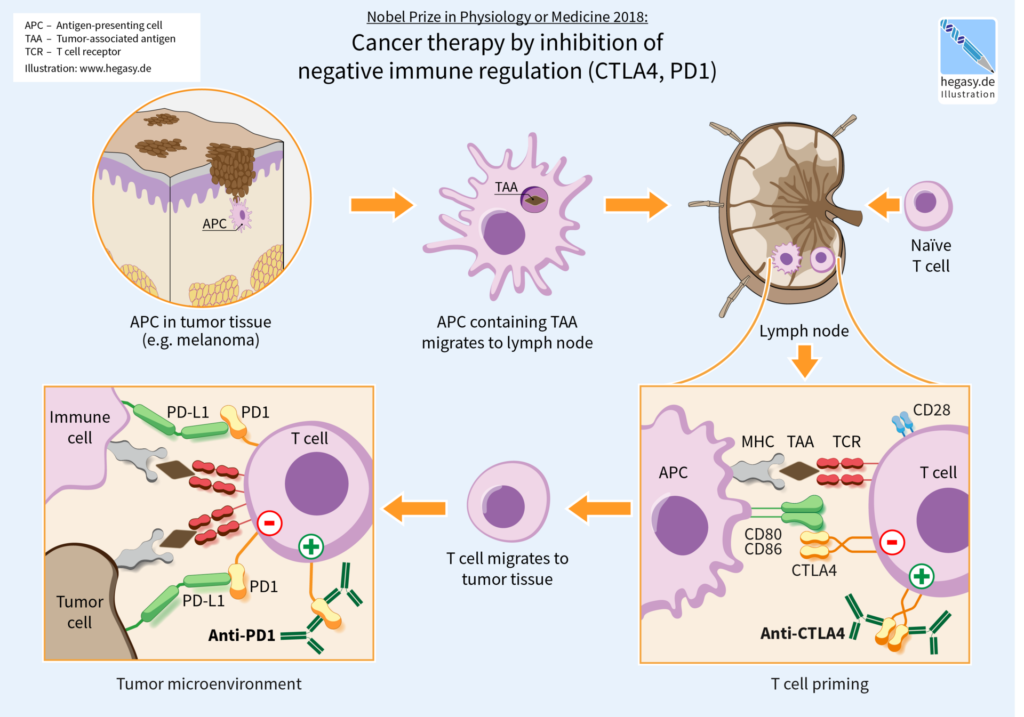
The checkpoint inhibitors in current use are the PD-1 inhibitors (pembrolizumab, nivolumab, cemiplimab), the PD-L1 inhibitors (atezolizumab, durvalumab, avelumab) and the CTLA-4 inhibitors (ipilimumab, tremelimumab). All are monoclonal antibodies given by infusion. The LAG-3 inhibitor relatlimab, used with nivolumab in melanoma, is a newer class.
Immunotherapy is a different method from targeted therapy, which binds to a gene alteration inside the tumour cell; immunotherapy acts on the immune cell instead. CAR-T cell therapy and cancer vaccines also belong to the immunotherapy family: CAR-T is used today in lymphoma and leukaemia, and treatment vaccines for solid tumours remain in clinical trials. This page describes checkpoint inhibitors.
Cancers Treated
Checkpoint inhibitors, first licensed for melanoma in 2011, are now licensed in more than 15 cancer types. For each cancer the stage, and whether the drug is given alone or with chemotherapy, is defined separately in the ESMO and NCCN guidelines. The table summarises the common indications; details are on the individual cancer pages.
| Cancer type | How it is used | Deciding test |
|---|---|---|
| Lung cancer (non-small cell) | Around surgery in stage 2 and 3; one year after chemoradiotherapy in inoperable stage 3; alone or with chemotherapy in metastatic disease | PD-L1; absence of a driver mutation (EGFR, ALK) |
| Lung cancer (small cell) | Added to chemotherapy in extensive-stage disease; after chemoradiotherapy in limited-stage disease | No test required |
| Melanoma | One year after surgery from stage 2B; alone or with ipilimumab or relatlimab in metastatic disease | No test required; BRAF status checked for the alternative |
| Colorectal cancer | First line in MSI-high or dMMR metastatic disease | MSI or MMR |
| Triple-negative breast cancer | With chemotherapy before surgery and continued after it in early disease; with chemotherapy in PD-L1-positive metastatic disease | PD-L1 (metastatic) |
| Stomach and oesophageal cancer | Added to chemotherapy in metastatic disease | PD-L1 CPS; MSI |
| Kidney, bladder, head and neck, liver cancer | First line in metastatic disease, alone or in combination | PD-L1 (bladder and head and neck) |
| Cervical and endometrial cancer | With chemotherapy or chemoradiotherapy in locally advanced and metastatic disease | PD-L1 (cervical); MMR (endometrial) |
| Skin cancers (Merkel cell, squamous cell), Hodgkin lymphoma | Alone in advanced or refractory disease | No test required |
In some tumours, such as pancreatic cancer, prostate cancer and hormone receptor-positive breast cancer, the effect of immunotherapy is limited and it is used only in special situations such as MSI-high disease. The choice of treatment is made by the medical oncologist according to stage, pathology and molecular findings.
Tests Required
Before immunotherapy starts, one or more of three biomarkers is tested depending on the cancer type; these tests predict the likelihood of response and are a licensing condition in several cancers. They are done on the biopsy tissue in the pathology laboratory; MSI and TMB can also be measured by next-generation sequencing. A test done in another country is reviewed rather than repeated when the report and the method are adequate. The testing process is described on the comprehensive genomic profiling page.
- PD-L1
- Measurement of the PD-L1 protein on the surface of tumour cells by immunohistochemistry. Lung cancer uses the tumour proportion score (TPS); stomach and head and neck cancer use the combined positive score (CPS), which counts tumour and immune cells together. In lung cancer a TPS of 50 per cent or more allows immunotherapy alone; a low or negative score means it is combined with chemotherapy. A negative PD-L1 result does not rule immunotherapy out.
- MSI and MMR
- Microsatellite instability (MSI) and deficient mismatch repair (dMMR) show that the tumour cannot correct DNA errors. These tumours carry many mutations and respond well to immunotherapy. In MSI-high metastatic colorectal cancer pembrolizumab doubled the period of disease control compared with chemotherapy in the KEYNOTE-177 trial. An MSI-high result opens an immunotherapy option in any cancer type.
- TMB
- Tumour mutational burden (TMB) is the number of mutations per megabase of tumour DNA. A high TMB (10 or more) predicts response in some tumours and is accepted as a criterion for pembrolizumab regardless of cancer type. Its value differs between cancers, and it does not decide treatment on its own.

One Patient’s Story: KEAP1 and STK11
In a patient who declined chemotherapy and whose diagnosis was delayed, an NGS report established adenocarcinoma of the lung; the video explains what KEAP1 and STK11 changes mean for immunotherapy response.
How It Is Given and for How Long
Checkpoint inhibitors are given into a vein in the day-case unit over 30 to 60 minutes; no overnight stay is needed and the patient leaves the same day. The interval depends on the drug: pembrolizumab is given as 200 mg every three weeks or 400 mg every six weeks, nivolumab every two or four weeks. Blood counts, liver, kidney and thyroid tests are checked before each dose. The six-weekly schedules make it practical for a patient who lives abroad to travel between infusions, and flying between doses is generally possible once the medical oncologist has confirmed there is no active side effect.
The duration depends on the aim. Immunotherapy given around surgery to reduce the risk of recurrence usually lasts one year in total. In metastatic disease treatment continues while the response lasts and was given for a maximum of two years in the major trials; in KEYNOTE-024 and KEYNOTE-189 most patients who completed two years kept their response after stopping. What happens after two years is decided by the medical oncologist on the basis of the quality of the response and the side effects.
The effect of immunotherapy appears later than that of chemotherapy, usually on imaging within the first two to three months. In a small number of patients the tumour looks larger at first because immune cells have gathered in it and then shrinks; this is called pseudoprogression. If the patient is well, treatment continues and imaging is repeated after four to eight weeks. The iRECIST criteria are used to separate true progression from pseudoprogression.
Immune-Related Side Effects
The side effects of immunotherapy arise when the released immune system also turns on healthy tissue, and any organ can be affected; they are therefore called immune-related adverse events. According to the 2022 ESMO and the NCCN guidelines, a side effect of any grade occurs in about 70 per cent of patients on a PD-1 inhibitor and a serious (grade 3 or 4) side effect in 10 to 15 per cent; with the ipilimumab combination the serious rate exceeds 50 per cent. Most side effects reverse with corticosteroids, and reporting them early reduces their severity.
| Organ | Symptom | When to contact the team the same day |
|---|---|---|
| Skin | Itching, rash, vitiligo | Rash covering more than 30 per cent of the body, blistering, mouth ulcers |
| Bowel (colitis) | Diarrhoea, abdominal pain, blood in the stool | Four or more loose stools a day, bloody stool, severe abdominal pain |
| Lung (pneumonitis) | Dry cough, breathlessness, chest pain | New or worsening breathlessness; same-day assessment at any grade |
| Liver (hepatitis) | Usually no symptoms; raised enzymes on blood tests | Jaundice, dark urine, pain under the right ribs |
| Thyroid and pituitary | Fatigue, weight change, palpitations, headache | Severe headache, visual disturbance, extreme weakness with low blood pressure |
| Pancreas (type 1 diabetes) | Excessive thirst, frequent urination, weight loss | Nausea, vomiting, confusion (signs of ketoacidosis) |
| Heart (myocarditis) | Chest pain, palpitations, breathlessness | Emergency department for any of these; rare but can be fatal |
| Joints and muscles | Joint pain, stiffness, muscle weakness | Difficulty swallowing, drooping eyelid, progressive weakness |
| Nervous system | Numbness, headache | Sudden weakness, double vision, loss of balance, altered consciousness |
Side effects mostly begin within the first three months but can appear months after treatment has ended, so follow-up continues after the last dose. Mild side effects are managed by pausing treatment and, if needed, starting corticosteroids; serious side effects need high-dose corticosteroids, additional drugs such as infliximab if there is no response, and permanent discontinuation of immunotherapy. Hormone deficiencies such as an underactive thyroid can be permanent and are managed with hormone replacement, and immunotherapy can continue in that case.
A short course of low-dose corticosteroid, for nausea or allergy, does not reduce the effect of immunotherapy, but long-term use of more than 10 mg of prednisone a day before treatment may lower the response. Unnecessary antibiotics are avoided in the first weeks because they alter the gut flora, but an antibiotic is never delayed when there is an infection. Immunotherapy is possible in patients with an autoimmune disease, but because of the risk of a flare the decision is made together with the relevant physician.
Please note: the information on this page describes general principles and does not replace a consultation or an individual treatment plan. A patient on immunotherapy who attends any emergency department, at home or abroad, states that they are receiving immunotherapy, because the treatment of these side effects differs from that of other illnesses.
Combination with Chemotherapy
Immunotherapy is given together with chemotherapy in many cancers; chemotherapy breaks tumour cells apart and exposes antigens that the immune system can recognise, so the two methods complement each other. In the KEYNOTE-189 trial in lung adenocarcinoma, pembrolizumab with chemotherapy prolonged disease control substantially compared with chemotherapy alone, and in the KEYNOTE-522 trial in triple-negative breast cancer adding pembrolizumab to pre-operative chemotherapy increased the rate of complete response.
In combined treatment the chemotherapy is usually limited to four to six cycles and immunotherapy then continues alone. The side effects are those of both drugs added together; during the period of low blood counts caused by chemotherapy, fever is an emergency. The chemotherapy page describes the cycle schedule and the timing of side effects in detail.
In some cancers immunotherapy is combined with targeted therapy instead: pembrolizumab with axitinib or lenvatinib in kidney cancer and atezolizumab with bevacizumab in liver cancer are examples. In lung cancer with an EGFR or ALK alteration immunotherapy is not used before targeted therapy; its effect is low in these patients and side effects increase when the two are given in sequence.
Access in Türkiye
The checkpoint inhibitors in current ESMO and NCCN guidelines are licensed in Türkiye by the Turkish Medicines and Medical Devices Agency and are the same molecules, under the same international non-proprietary names, as those used in Europe and North America; the brand name and the manufacturer's packaging may differ from what a patient knows from home. The licensed indication for a given cancer and stage can differ between countries, and it is checked at the consultation. Use outside the licensed indication is assessed through an off-label application to the agency; the outcome is not promised in advance.
For a patient who lives abroad, immunotherapy is planned as day-case treatment with a written schedule. Between infusions the patient can return home, and the immune-related side-effect plan is sent to the home clinician together with the treatment summary, so that a rash, diarrhoea, cough or fever can be assessed locally without delay; the clinic remains reachable for questions by message. It is also possible to continue with the same drug at a hospital in the patient's own country after starting in Izmir, provided the drug is available there; the transfer is arranged with a detailed treatment summary. The general process is described on the international patients page.
Frequently Asked Questions
Which cancers is immunotherapy used for?
Checkpoint inhibitors are licensed today for lung cancer, melanoma, kidney, bladder, head and neck, stomach and oesophageal, liver, cervical, endometrial and triple-negative breast cancer, MSI-high colorectal cancer, Merkel cell and squamous cell skin cancer and Hodgkin lymphoma. The stage and the test result required for each cancer are defined separately in the guidelines. In some tumours, such as pancreatic, prostate and most breast cancers, the effect is limited and immunotherapy is not standard treatment.
What are the side effects of immunotherapy?
The side effects of immunotherapy arise when the released immune system also turns on healthy tissue, so any organ can be affected. The most common are fatigue, itching and rash, thyroid disturbance, diarrhoea and joint pain. Rarer but serious effects are pneumonitis (lung inflammation), colitis, hepatitis, inflammation of the pituitary gland, type 1 diabetes and myocarditis. According to the 2022 ESMO guideline most side effects reverse with corticosteroids, and reporting them early reduces their severity. They can also appear months after treatment has ended.
How many cycles of immunotherapy are given?
The number of cycles depends on the aim of treatment. Immunotherapy given around surgery to reduce the risk of recurrence usually lasts one year in total; one year of durvalumab after chemoradiotherapy in stage 3 lung cancer is an example. In metastatic disease treatment continues while the response lasts and was given for a maximum of two years (35 cycles) in the major trials; most patients who stop after two years keep their response. The duration varies from person to person.
How does immunotherapy differ from chemotherapy?
Chemotherapy kills the cancer cell directly; immunotherapy binds not to the cancer cell but to the brakes of the immune system, so that the body's own defence cells recognise the tumour. The side-effect profiles therefore differ: nausea, hair loss and low blood counts are typical of chemotherapy, whereas immunotherapy causes immune-related inflammation of organs. The effect of immunotherapy starts later but can last longer in patients who respond. The two are combined in many cancers, and the cancer type, stage and biomarker results decide which is given.
Does immunotherapy work for everyone?
No; immunotherapy is not effective in every patient or every cancer. The response rate depends on the cancer type and on biomarkers: responses are frequent in PD-L1-high lung cancer, MSI-high tumours and melanoma, and less frequent in PD-L1-negative tumours or cancers with a low tumour mutational burden. Even within the same cancer some tumours do not respond at all. For this reason PD-L1, MSI or TMB is tested before treatment starts, and the response is assessed with imaging every two to three months.
What if I develop a fever during immunotherapy?
A temperature of 38 °C or above during immunotherapy is reported to the treating team the same day; the cause may be an infection, a reaction to the drug or immune-related inflammation of an organ, and these need different treatment. In patients who receive chemotherapy at the same time, fever may signal a dangerous drop in white blood cells and the patient goes to an emergency department without waiting. Fever with breathlessness, severe diarrhoea, abdominal pain, jaundice or confusion also needs urgent assessment.
When is immunotherapy stopped?
Immunotherapy is stopped in four situations: when the planned duration is complete (one year in adjuvant treatment, usually a maximum of two years in metastatic disease), when imaging confirms that the disease has progressed, when a serious immune-related side effect develops, or when the patient chooses not to continue. After a severe side effect such as grade 3 or 4 pneumonitis, myocarditis or hepatitis the drug is stopped permanently; after a mild side effect treatment can be paused and resumed once it has settled.
Related Pages
Targeted Therapy
Open the Page
Chemotherapy
Open the Page
Comprehensive Genomic Profiling
Open the Page
Lung Cancer
Open the Page
Melanoma
Open the Page
Triple-Negative Breast Cancer
Open the Page
Colorectal Cancer
Open the Page
Treatments
Open the PageSources and Guidelines
- Haanen J et al. Management of toxicities from immunotherapy: ESMO Clinical Practice Guideline for diagnosis, treatment and follow-up. Ann Oncol 2022;33(12):1217-1238. Link
- National Comprehensive Cancer Network. NCCN Clinical Practice Guidelines in Oncology: Management of Immunotherapy-Related Toxicities. Link
- Brahmer JR et al. Society for Immunotherapy of Cancer (SITC) clinical practice guideline on immune checkpoint inhibitor-related adverse events. J Immunother Cancer 2021;9(6):e002435. Link
- Schneider BJ et al. Management of immune-related adverse events in patients treated with immune checkpoint inhibitor therapy: ASCO guideline update. J Clin Oncol 2021;39(36):4073-4126. Link
- Reck M et al. Pembrolizumab versus chemotherapy for PD-L1-positive non-small-cell lung cancer (KEYNOTE-024). N Engl J Med 2016;375:1823-1833. Link
- Gandhi L et al. Pembrolizumab plus chemotherapy in metastatic non-small-cell lung cancer (KEYNOTE-189). N Engl J Med 2018;378:2078-2092. Link
- André T et al. Pembrolizumab in microsatellite-instability-high advanced colorectal cancer (KEYNOTE-177). N Engl J Med 2020;383:2207-2218. Link
- Schmid P et al. Pembrolizumab for early triple-negative breast cancer (KEYNOTE-522). N Engl J Med 2020;382:810-821. Link
- Larkin J et al. Five-year survival with combined nivolumab and ipilimumab in advanced melanoma (CheckMate 067). N Engl J Med 2019;381:1535-1546. Link
- Seymour L et al. iRECIST: guidelines for response criteria for use in trials testing immunotherapeutics. Lancet Oncol 2017;18(3):e143-e152. Link
- National Cancer Institute. Immunotherapy to Treat Cancer. Link
- Turkish Medicines and Medical Devices Agency (TİTCK), Ministry of Health of the Republic of Türkiye. Link