
CGP Versus Single-Gene Testing
Comprehensive genomic profiling examines hundreds of genes and four kinds of alteration (point mutations, copy number gains, gene fusions and mutational burden) in a single next-generation sequencing (NGS) run on tumour DNA. A single-gene test answers one question only, for example whether a lung cancer carries an EGFR mutation. A broad panel screens all the targets at once from the same tissue, which saves both biopsy material and time.
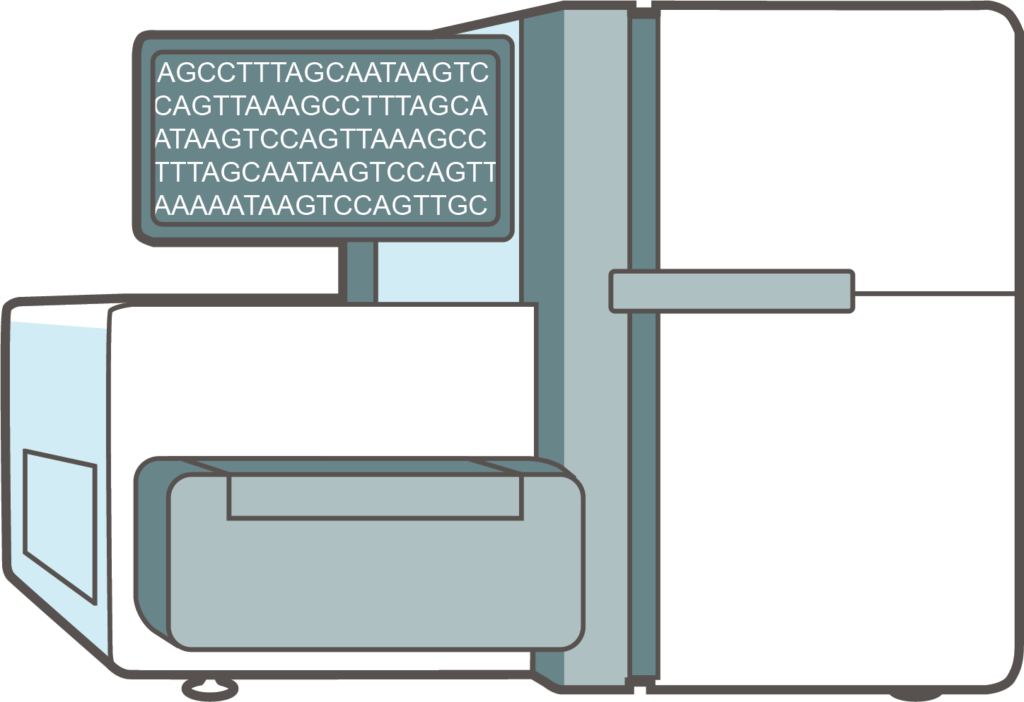
CGP looks for alterations in the tumour tissue (somatic); a hereditary test for alterations a person is born with (germline) is a separate blood test. When a tumour test shows an alteration in a gene that can be inherited, such as BRCA, whether it is germline is confirmed through hereditary cancer risk assessment. Panel size (50, 300 or 500 genes) varies between laboratories; what matters clinically is that the targets defined in the guideline for that cancer are covered by the panel.
| Test type | What it examines | Sample | When it is sufficient |
|---|---|---|---|
| Immunohistochemistry | Amount of a single protein in the cell (HER2, PD-L1, MMR) | Tissue | First step in breast, stomach and lung cancer; fast result |
| FISH | Amplification or rearrangement of a single gene (HER2, ALK) | Tissue | When the immunohistochemistry result is equivocal |
| Single gene or small panel (PCR) | Known mutations in one or a few genes | Tissue or blood | Colorectal cancer (RAS, BRAF), melanoma (BRAF), thyroid cancer |
| Targeted NGS panel (20 to 50 genes) | The common targets of a given cancer type | Tissue or blood | All the standard targets in lung cancer |
| Comprehensive genomic profiling (300 genes and more) | Mutations, copy number, fusions, TMB and MSI together | Tissue or blood | Rare tumours, advanced disease with no target found, assessment for clinical trials |
Why a Genetic Panel Is Recommended
A short film on which patients are offered a comprehensive panel and which question it is meant to answer.
Who Should Have CGP
According to the 2024 recommendation of the ESMO Precision Medicine Working Group, a multi-gene NGS panel is standard practice in advanced non-small cell lung cancer (particularly adenocarcinoma), cholangiocarcinoma, prostate cancer and ovarian cancer, because alterations with a targeted drug are found often enough in these cancers. In colorectal cancer, breast cancer, stomach cancer and melanoma a limited set of tests such as RAS, BRAF, MSI, HER2 and BRAF V600 is enough to decide treatment, and a broad panel is not routine.
A broad panel is also used in rare tumours, in cancer of unknown primary, in patients in good general condition who have exhausted the standard lines, when eligibility for a clinical trial is being assessed, and to look for targets licensed regardless of cancer type (NTRK fusions, MSI-high, TMB-high, BRAF V600E, RET). In early-stage disease CGP rarely changes treatment and is not recommended routinely; the exceptions are tests defined in the guidelines such as EGFR and ALK in early lung cancer and HER2 in breast cancer.
The decision to test is made by the medical oncologist on the basis of how likely the result is to change treatment; not every patient has a broad panel, and a test result does not always change treatment. In lung adenocarcinoma about half of patients have a targetable alteration, whereas across other solid tumours the proportion whose treatment changes after a broad panel is about one third. In a nationwide cohort of more than 54,000 patients in Japan, a potentially actionable alteration was reported in about 73 per cent, but only 8 per cent went on to receive a matched drug, which shows the gap between a finding on paper and a usable treatment.

How an NGS Report Is Produced, Step by Step
From the journey of the sample to the laboratory to the reading of the genomic map: how the biopsy or blood sample is sequenced and how the tumour’s genomic fingerprint is interpreted.
Tissue and Liquid Biopsy
Comprehensive genomic profiling can be done on two kinds of sample: the biopsy or surgical tissue kept as a paraffin block in the pathology laboratory, and a liquid biopsy taken from blood. Tissue is the first choice because it contains the tumour cells directly; a liquid biopsy (analysis of circulating tumour DNA) is used when tissue cannot be obtained or when resistance is being investigated. Tissue and liquid CGP panels are run in accredited laboratories in Türkiye, and samples can also be sent from Izmir to an international commercial assay when a particular test is required.
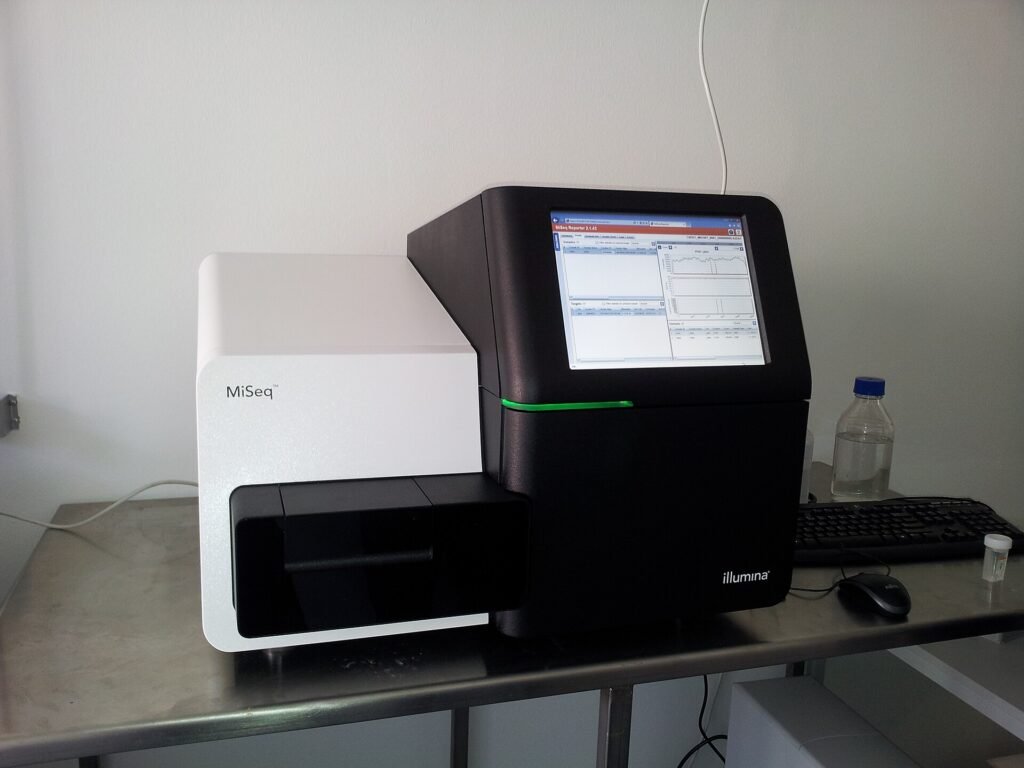
- Tissue sample (paraffin block)
- A biopsy block taken earlier can be retrieved from the pathology archive and used; a new biopsy is usually not needed. The block must contain enough tumour cells (generally 20 per cent or more), and DNA quality can fall in blocks older than two to three years. Bone samples may be unsuitable for NGS because of the decalcification process. A block or 10 to 15 unstained slides can be shipped from a pathology department abroad together with the pathology report.
- Liquid biopsy (blood)
- Fragments of DNA shed by the tumour are analysed in 10 to 20 mL of blood. It has three uses: when tissue is insufficient or a biopsy is risky, when resistance develops on targeted therapy, and when a result is needed quickly. A positive result is as reliable as tissue; a negative result does not prove that a target is absent, and a tissue test is then required.
- New biopsy
- Tissue is taken again when the existing sample is insufficient, when so much time has passed that the tumour biology may have changed, or when the mechanism of resistance could not be found in a liquid biopsy; the method is decided with the interventional radiology or surgical team.
Should Every Patient Have Comprehensive Genomic Profiling
Profiling reads DNA and RNA changes, variants and copy number changes together; the video sets out when it takes priority.
Process and Turnaround
The process begins with the medical oncologist deciding which panel is needed and ends with the laboratory report being turned into a treatment decision; the total time is usually three to four weeks. During this period a provisional plan is set from the existing pathology and staging; if the patient's condition is urgent, chemotherapy can start before the result and the plan is updated when it arrives. For a patient abroad, the first two steps can be completed remotely with the existing reports, and the block can be shipped before the visit.
| Step | What happens | Typical time |
|---|---|---|
| 1. Decision and consent | The medical oncologist chooses the panel by cancer type and stage; the patient is informed and consents | Consultation day |
| 2. Obtaining the sample | The paraffin block is requested from the pathology archive or blood is taken; a pathologist checks the tumour content | 2 to 5 working days (plus courier time from abroad) |
| 3. Laboratory analysis | DNA and, if needed, RNA extraction, sequencing, bioinformatic analysis | 10 to 14 working days (liquid biopsy 7 to 14) |
| 4. Report and interpretation | The clinical molecular oncology team classifies the variants with OncoKB, ClinVar and cBioPortal | 1 to 3 working days |
| 5. Decision | The medical oncologist discusses the result with the patient; complex cases go to the molecular tumour board | Follow-up consultation, in person or remote |
If the tissue proves insufficient the process returns to step 2 and a new sample or a liquid biopsy is planned, which adds one to two weeks. A test already done elsewhere, including a FoundationOne CDx, Guardant360 or national genomics service report, is reinterpreted rather than repeated; a second opinion can be requested with the existing reports.
What a Genetic Panel Test Is
Two patients with the same diagnosis can have tumours that behave very differently. The video explains what the test measures and how it is used in a personalised treatment decision.
How the Report Is Read
A CGP report has four parts: the gene alterations found, the level of drug evidence for each, immunotherapy markers such as TMB and MSI, and variants of uncertain significance. The key to reading the report is the level of evidence; the same alteration can define standard treatment in one cancer and rest only on research data in another.
The ESMO ESCAT scale ranks targets in tiers: tier 1 is a target with a licensed drug in that cancer type that appears in the guideline (EGFR in lung cancer, HER2 in breast cancer); tier 2 is a target with responses shown in phase 2 trials; tier 3 is a target where benefit has been shown in a different cancer type; tier 4 rests on laboratory evidence only; tier 5 means the drug shrinks the tumour but has not been shown to help patients live longer or better; and tier X means there is no evidence that the finding is treatable. The OncoKB database ranks in a similar way from level 1 to level 4, where level 1 means a drug approved by the FDA for that alteration. The joint AMP, ASCO and CAP classification places variants in four tiers by clinical significance: strong (tier I), potential (tier II), unknown (tier III) and benign (tier IV).
A variant of uncertain significance (VUS) is an alteration whose link to disease is not yet known; it does not decide treatment and may be reclassified over time by the laboratory or the team. General information on targeted drugs is on the targeted therapy page and on immunotherapy markers on the immunotherapy page. When the report shows an alteration in a gene that can be inherited, such as BRCA1, BRCA2 or MLH1, and particularly when the allele fraction is high, germline confirmation on a blood test is recommended.
Please note: the information on this page describes general principles and does not replace a consultation or an individual treatment plan. "Target found" on a laboratory report is not a drug decision on its own; the level of evidence, the cancer type and the patient's condition are assessed together.
Off-Label and Clinical Trial Routes
It often happens that a target is found but the drug for it is not licensed in Türkiye, or not licensed for the patient's cancer type; according to ESMO data a large share of the targets found on broad panels are ESCAT tier 3 or below. The case is then discussed at the molecular tumour board, and three options are considered as matters for assessment.
The first is an application for off-label use to the Turkish Medicines and Medical Devices Agency; the medical oncologist prepares it with the supporting evidence, the outcome depends on the agency's review and is not promised in advance. The second is entry into an open clinical trial that matches the target; trials are searched on ClinicalTrials.gov and national registries, and for a patient from abroad a trial in the home country is considered as well, with the report and assessment sent to the home clinician. The third, when neither route is suitable, is to continue with the standard guideline treatment; this is a valid and often the right decision.
The wider section, including hereditary testing and the tumour board, is described on the precision oncology page, and the sequence of a remote assessment for patients from abroad on the international patients page.
Frequently Asked Questions
How long do CGP results take?
Comprehensive genomic profiling is usually reported within 10 to 14 working days of the tissue block reaching the laboratory; retrieving the block from the pathology archive and shipping it adds two to five working days, and a block sent from abroad adds the courier time. A liquid biopsy takes seven to 14 working days. If the tissue proves insufficient a new sample is needed and the time is longer. Meanwhile the medical oncologist sets a provisional plan, and in urgent situations chemotherapy can start first.
Can NGS diagnose cancer?
No; a cancer diagnosis is made by a pathologist examining the biopsy tissue under the microscope, and an NGS test does not make the diagnosis. Next-generation sequencing shows which gene alterations an already diagnosed tumour carries and guides the choice of treatment. Blood-based multi-cancer screening tests for healthy people are still at the research stage and are not recommended in guidelines. A hereditary cancer test on blood is a separate test that gives risk information, not a diagnosis.
What happens if a variant is found?
A variant on the report is first graded by its level of evidence with the ESCAT and OncoKB scales and then interpreted with the cancer type, stage and previous treatments. A level 1 target leads to standard targeted therapy or immunotherapy; a lower-level target is discussed at the molecular tumour board. A variant of uncertain significance does not decide treatment. If the variant is in a gene such as BRCA1, BRCA2 or MLH1 that can be inherited, a separate blood test is offered to check whether it is germline.
Does liquid biopsy replace tissue biopsy?
Partly. A liquid biopsy analyses tumour DNA circulating in the blood; a positive result is as reliable as tissue and is sufficient to start treatment. Not every tumour releases enough DNA into the blood, however, so a negative result does not prove that a target is absent, and a tissue test is then still needed. Liquid biopsy is preferred in three situations: when tissue cannot be obtained or is insufficient, when resistance develops on targeted therapy, and when a result is needed quickly.
Does every patient need CGP?
No; not every patient needs a broad panel. According to the 2024 ESMO recommendation a multi-gene panel is standard in advanced lung adenocarcinoma, cholangiocarcinoma, prostate and ovarian cancer, whereas in colorectal, breast, stomach cancer and melanoma a limited set of tests (RAS, BRAF, MSI, HER2) is enough to decide treatment. In early-stage disease a broad panel rarely changes treatment. CGP comes into consideration in rare tumours, when standard lines have been exhausted and when a clinical trial is being assessed.
What does it mean if no target is found?
A result without a target does not mean the test has failed; it is itself a result that guides treatment. Knowing that the tumour carries no targetable alteration, the medical oncologist applies the standard guideline treatment, usually chemotherapy, immunotherapy or both. A test result does not always change treatment; in broad panels roughly one third of patients with advanced cancer have a treatment-changing target. When the disease progresses, testing can be repeated on a new biopsy or a liquid biopsy.
Can I send an existing report for interpretation?
Yes. A report from a commercial assay such as FoundationOne CDx or Guardant360, or from a hospital or national genomics service, is reviewed with the pathology report and imaging and is not repeated unless the panel missed genes relevant to the cancer. The clinical molecular oncology team checks each reported variant against OncoKB, ClinVar and cBioPortal, and when the raw data file is available it can be re-analysed. The interpretation is given as a written assessment and, where useful, the case is discussed at the molecular tumour board.
Related Pages

Precision Oncology
Open the Page
Molecular Tumour Board
Open the Page
Hereditary Cancer Risk Assessment
Open the Page
Targeted Therapy
Open the Page
Immunotherapy
Open the Page
Lung Cancer
Open the Page
Second Opinion
Open the Page
International Patients
Open the PageSources and Guidelines
- Mosele F et al. Recommendations for the use of next-generation sequencing (NGS) for patients with metastatic cancers: a report from the ESMO Precision Medicine Working Group. Ann Oncol 2020;31(11):1491-1505. Link
- Mosele MF et al. Recommendations for the use of next-generation sequencing (NGS) for patients with advanced cancer in 2024: a report from the ESMO Precision Medicine Working Group. Ann Oncol 2024;35(7):588-606. Link
- Mateo J et al. A framework to rank genomic alterations as targets for cancer precision medicine: the ESMO Scale for Clinical Actionability of molecular Targets (ESCAT). Ann Oncol 2018;29(9):1895-1902. Link
- Chakravarty D et al. OncoKB: a precision oncology knowledge base. JCO Precis Oncol 2017;1:1-16. Link
- Memorial Sloan Kettering Cancer Center. OncoKB Precision Oncology Knowledge Base. Link
- Saito Y et al. Real-world clinical utility of comprehensive genomic profiling in advanced solid tumors. Nat Med 2026;32:690-701. Link
- National Comprehensive Cancer Network. NCCN Clinical Practice Guidelines in Oncology: Non-Small Cell Lung Cancer. Link
- Li MM et al. Standards and guidelines for the interpretation and reporting of sequence variants in cancer: a joint consensus recommendation of AMP, ASCO and CAP. J Mol Diagn 2017;19(1):4-23. Link
- Rolfo C et al. Liquid biopsy for advanced NSCLC: a consensus statement from the International Association for the Study of Lung Cancer. J Thorac Oncol 2021;16(10):1647-1662. Link
- National Center for Biotechnology Information. ClinVar. Link
- cBioPortal for Cancer Genomics. Link
- National Cancer Institute. Biomarker Testing for Cancer Treatment. Link