
Symptoms and Risk Factors
The most common symptom of breast cancer is a firm, usually painless lump in the breast. Other symptoms are nipple retraction, bloody nipple discharge, thickening or dimpling of the skin (peau d'orange) and swelling in the armpit. In advanced disease bone pain, breathlessness or weight loss can occur; spread to bone may present as shoulder or back pain.
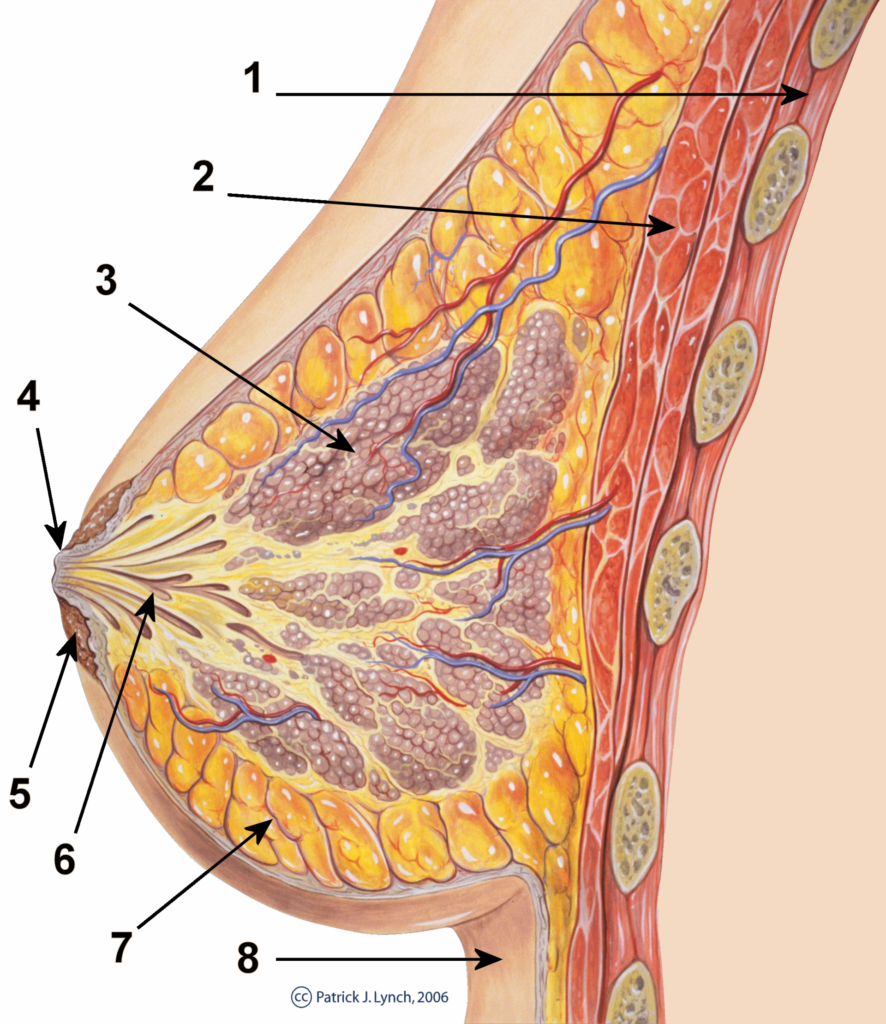
Breast cancer is the most common cancer in women worldwide; according to IARC (GLOBOCAN 2022) about 2.3 million new cases were diagnosed in 2022, and Turkish national cancer statistics also place it first among women.
Risk factors that cannot be changed are older age, early first period, late menopause, never having given birth and a family history of breast or ovarian cancer. Modifiable factors are excess weight, inactivity, alcohol and long-term hormone replacement therapy. Breast cancer under 50 in a relative, several affected relatives, male breast cancer or a known BRCA mutation are signs of hereditary risk; in that case a hereditary cancer risk assessment is recommended.
Any newly noticed lump, nipple discharge or skin change should be examined by a physician. The Turkish Ministry of Health screening programme, like most national programmes, offers mammography every two years between the ages of 40 and 69.
How Breast Cancer Is Staged
Breast cancer is staged from 0 to 4 by combining the size of the tumour (T), spread to the lymph nodes in the armpit (N) and metastasis to distant organs (M); this is the TNM system. Staging uses mammography, ultrasound, breast MRI where needed and a core biopsy (tissue taken with a needle); from stage 2 upwards, CT or PET-CT looks for distant spread.
The pathology report gives the tumour type, its grade, the oestrogen and progesterone receptor (ER, PR) results, HER2 status and Ki-67 (the rate of cell division). Since the 8th edition of the AJCC system these biological features are part of the stage. Treatment choice is determined by the physician according to stage, pathology and molecular findings; a report from any country that contains these items is sufficient for the initial review.
| Stage | Definition | Treatment approach |
|---|---|---|
| Stage 0 | Ductal carcinoma in situ; cancer cells confined to the milk duct | Surgery, with radiotherapy and endocrine therapy where indicated |
| Stage 1 | Tumour 2 cm or smaller, no or minimal lymph node involvement | Surgery; endocrine therapy, chemotherapy or HER2-targeted therapy according to subtype |
| Stage 2 | Tumour 2 to 5 cm, or a limited number of involved axillary nodes | Systemic therapy before or after surgery; radiotherapy |
| Stage 3 | Tumour over 5 cm, reaching the skin or chest wall, or many involved nodes (locally advanced) | Usually chemotherapy and targeted therapy first, then surgery and radiotherapy |
| Stage 4 | Metastasis (spread) to distant organs such as bone, liver, lung or brain | Systemic therapy is the main treatment; the aim is long-term disease control |

Does Stage 4 Always Mean Hopelessness
Bone metastasis makes the disease stage four, but the course of treatment is not set by stage alone. Hormone receptor status, HER2 status and the tumour’s genetic profile all shape the options.
Breast Cancer Subtypes
Breast cancer is divided into three main subtypes according to the receptor results in the pathology report, and the subtype is as important as the stage because it determines which class of drug will work.
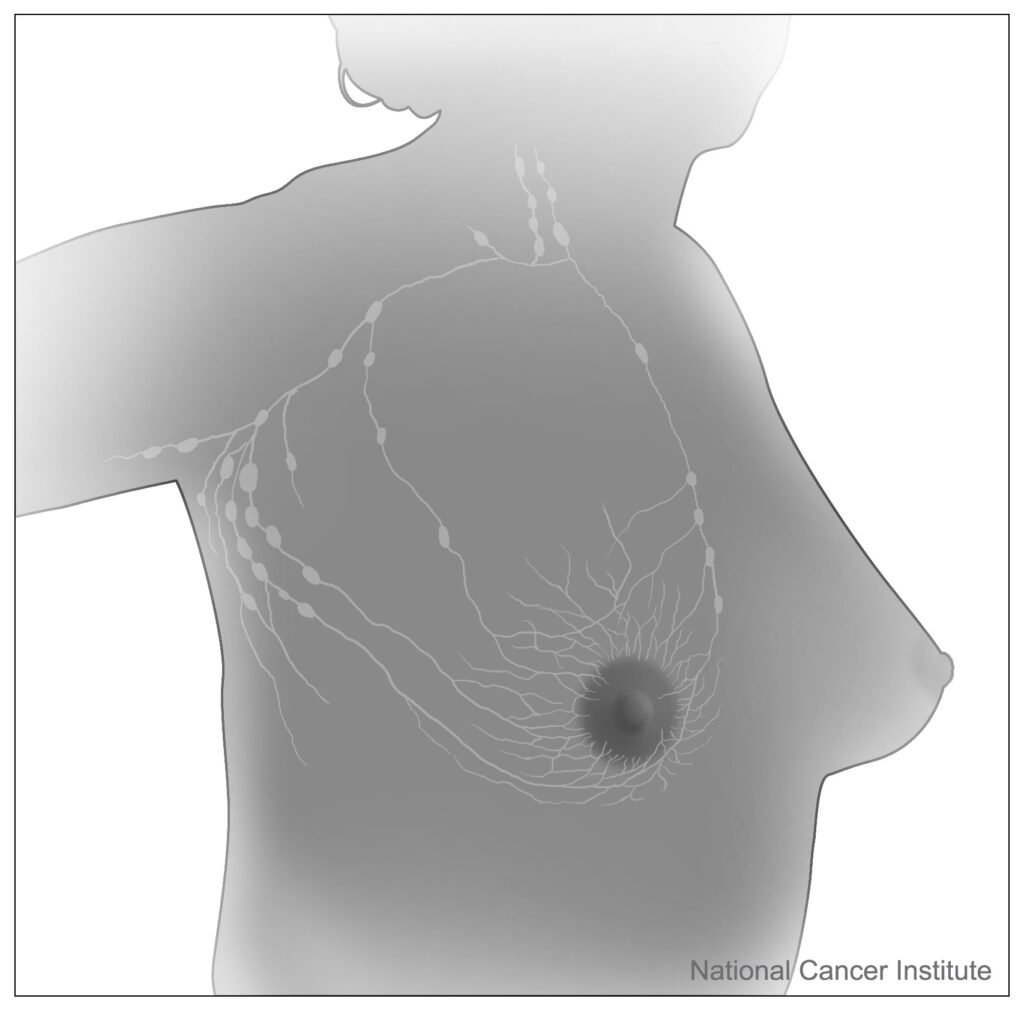
- Hormone receptor-positive (ER and/or PR positive, HER2-negative)
- About 70 per cent of breast cancers belong to this group (ESMO 2024 guideline). The tumour grows in response to oestrogen, so endocrine therapy is the backbone of treatment. Chemotherapy is added only when the recurrence risk is high.
- HER2-positive
- The tumour cells carry an excess of HER2 protein on their surface; about 15 to 20 per cent of patients are in this group. The backbone of treatment is HER2-targeted therapy such as trastuzumab and pertuzumab. Details are on the HER2-positive breast cancer page.
- Triple-negative
- ER, PR and HER2 are all negative; about 10 to 15 per cent of patients are in this group. Endocrine therapy does not work; chemotherapy is used, with immunotherapy in selected patients. Details are on the triple-negative breast cancer page.
Hormone receptor-positive and HER2-positive can occur together, in which case both classes of treatment are used. Tumours with a HER2 score of 1+ or 2+ and a negative ISH test are called HER2-low; they are not HER2-positive, but in metastatic disease some antibody-drug conjugates are effective in this group too.
Systemic Treatment Options by Subtype
Systemic therapy is drug treatment that reaches the whole body through the bloodstream; chemotherapy, endocrine therapy, targeted therapy and immunotherapy belong to this group. In early disease the purpose is to destroy cells left behind; in metastatic disease it is to keep the cancer under control for as long as possible.
Systemic therapy given before surgery is called neoadjuvant and after surgery adjuvant. Neoadjuvant therapy shrinks the tumour and shows the effect of the drug directly. If no living tumour cells remain in the surgical specimen this is called a pathological complete response; in HER2-positive and triple-negative tumours this result determines the treatment that follows.
| Subtype | Treatment class | Guideline basis |
|---|---|---|
| Hormone receptor-positive, HER2-negative | Endocrine therapy; chemotherapy and two to three years of a CDK4/6 inhibitor in high-risk disease; endocrine therapy with a CDK4/6 inhibitor in metastatic disease | ESMO Early Breast Cancer 2024; NCCN Breast Cancer |
| HER2-positive | Chemotherapy with trastuzumab and pertuzumab; one year of HER2-targeted therapy in total; an antibody-drug conjugate for residual disease | ESMO Early Breast Cancer 2024; NCCN Breast Cancer |
| Triple-negative | Neoadjuvant chemotherapy with pembrolizumab in stage 2 and 3; capecitabine, or olaparib in BRCA carriers, for residual disease | ESMO Early Breast Cancer 2024; NCCN Breast Cancer |
| Metastatic disease (all subtypes) | Sequential lines according to subtype: targeted therapy, antibody-drug conjugates, chemotherapy, immunotherapy | ESMO Metastatic Breast Cancer living guideline |
Chemotherapy is mostly given into a vein every three weeks; the usual drugs are anthracyclines (doxorubicin, epirubicin) and taxanes (paclitaxel, docetaxel). Targeted therapy binds to a specific target in the tumour; HER2 antibodies and CDK4/6 inhibitors are in this class. Immunotherapy helps the immune system recognise the tumour and, in breast cancer, is used only in the triple-negative subtype.
Side effects depend on the drug class: nausea, hair loss and low blood counts with chemotherapy; hot flushes and joint pain with endocrine therapy; reduced heart function with HER2-targeted therapy. A temperature of 38 °C or above during chemotherapy requires same-day contact with the treating team or an emergency department, wherever the patient is.
Please note: the information on this page describes general principles; it does not replace a medical consultation or an individual treatment plan.
Chemotherapy or Immunotherapy
When breast cancer is caught early the tumour can be removed completely with surgery, and some patients may not need chemotherapy. The video explains which findings decide that.
Endocrine Therapy and Side Effects
Endocrine therapy consists of oral medicines that stop oestrogen reaching the tumour cell or being produced in the body, and it is the standard treatment for hormone receptor-positive breast cancer. Tamoxifen is used before the menopause and aromatase inhibitors (anastrozole, letrozole, exemestane) after it. In high-risk premenopausal patients ovarian suppression (a monthly injection) can be combined with an aromatase inhibitor. Because these are tablets, the home physician can continue the prescription with a written plan.
Tamoxifen
Tamoxifen blocks the oestrogen receptor and is taken as one tablet a day. Common side effects are hot flushes, vaginal discharge, irregular periods and leg cramps. Rare but important side effects are thickening of the womb lining, blood clots and cataract or retinal changes; a yearly gynaecological check is advised, and blurred vision prompts an eye examination.
Aromatase Inhibitors
Aromatase inhibitors stop oestrogen production after the menopause. Their most common side effects are joint and muscle pain, hot flushes, vaginal dryness and loss of bone density; bone density is measured every one to two years and a bone-protecting medicine is added if needed.
Genetic Testing in Metastatic Hormone Positive Breast Cancer
Changes in ESR1, PIK3CA and the mTOR pathway can affect the treatment decision directly, which is why testing is considered in the first line where possible.
How Long Treatment Takes
Breast cancer treatment in early disease usually takes six months to a year for the active phase and five to 10 years for endocrine therapy. In HER2-positive disease chemotherapy lasts four to six months and HER2-targeted therapy one year in total; in triple-negative disease neoadjuvant treatment takes about six months, with six further months of immunotherapy after surgery.
Radiotherapy is given on weekdays for three to five weeks after chemotherapy has finished. Endocrine therapy is a daily tablet for five years, extended to 10 in high-risk disease; where a CDK4/6 inhibitor is added, it is taken for two or three years.
For international patients the question is usually how much of this time must be spent in Izmir. Intravenous chemotherapy cycles are given here, while oral therapy and routine follow-up can often continue at home under a shared plan; whether surgery or radiotherapy is done at home or in Izmir is decided case by case, and a written treatment summary in English is provided for the home oncologist. In metastatic disease treatment has no fixed end date; it continues as long as the drug is effective and well tolerated, with imaging every two to three cycles. The practical steps are on the international patients page, and an existing plan from another centre can be reviewed as a second opinion.
Genomic and Genetic Assessment
Molecular assessment in breast cancer works at two levels: a blood test for inherited (germline) gene changes and tissue or liquid biopsy (analysis of circulating tumour DNA in blood) for changes in the tumour itself (somatic). A test result does not always change treatment.
BRCA1 and BRCA2
Germline BRCA testing is recommended for diagnosis under 50, triple-negative subtype, male breast cancer, a family history of breast, ovarian, pancreatic or prostate cancer and, according to the NCCN guideline, in all patients with metastatic disease. In BRCA carriers PARP inhibitors such as olaparib are an option. Because the result also concerns family members, genetic counselling and consent precede the test.
Genomic Decision Tests
Multigene tests such as Oncotype DX predict the benefit of chemotherapy in hormone receptor-positive, HER2-negative early tumours. In the TAILORx trial, adding chemotherapy showed no benefit in patients over 50 with a recurrence score of 25 or below; the test is requested when the chemotherapy decision is uncertain and can use the existing biopsy block.
PIK3CA and ESR1
In metastatic hormone receptor-positive disease the tumour is tested for a PIK3CA mutation; if present, alpelisib or capivasertib become options. In disease progressing on an aromatase inhibitor an ESR1 mutation is sought in blood; it marks endocrine resistance and brings drugs such as elacestrant into consideration. These tests are part of comprehensive genomic profiling, and complex results are discussed at a molecular tumour board.
Clinical Evidence
This section summarises guideline and trial data for physicians and health professionals.
Guideline Summary
The ESMO Early Breast Cancer guideline (Loibl et al., Ann Oncol 2024) recommends 5 to 10 years of adjuvant endocrine therapy in HR+/HER2- disease with abemaciclib (monarchE) or ribociclib (NATALEE) in high-risk patients; neoadjuvant chemotherapy with trastuzumab and pertuzumab for T2 or N+ HER2+ tumours, with T-DM1 for residual disease (KATHERINE); and the KEYNOTE-522 regimen for stage II to III triple-negative disease. The NCCN Breast Cancer guideline (version 4.2026) is aligned with these recommendations and advises germline BRCA testing in all patients with metastatic disease.
Pivotal Trials
monarchE (phase III, JCO 2020) showed a significant improvement in invasive disease-free survival with two years of abemaciclib in high-risk HR+/HER2- early disease (HR 0.75). NATALEE (phase III, NEJM 2024) improved the same endpoint with three years of ribociclib in stage II to III HR+ disease (HR 0.75). TAILORx (NEJM 2018) showed endocrine therapy alone to be non-inferior to chemoendocrine therapy at recurrence scores of 11 to 25; ATLAS (Lancet 2013) showed that 10 years of tamoxifen reduces recurrence and breast cancer mortality.
Areas in Transition
In metastatic HR+ disease, elacestrant for ESR1-mutated tumours after a CDK4/6 inhibitor (EMERALD, JCO 2022) and capivasertib for PIK3CA/AKT1/PTEN alterations have created new lines of therapy. In HER2-low tumours trastuzumab deruxtecan (DESTINY-Breast04, NEJM 2022) increased median progression-free survival from 5.1 to 9.9 months compared with chemotherapy. ctDNA monitoring for molecular recurrence remains investigational. Off-label use and clinical trial participation are matters for individual assessment only; as of 21 September 2026, marketing authorisation and reimbursement status in Türkiye differ by drug and are discussed at the consultation.
Frequently Asked Questions
How long does breast cancer treatment take?
In early breast cancer the active phase of surgery, chemotherapy and radiotherapy usually takes six months to a year; in hormone receptor-positive disease a daily endocrine tablet then continues for five to 10 years. HER2-targeted therapy lasts a total of one year, and in metastatic disease treatment has no fixed end date. The time spent in Izmir is often shorter than the total, because oral therapy and follow-up can be shared with the home oncologist. Duration varies from person to person.
Why is chemotherapy given before surgery?
Chemotherapy given before surgery is called neoadjuvant treatment. It shrinks a large tumour, can make breast-conserving surgery possible and shows directly how the tumour responds to the drug. ESMO and NCCN guidelines recommend this order for HER2-positive and triple-negative tumours of stage 2 and above. If no living tumour cells remain in the surgical specimen, a pathological complete response has been achieved; if residual disease is found, the treatment after surgery is adjusted accordingly.
How many years is endocrine therapy taken?
Endocrine therapy is taken for five years as standard in hormone receptor-positive breast cancer, and extended to 10 years when the lymph nodes were involved or the recurrence risk is high. ESMO 2024 and NCCN guidelines set the duration according to tumour size, nodal status and how well the tablet is tolerated. Tamoxifen is used before the menopause and an aromatase inhibitor after it; the prescription can be continued by the home physician with a shared plan.
How is HER2-positive breast cancer treated?
HER2-positive breast cancer is treated with chemotherapy combined with antibodies that target the HER2 protein, trastuzumab and pertuzumab; in early disease these antibodies are given for a total of one year. From stage 2 upwards treatment usually starts before surgery, and if residual tumour is found afterwards an antibody-drug conjugate is used. In metastatic disease the first-line regimen is trastuzumab, pertuzumab and a taxane. Heart function is measured every three months throughout treatment.
Who should have genetic testing?
Germline BRCA1 and BRCA2 testing is recommended for patients diagnosed under 50, those with triple-negative disease, men with breast cancer and anyone with a family history of breast, ovarian, pancreatic or prostate cancer; the NCCN guideline recommends testing for every patient with metastatic breast cancer. Tumour tests are different: PIK3CA and ESR1 are requested in metastatic hormone-positive disease, and Oncotype DX in early disease to decide whether chemotherapy is needed. Testing can use a blood sample or the existing biopsy block.
Can I be assessed before travelling to Turkey?
Yes. The assessment starts with a remote document review: the pathology report with ER, PR, HER2 and Ki-67 results, imaging in DICOM format, blood tests and any treatment summary are sent in advance and read before a video or telephone consultation in English. A written opinion follows, so that you can decide whether to travel at all, and whether some steps such as surgery or radiotherapy are better done at home. Receptor tests are repeated only when the report is unclear or the block is needed for further testing.
How is follow-up organised after treatment?
After active treatment, ESMO 2024 recommends a visit every three to six months for the first three years, every six months for the next two years and yearly thereafter, with a physical examination at each visit and a mammogram once a year. Routine CT, PET-CT or tumour marker tests are not recommended when there are no symptoms. For patients who return home, a written treatment summary with the follow-up schedule is provided for the home oncologist, and results can be reviewed remotely.
Related Pages

HER2-positive Breast Cancer
Open the Page
Triple-Negative Breast Cancer
Open the Page
Chemotherapy
Open the Page
Targeted Therapy
Open the Page
Immunotherapy
Open the Page
Hereditary Cancer Risk Assessment
Open the Page
Comprehensive Genomic Profiling
Open the Page
International Patients
Open the Page
Second Opinion
Open the PageSources and Guidelines
- Loibl S et al. Early breast cancer: ESMO Clinical Practice Guideline for diagnosis, treatment and follow-up. Ann Oncol 2024;35(2):159-182. Link
- Gennari A et al. ESMO Clinical Practice Guideline for the diagnosis, staging and treatment of patients with metastatic breast cancer. Ann Oncol 2021;32(12):1475-1495 (living guideline). Link
- National Comprehensive Cancer Network. NCCN Clinical Practice Guidelines in Oncology: Breast Cancer, version 4.2026. Link
- Turkish Society of Medical Oncology. Guidelines and patient information resources. Link
- Republic of Türkiye Ministry of Health, General Directorate of Public Health. Cancer statistics and national screening standards. Link
- International Agency for Research on Cancer (WHO). GLOBOCAN 2022, Global Cancer Observatory. Link
- Sparano JA et al. Adjuvant chemotherapy guided by a 21-gene expression assay in breast cancer (TAILORx). N Engl J Med 2018;379:111-121. Link
- Johnston SRD et al. Abemaciclib combined with endocrine therapy for the adjuvant treatment of HR+, HER2-, node-positive, high-risk early breast cancer (monarchE). J Clin Oncol 2020;38(34):3987-3998. Link
- Slamon D et al. Ribociclib plus endocrine therapy in early breast cancer (NATALEE). N Engl J Med 2024;390:1080-1091. Link
- Davies C et al. Long-term effects of continuing adjuvant tamoxifen to 10 years versus stopping at 5 years (ATLAS). Lancet 2013;381:805-816. Link
- Modi S et al. Trastuzumab deruxtecan in previously treated HER2-low advanced breast cancer (DESTINY-Breast04). N Engl J Med 2022;387:9-20. Link
- Bidard FC et al. Elacestrant versus standard endocrine therapy for ER+/HER2- advanced breast cancer (EMERALD). J Clin Oncol 2022;40(28):3246-3256. Link
- National Cancer Institute. Breast Cancer Treatment (PDQ), patient version. Link
- Cancer Research UK. Breast cancer: treatment and follow-up. Link